 MicoRadar
Fool's mushroom
Amanita verna
Also called: Spring destroying angel
In Spanish: Cicuta blanca, Amanita de primavera, Oronja blanca · In Catalan: Cogomassa, Cogomat, Farinera vernal · In Basque: Hiltzaile goiztiar, Kuleto zuri, Ilkor zuri
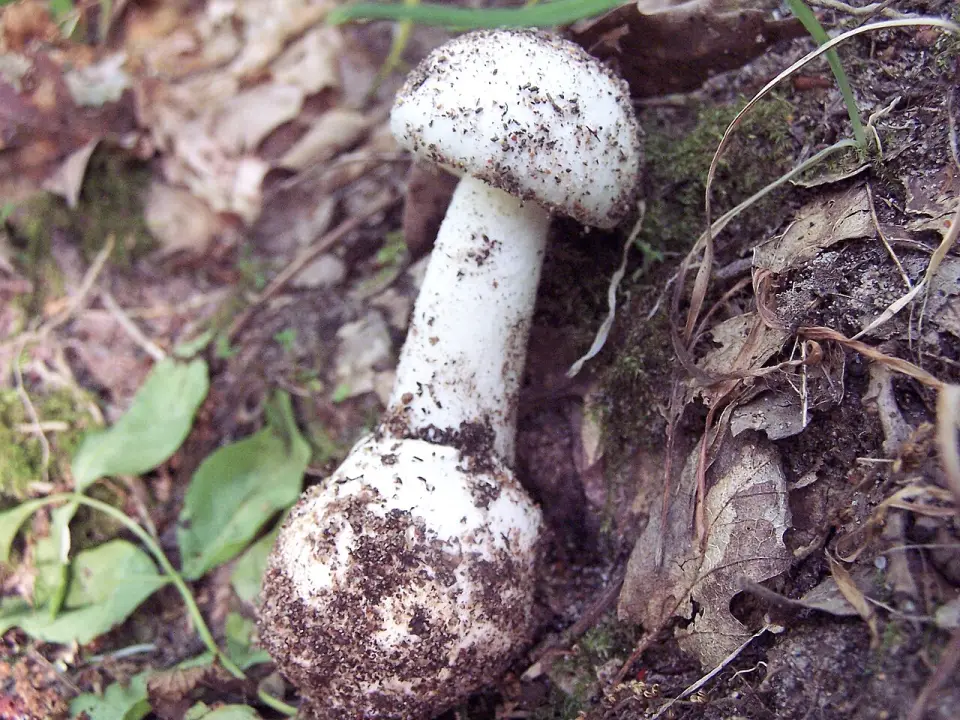
Photo: Roberto Petruzzo / Wikimedia Commons · CC BY-SA 2.5
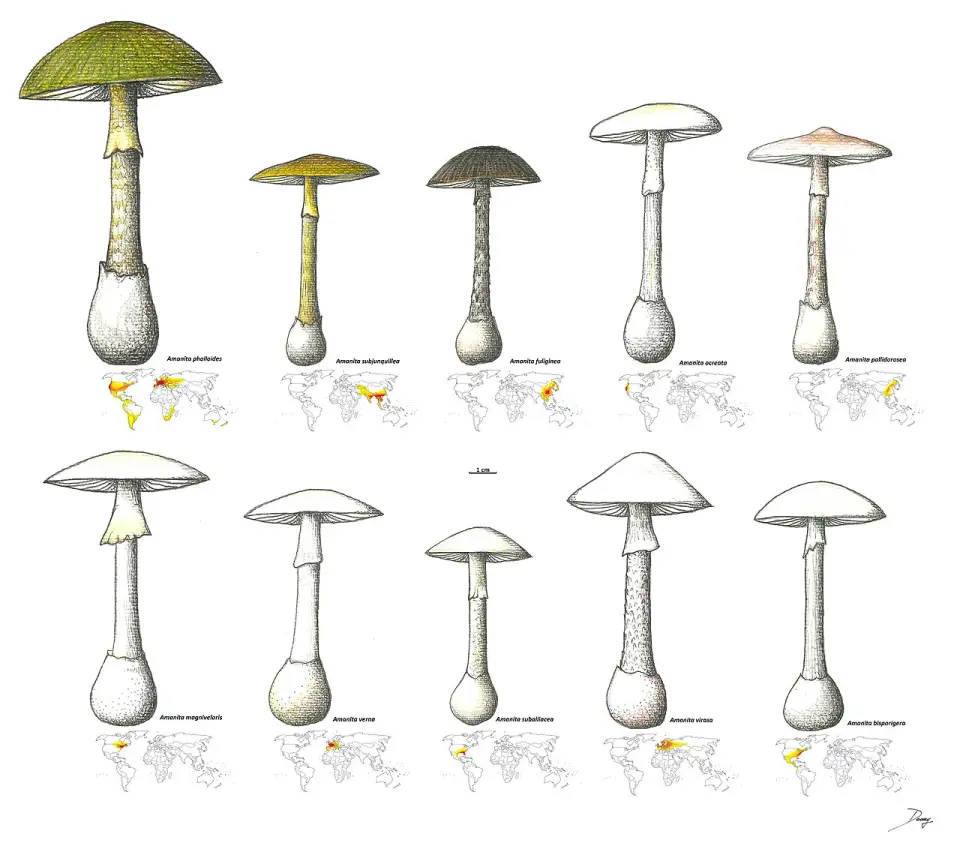
Photo: Danny Cicchetti / Wikimedia Commons · CC BY-SA 4.0
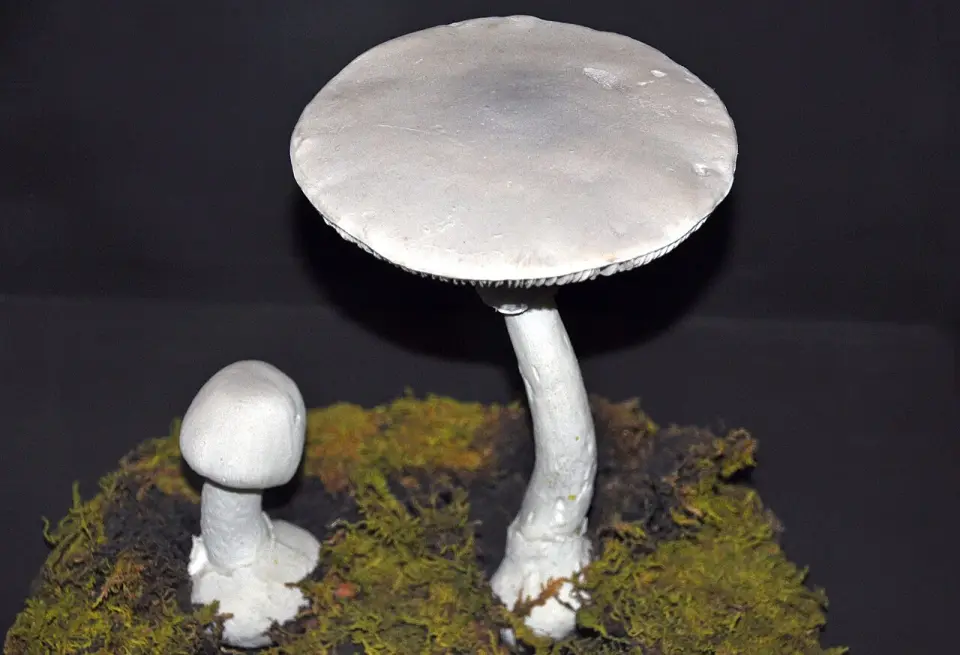
Photo: James St. John / Wikimedia Commons · CC BY 2.0
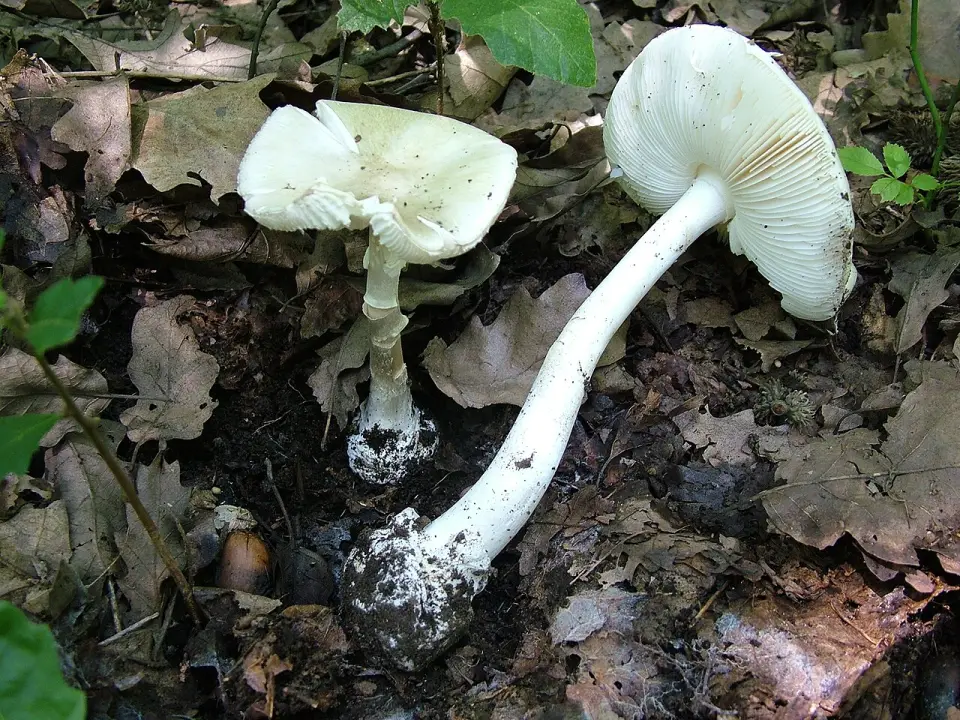
Photo: Sinisa Radic / Wikimedia Commons · CC BY-SA 4.0
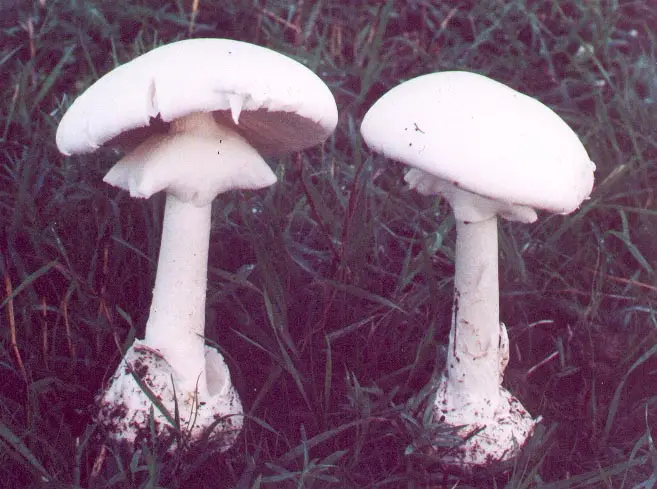
Photo: Sinisa Radic / Wikimedia Commons · CC BY-SA 4.0
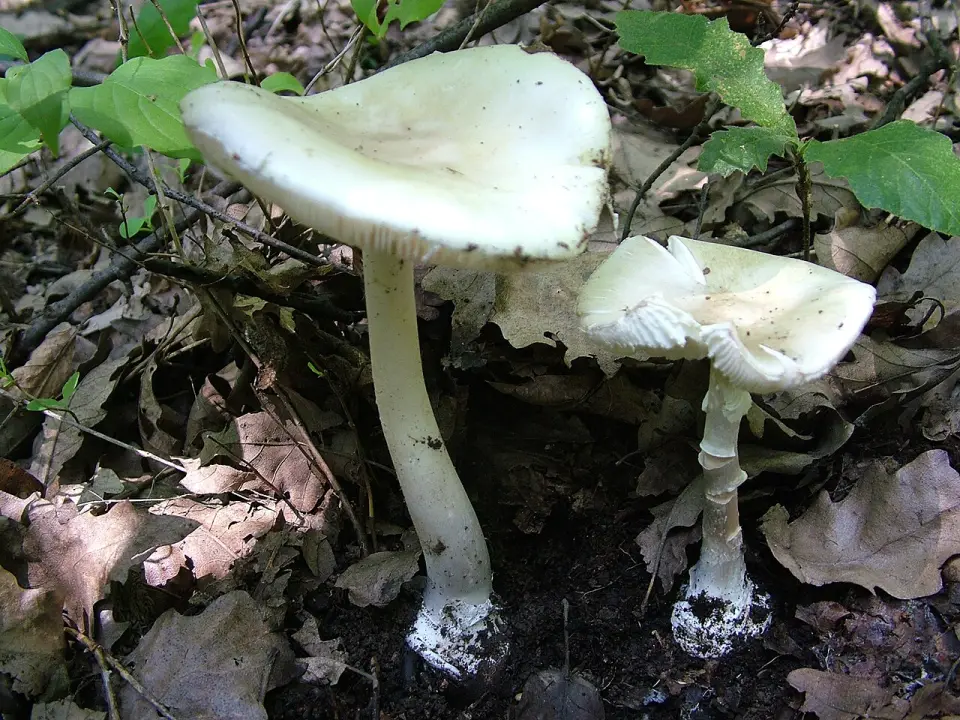
Photo: Sinisa Radic / Wikimedia Commons · CC BY-SA 4.0
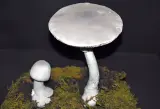
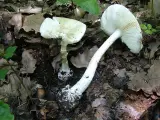
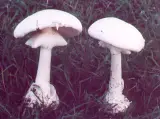
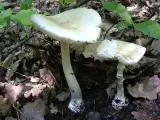
Do not pick and do not taste. It is on the map for reference — so you know it by sight.
White throughout: cap, gills, stem, ring and volva. It is the death cap dressed for spring and carrying the same amatoxins, and its danger lies in the season — it comes up when nobody is thinking about deadly mushrooms — and in the colour, which puts it close to the field mushrooms. The buried, sac-like membranous volva is the thing to look for, which means lifting the whole mushroom out.
Quick facts
- Scientific name
- Amanita verna Bull. ex Lam. (1783)
- Family
- Amanitaceae
- Edibility
- Deadly
- Season
- Apr–Jun
- Usual altitude
- 241–1,011 m
- Under which trees
- Pine, Holm oak, Cork oak, Oak
- IUCN Red List
- Not evaluated (NE)
Where it grows
Holm oak, cork oak and oak woods of the centre and south, and pine woods too, on acid, sandy soils. March to June, peaking after the April rains.
Confused with
- Field mushroomAgaricus campestris
A field mushroom's gills turn pink and then black, and there is no volva at the base. The fool's mushroom keeps white gills all its life. Never cut it off at ground level: the volva is the thing you need to see.
- Bearded amanitaAmanita ovoidea
Also white and with a volva, but much fleshier, with a ring that falls apart into cottony flakes and an unpleasant smell. Picking it is discouraged precisely because of this pairing.
When it has been found
Finds recorded in Spain, by month: 92 in all, from GBIF. They show when it fruits, and also when people go looking.
Where it has been found
Each square is an area of about 20 km with recorded finds; the darker, the more finds. It does not pinpoint patches: for where it is coming up now, see the forecast map.
Where it comes up
Areas where this species is scoring highest right now.
- Montseny massif MassifsWeak · peak moderate
- Maresme ComarcasWeak · peak moderate
- Vallés Oriental ComarcasWeak · peak moderate
- Garrotxa ComarcasWeak · peak moderate
- la Selva ComarcasWeak · peak moderate
- Gironés ComarcasWeak · peak moderate
- Lower Empordà ComarcasVery weak · peak moderate
- Osona ComarcasVery weak · peak moderate
Sources
The usual altitude and the trees come from our own fit of the model to those finds and to the Spanish Forest Map (Mapa Forestal de España).
Would you know them from a photograph? →
The description is for reference. Identifying a mushroom from a photograph is unreliable: do not eat anything you are not sure of.