 MicoRadar
Fool's webcap
Cortinarius orellanus
In Spanish: Cortinario de montaña · In Catalan: Cortinari de muntanya, Cortinari metzinós · In Basque: Sare hiltzaile · In Galician: Arañeira da morte
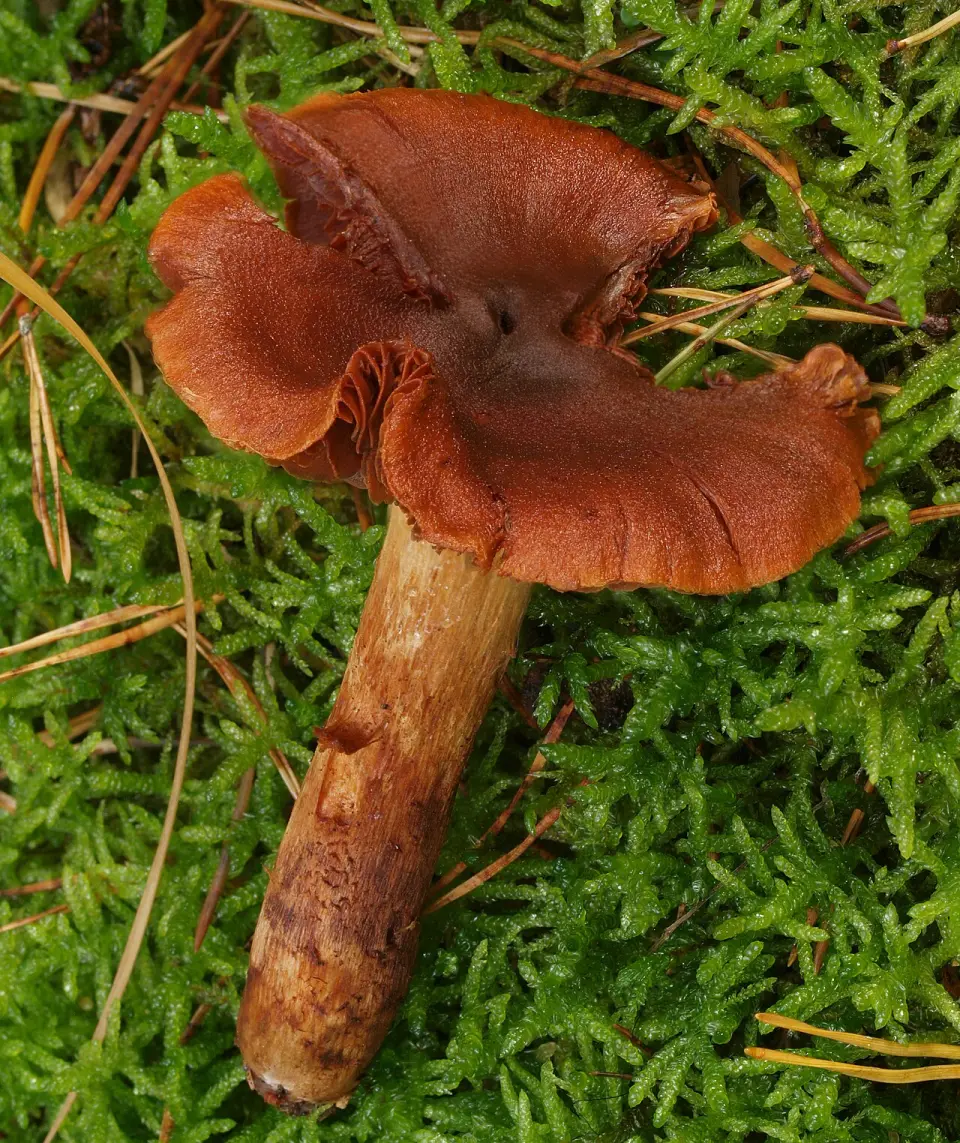
Photo: Andreas Kunze / Wikimedia Commons · CC BY-SA 3.0
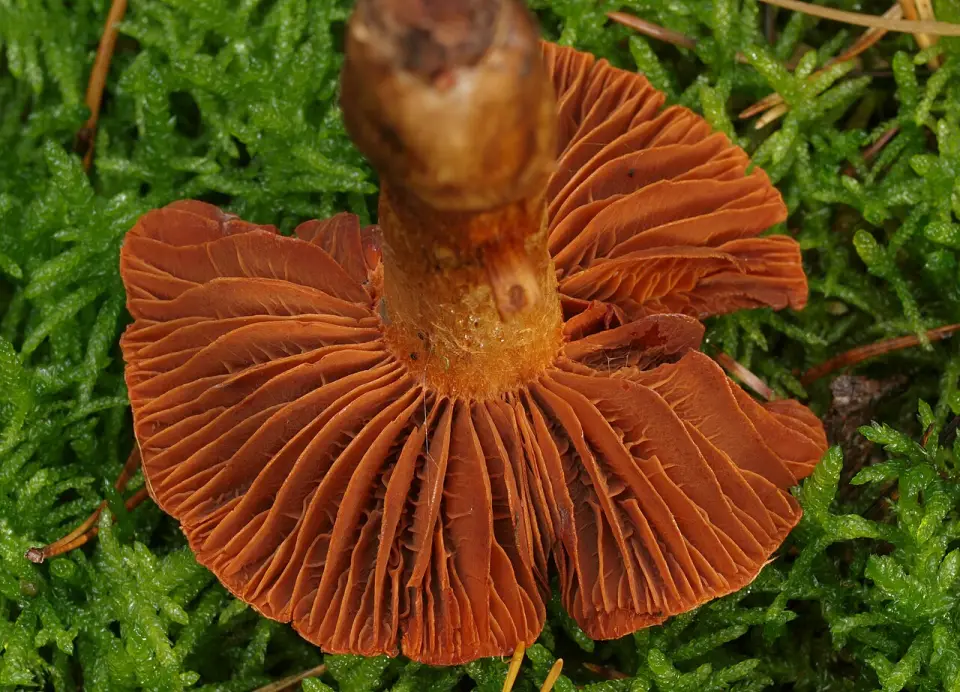
Photo: Andreas Kunze / Wikimedia Commons · CC BY-SA 3.0
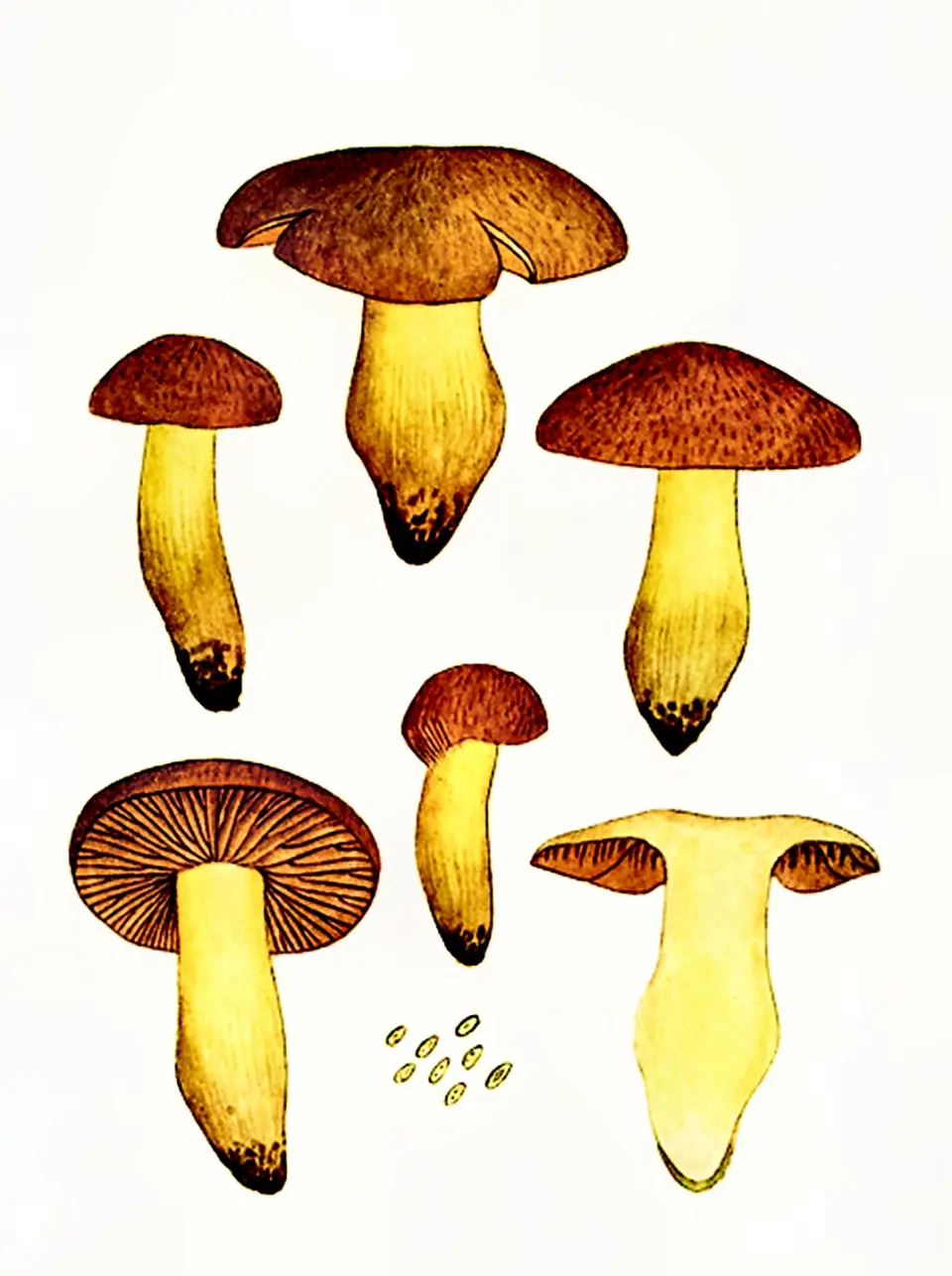
Photo: Giacomo Bresadola / Wikimedia Commons · Public domain
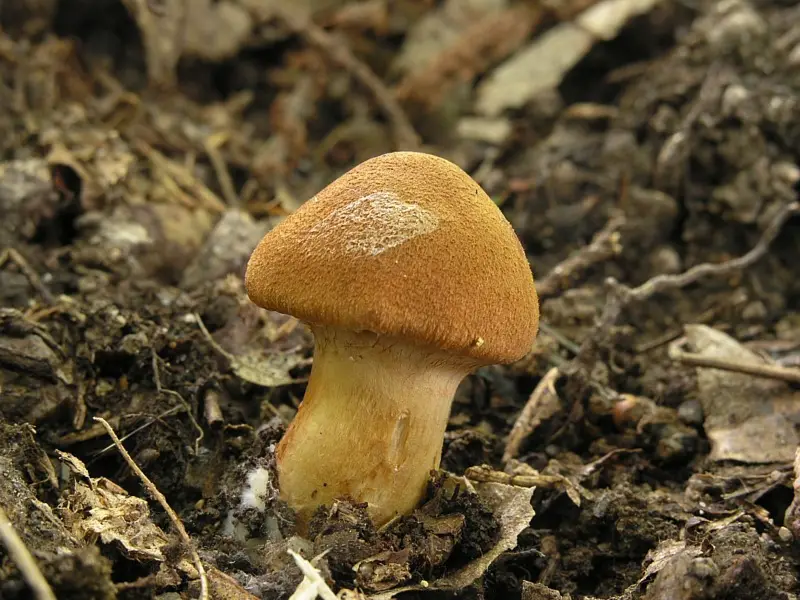
Photo: Thomas Pruß / Wikimedia Commons · CC BY-SA 3.0
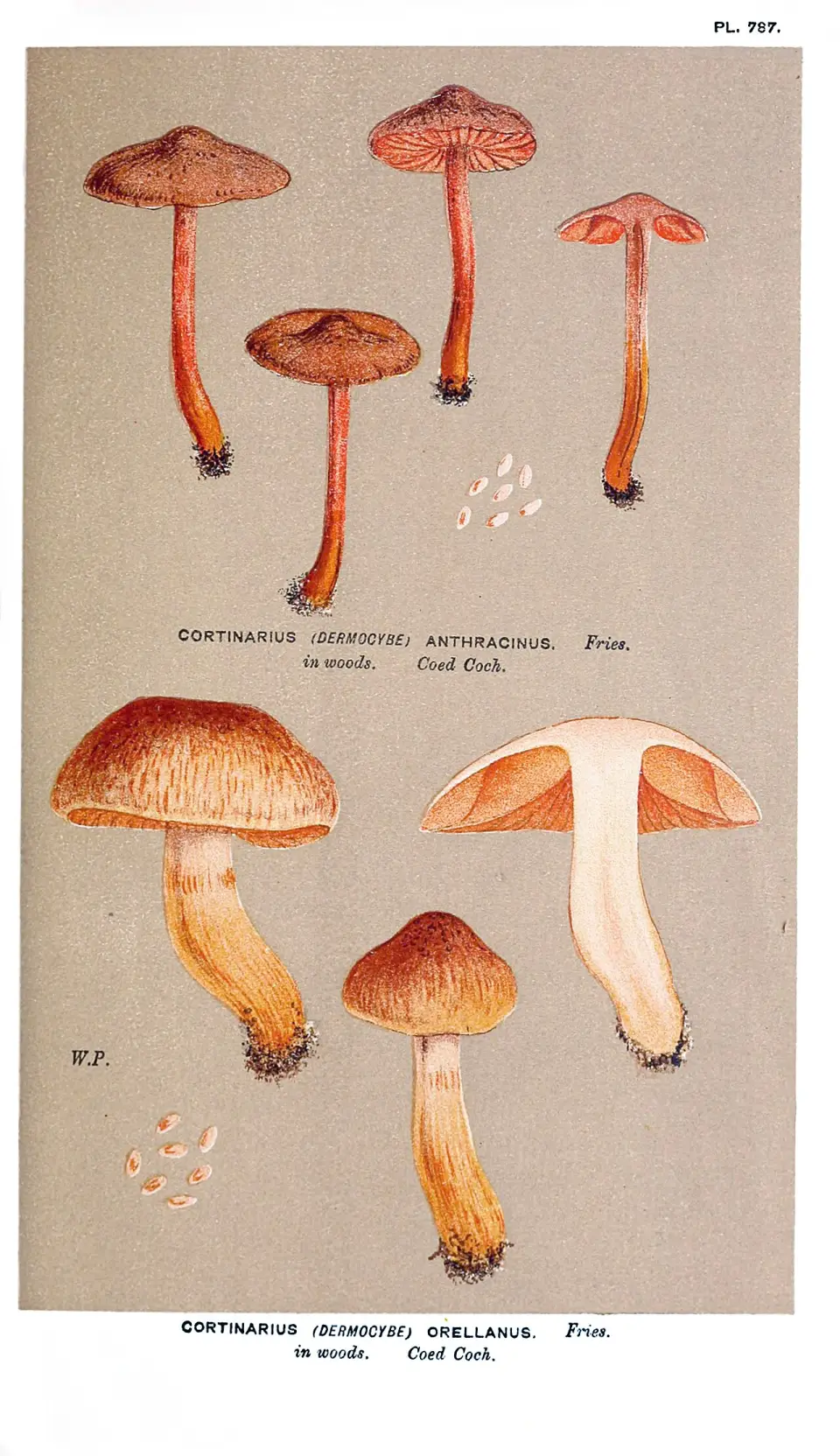
Photo: Mordecai Cubitt Cooke / Wikimedia Commons · Public domain
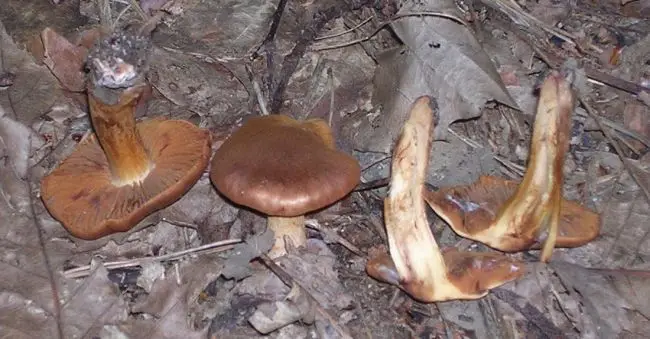
Photo: The original uploader was Michaelll at English Wikipedia. / Wikimedia Commons · CC BY-SA 2.5
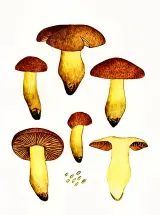
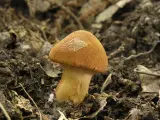
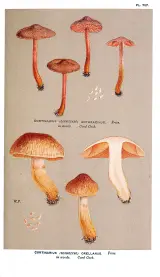
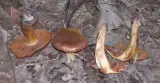
Do not pick and do not taste. It is on the map for reference — so you know it by sight.
A dry, tawny-orange cap, finely felted, with widely spaced gills of the same rusty shade and the remains of a cobweb veil — not a ring — on the stem. It contains orellanine, and that is what sets it apart from everything else here: there are no symptoms. Anything from a few days to three weeks passes with nothing, and by the time the thirst and the kidney pain arrive the damage is irreversible. Whoever ate it does not connect the mushroom with what is happening to them.
Quick facts
- Scientific name
- Cortinarius orellanus Fr. (1838)
- Family
- Cortinariaceae
- Edibility
- Deadly
- Season
- Sep–Nov
- Usual altitude
- 312–1,226 m
- Under which trees
- Oak, Holm oak, Beech, Chestnut, Hazel
- IUCN Red List
- Not evaluated (NE)
Where it grows
Oak, beech and chestnut on acid soil, often among heather and bilberry. September to November, in the northern half and the north-western ranges.
Confused with
- ChanterelleCantharellus cibarius
A chanterelle has thick blunt folds running down the stem, not gills, and smells of apricot. The orange colour is the only thing they share.
- False chanterelleHygrophoropsis aurantiaca
Thin, crowded gills of a vivid orange and soft flesh. Its white spore print separates it from the webcap, whose print is rusty.
When it has been found
Finds recorded in Spain, by month: 102 in all, from GBIF. They show when it fruits, and also when people go looking.
Where it has been found
Each square is an area of about 20 km with recorded finds; the darker, the more finds. It does not pinpoint patches: for where it is coming up now, see the forecast map.
Where it comes up
Areas where this species is scoring highest right now.
- Montseny massif MassifsExcellent · peak excellent
- Garrotxa ComarcasExcellent · peak excellent
- Osona ComarcasGood · peak excellent
- la Selva ComarcasGood · peak excellent
- Vallés Oriental ComarcasGood · peak excellent
- Ripollés ComarcasModerate · peak excellent
- Pirineo ComarcasModerate · peak excellent
- Larraun-Leitzaldea ComarcasModerate · peak excellent
Sources
The usual altitude and the trees come from our own fit of the model to those finds and to the Spanish Forest Map (Mapa Forestal de España).
Would you know them from a photograph? →
The description is for reference. Identifying a mushroom from a photograph is unreliable: do not eat anything you are not sure of.