 MicoRadar
Deadly fibrecap
Inocybe erubescens
Also called: Red-staining inocybe, Brick-red tear mushroom
In Spanish: Inocibe de Patouillard, Inocibe lobulado, Bruja · In Basque: Inozibe hiltzaile
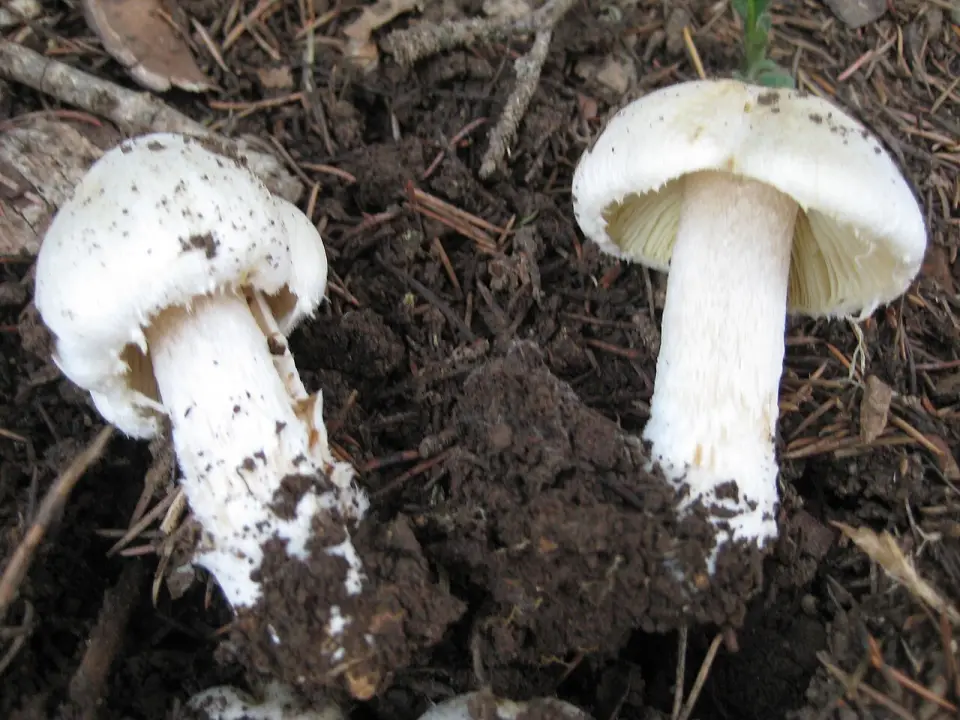
Photo: Nadine Modad / Wikimedia Commons · CC BY-SA 3.0
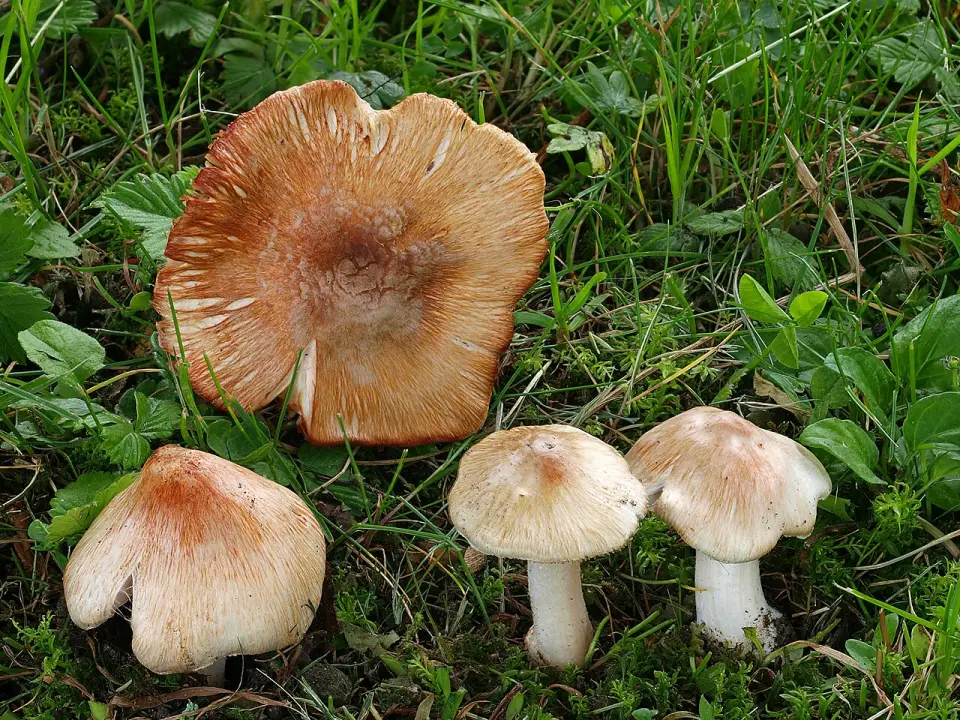
Photo: Andreas Kunze / Wikimedia Commons · CC BY-SA 3.0
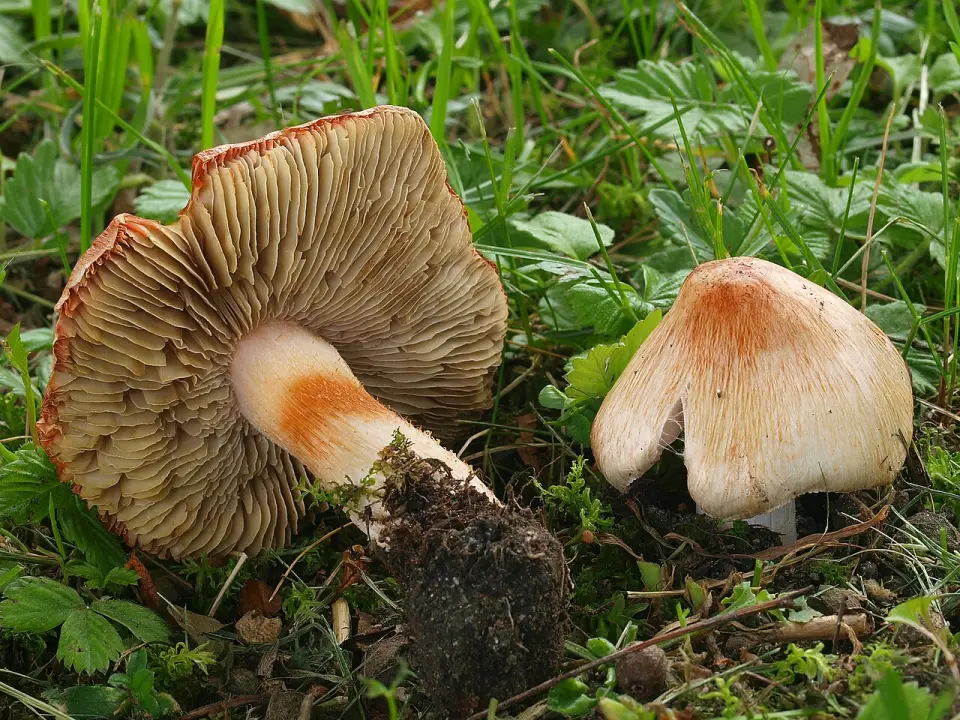
Photo: Andreas Kunze / Wikimedia Commons · CC BY-SA 3.0
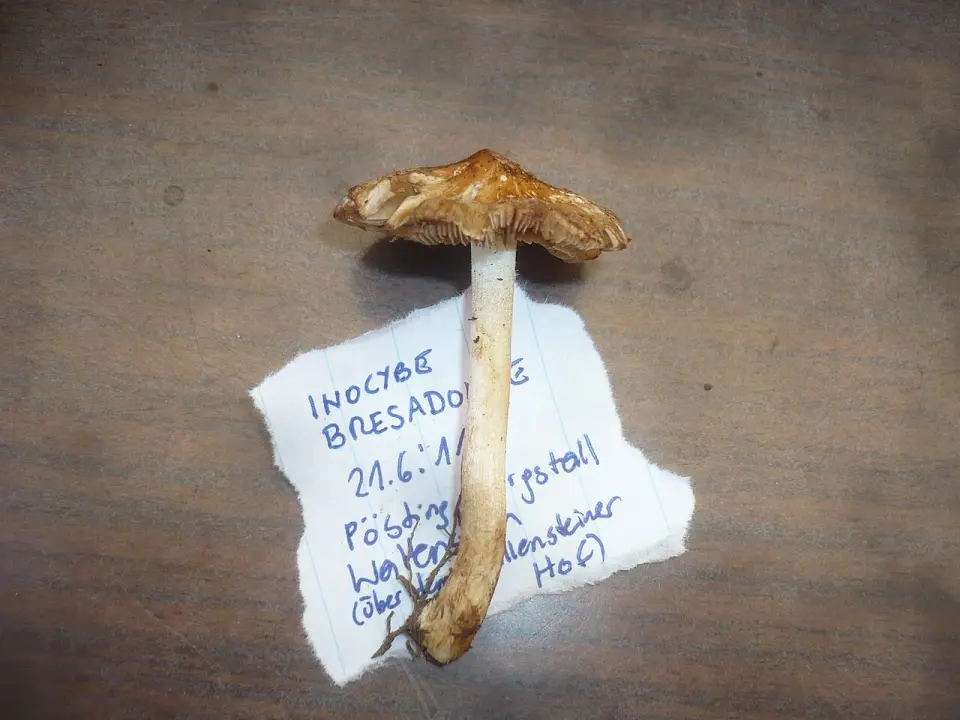
Photo: This image was created by user Gerhard Koller (Gerhard) at Mushroom Observer, a source for mycological images.You can contact this user here. / Wikimedia Commons · CC BY-SA 3.0
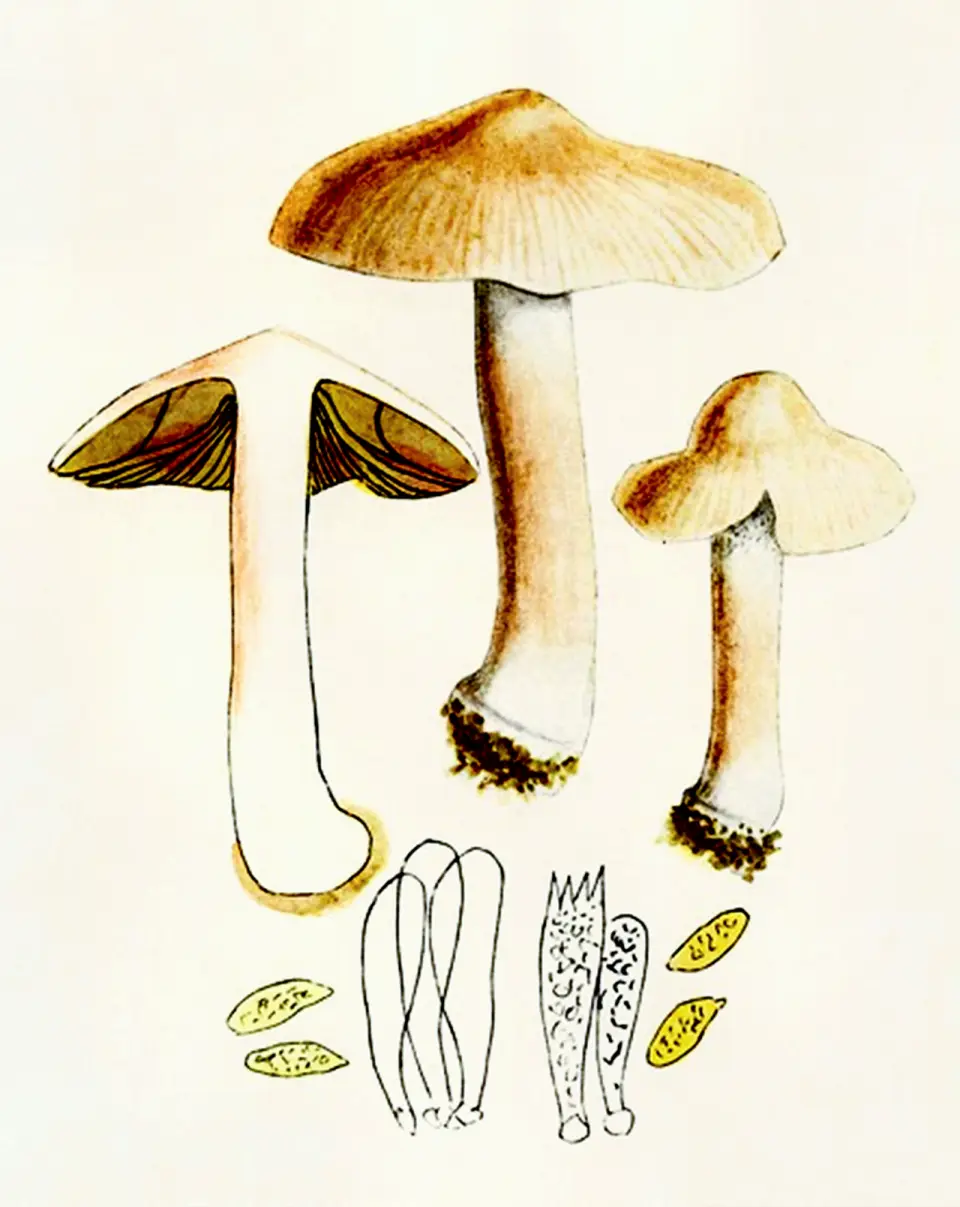
Photo: Giacomo Bresadola / Wikimedia Commons · Public domain
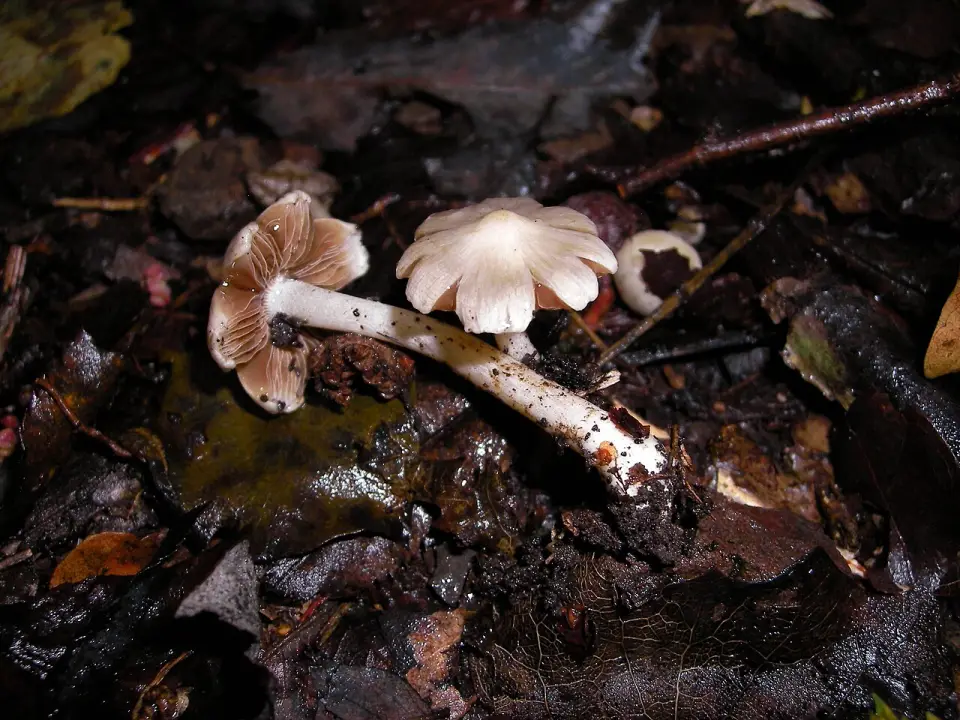
Photo: Danny Steaven / Wikimedia Commons · CC BY-SA 3.0
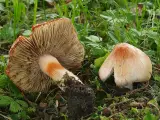
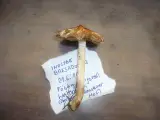
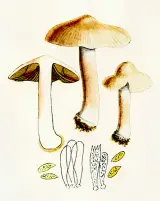
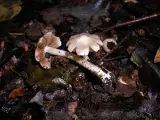
Do not pick and do not taste. It is on the map for reference — so you know it by sight.
A conical then bell-shaped cap, cream-white and splitting into radial fibres, which reddens — on the cap, the stem and in the flesh — wherever it is handled or as it ages. It holds muscarine in very high concentration: heavy sweating, salivation, streaming eyes, contracted pupils and a slowed heart within half an hour. It is one of the few poisonings with an antidote, atropine, and it has still killed.
Quick facts
- Scientific name
- Inocybe erubescens A.Blytt (1905)
- Family
- Inocybaceae
- Edibility
- Deadly
- Season
- Apr–Jul
- Usual altitude
- 63–1,011 m
- Under which trees
- Beech, Oak, Holm oak
- Dangerous look-alike
- St George's mushroom · Calocybe gambosa
- IUCN Red List
- Not evaluated (NE)
Where it grows
Beech, oak and parkland on limestone, often on the same grassy banks where St George's mushroom comes up. April to July.
Confused with
- St George's mushroomCalocybe gambosadangerous
The most dangerous confusion of the Spanish spring: same season, same limestone, same grassy banks, similar size, both pale. St George's smells strongly of fresh flour, has crowded white gills and never reddens; the fibrecap splits into fibres and stains red.
- Field mushroomAgaricus campestris
A field mushroom has pink gills that blacken, and a ring; the fibrecap has no ring and its gills go from white to clay brown.
When it has been found
Finds recorded in Spain, by month: 47 in all, from GBIF. They show when it fruits, and also when people go looking.
Where it has been found
Each square is an area of about 20 km with recorded finds; the darker, the more finds. It does not pinpoint patches: for where it is coming up now, see the forecast map.
Where it comes up
Areas where this species is scoring highest right now.
- Montseny massif MassifsExcellent · peak excellent
- Garrotxa ComarcasExcellent · peak excellent
- Osona ComarcasGood · peak excellent
- Vallés Oriental ComarcasGood · peak excellent
- la Selva ComarcasModerate · peak excellent
- Larraun-Leitzaldea ComarcasModerate · peak excellent
- Pla de l'Estany ComarcasModerate · peak excellent
- Sakana ComarcasModerate · peak excellent
Sources
The usual altitude and the trees come from our own fit of the model to those finds and to the Spanish Forest Map (Mapa Forestal de España).
Would you know them from a photograph? →
The description is for reference. Identifying a mushroom from a photograph is unreliable: do not eat anything you are not sure of.