 MicoRadar
Deadly dapperling
Lepiota brunneoincarnata
In Spanish: Lepiota mortal, Lepiota marrón rojiza · In Catalan: Palometa metzinosa, Cogomina bru vermellosa · In Basque: Galanperna arre-arrosa, Galanperna ardo-koloreko
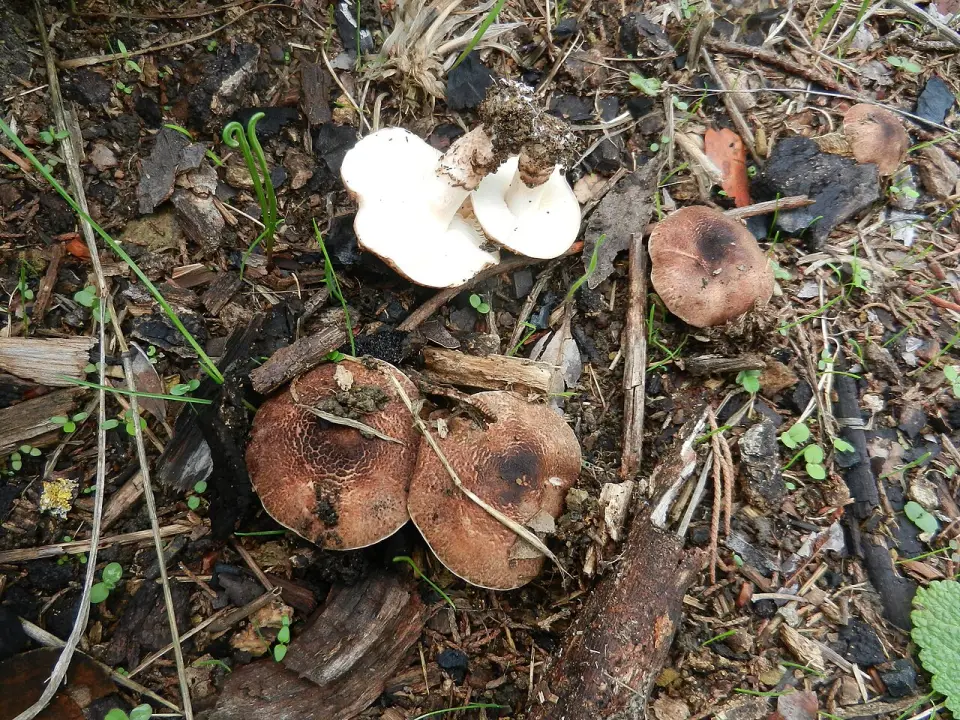
Photo: Murselin Guney / Wikimedia Commons · CC BY-SA 3.0
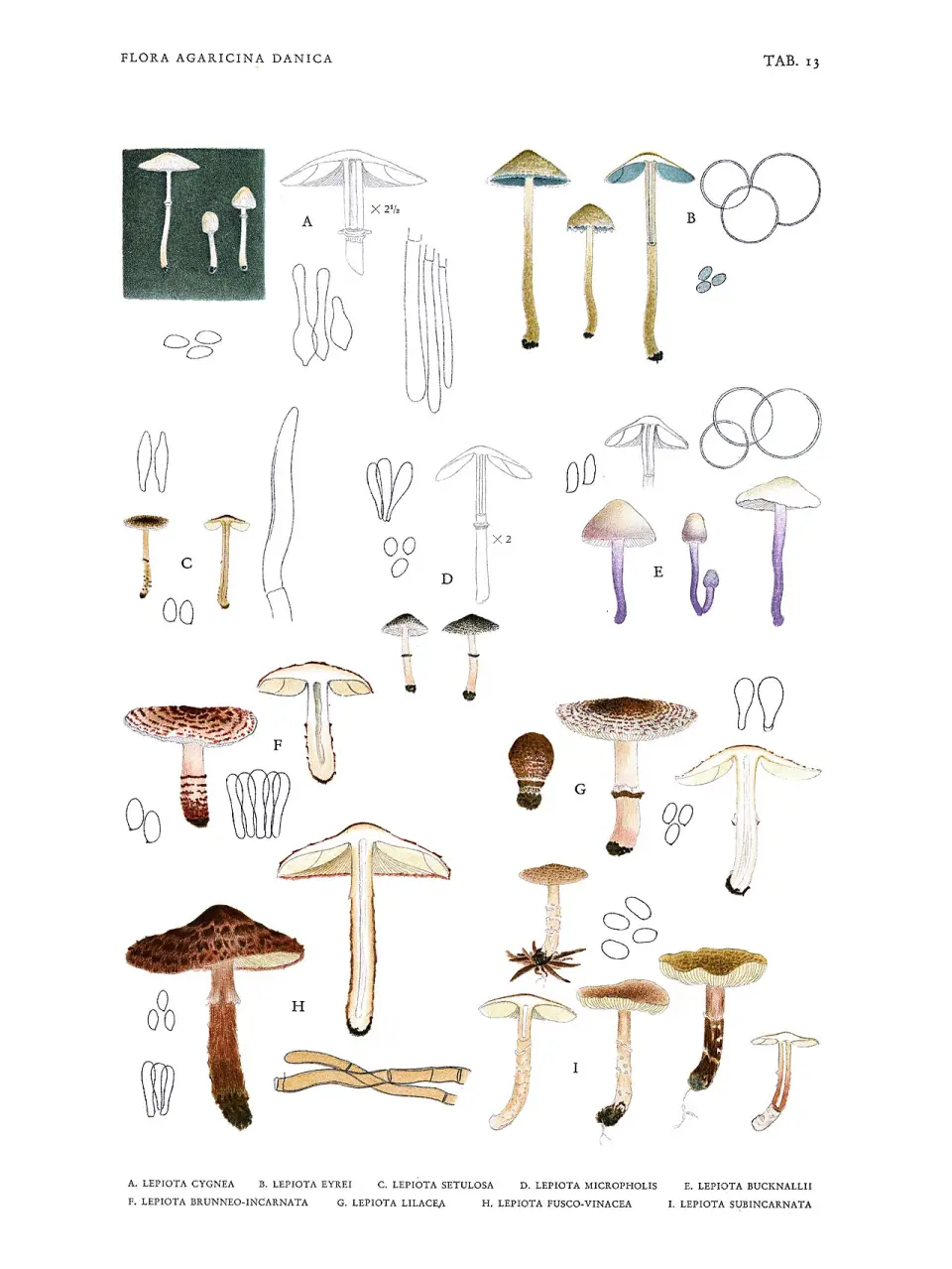
Photo: J.E.Lange / Wikimedia Commons · Public domain
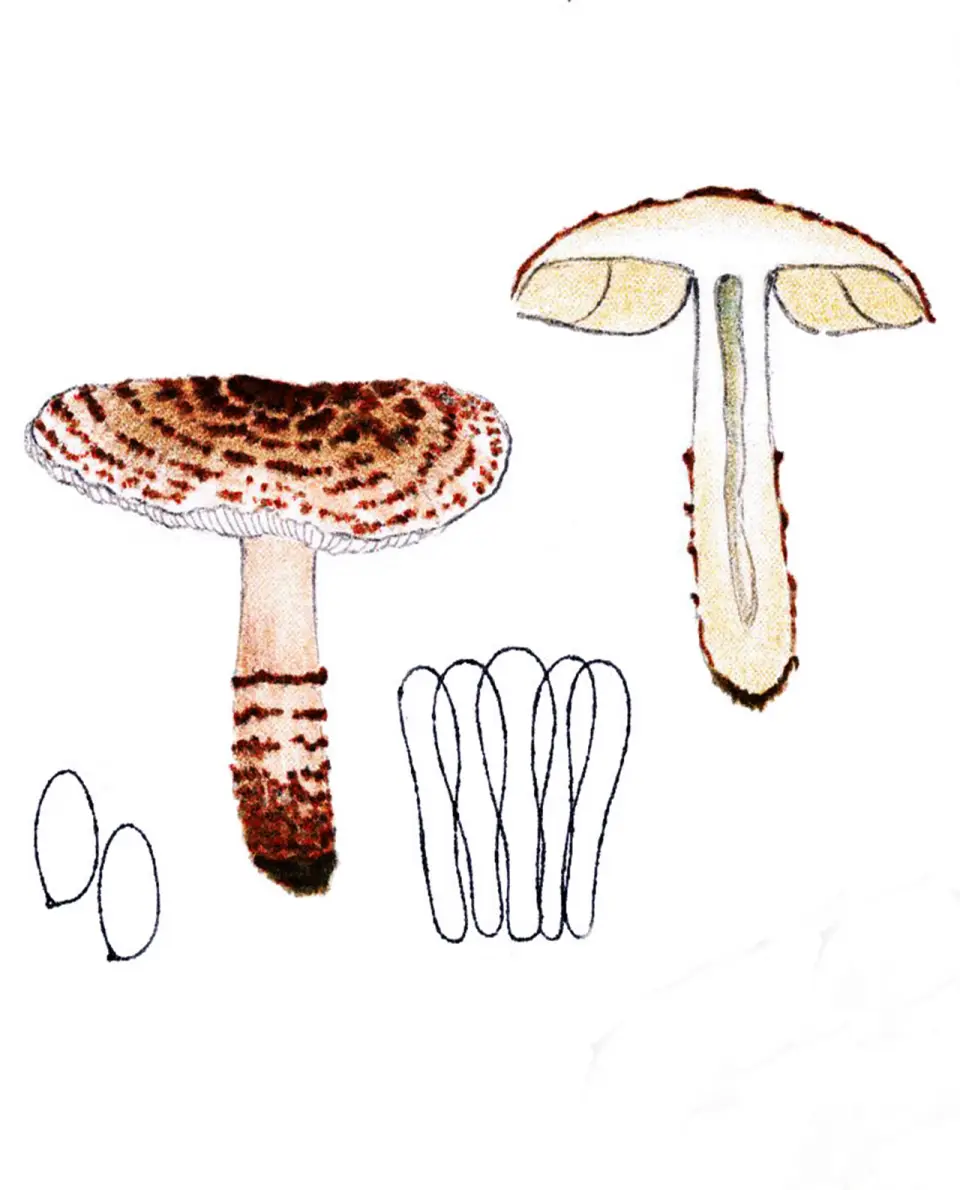
Photo: Jakob Emanuel Lange / Wikimedia Commons · Public domain
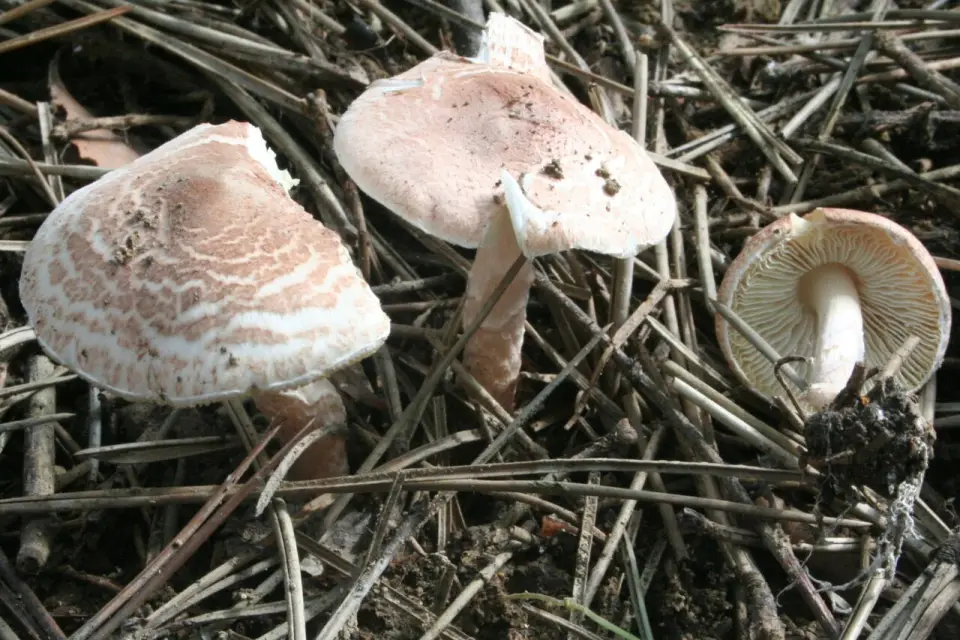
Photo: User:Strobilomyces / Wikimedia Commons · CC BY-SA 3.0
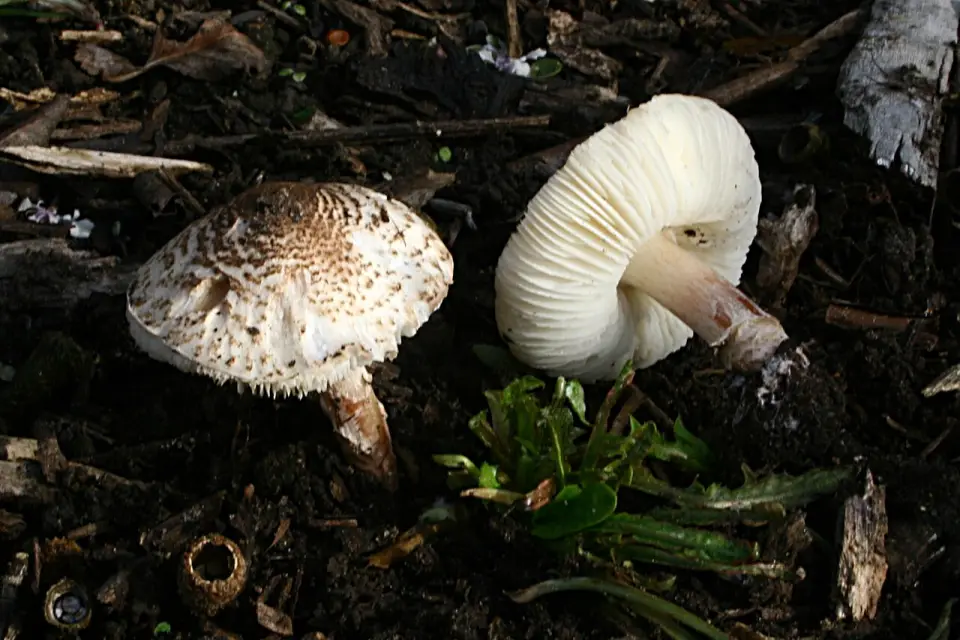
Photo: Strobilomyces / Wikimedia Commons · CC BY-SA 4.0
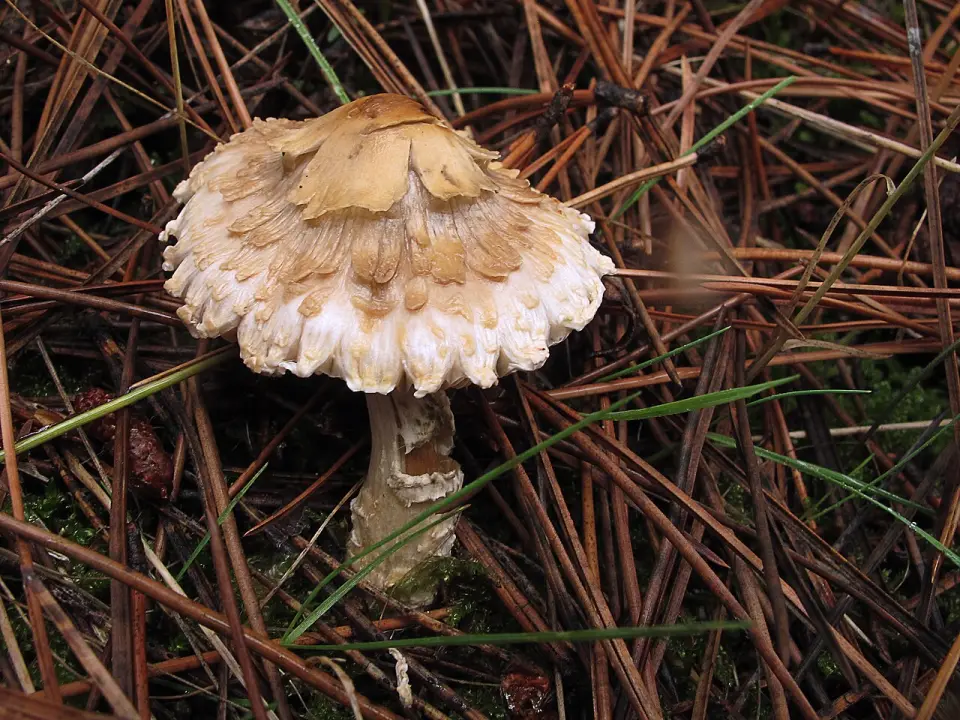
Photo: jacilluch / Wikimedia Commons · CC BY-SA 2.0
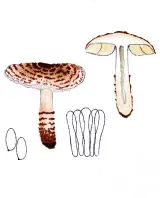
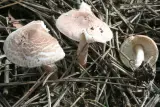
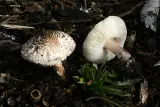
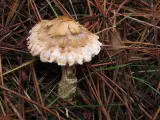
Do not pick and do not taste. It is on the map for reference — so you know it by sight.
A parasol in miniature, barely five centimetres across, with a cream cap in concentric brown scales and flesh that turns pink in the stem when cut. A fleeting ring, white gills, a fruity smell. It holds enough amatoxin to kill an adult with two or three caps, and it causes fatal poisonings in Spain almost every autumn — because it comes up on lawns and in parks, where nobody expects to meet anything dangerous.
Quick facts
- Scientific name
- Lepiota brunneoincarnata Chodat & C.Martín (1889)
- Family
- Agaricaceae
- Edibility
- Deadly
- Season
- Sep–Nov
- Usual altitude
- 25–963 m
- Under which trees
- Holm oak, Cork oak, Pine, Oak
- IUCN Red List
- Not evaluated (NE)
Where it grows
Lawns, parks, verges, path edges and dehesas; trampled, nitrogen-rich ground, almost always outside closed forest. September to November, mostly in the Mediterranean half.
Confused with
- Parasol mushroomMacrolepiota procera
Far larger — a parasol worth picking has a cap over ten centimetres — with a snakeskin-mottled stem and a double ring that slides. Size is the rule: no small garden dapperling belongs in the basket.
- Fairy ring champignonMarasmius oreades
The same size and on the same lawns, but with no ring, widely spaced gills and a tough stem that will not snap. The champignon comes up in rings; the dapperling scattered.
When it has been found
Finds recorded in Spain, by month: 181 in all, from GBIF. They show when it fruits, and also when people go looking.
Where it has been found
Each square is an area of about 20 km with recorded finds; the darker, the more finds. It does not pinpoint patches: for where it is coming up now, see the forecast map.
Where it comes up
Areas where this species is scoring highest right now.
- Montseny massif MassifsExcellent · peak excellent
- Maresme ComarcasExcellent · peak excellent
- Vallés Oriental ComarcasExcellent · peak excellent
- Pla de l'Estany ComarcasExcellent · peak excellent
- Gironés ComarcasExcellent · peak excellent
- Barcelonés ComarcasExcellent · peak excellent
- Lower Empordà ComarcasExcellent · peak excellent
- Garrotxa ComarcasExcellent · peak excellent
Sources
The usual altitude and the trees come from our own fit of the model to those finds and to the Spanish Forest Map (Mapa Forestal de España).
Would you know them from a photograph? →
The description is for reference. Identifying a mushroom from a photograph is unreliable: do not eat anything you are not sure of.