 MicoRadar
Horn of plenty
Craterellus cornucopioides
Also called: Black trumpet, Trumpet of the dead
In Spanish: Trompeta de los muertos, Trompeta negra, Cuerno de la abundancia · In Catalan: Trompeta negra, Trompeta de morts, Trompeta, Rossinyol negre, Vaqueta negra · In Basque: Saltsa-perretxiko beltz · In Galician: Trompeta dos mortos, Cantarela moura
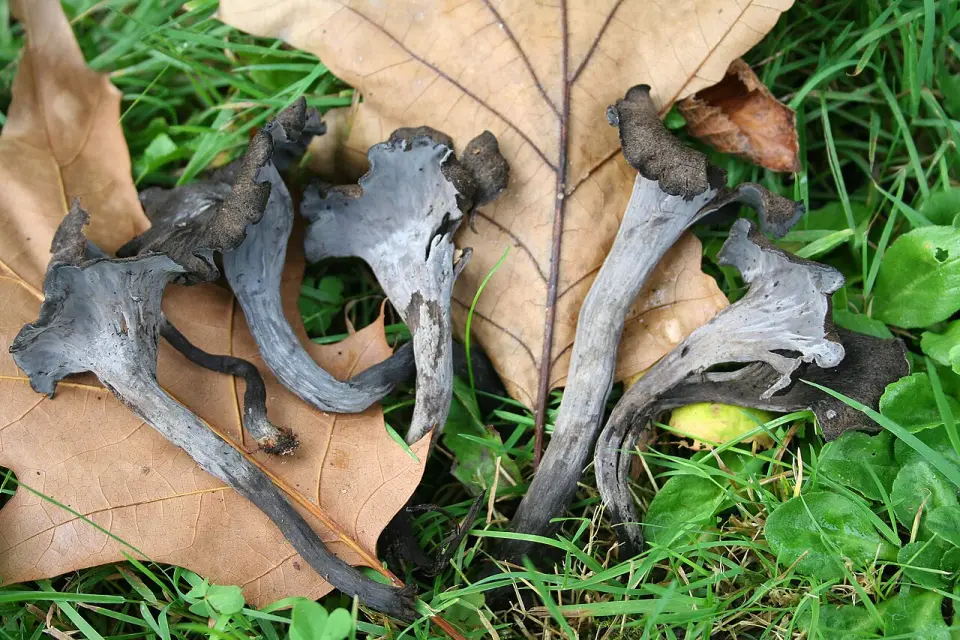
Photo: Jean-Pol GRANDMONT / Wikimedia Commons · CC BY 3.0
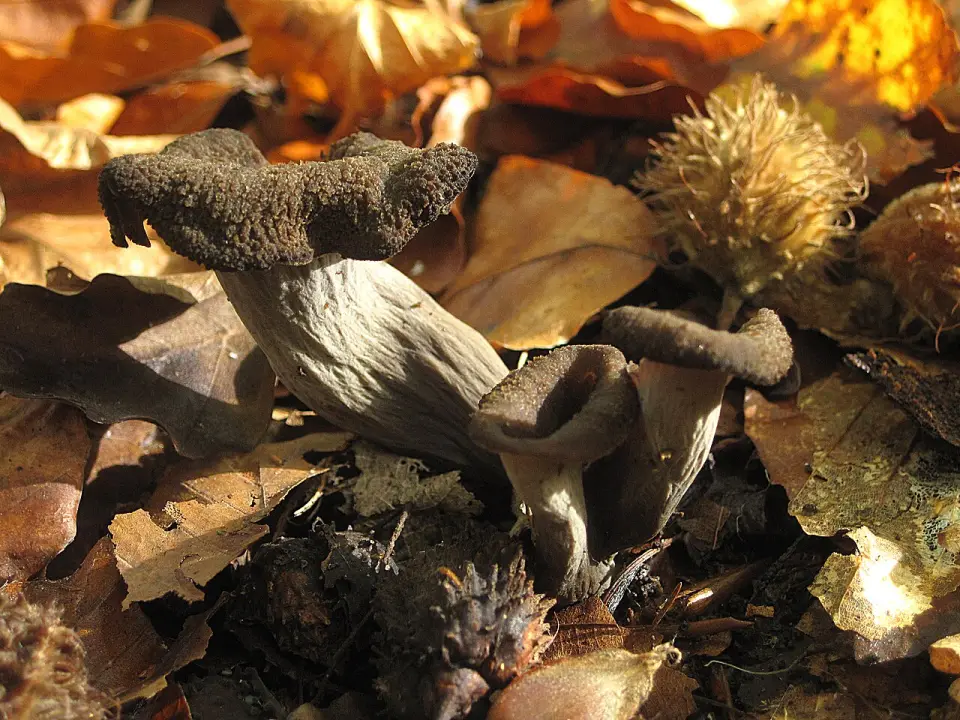
Photo: Jean-Pol GRANDMONT / Wikimedia Commons · CC BY 3.0
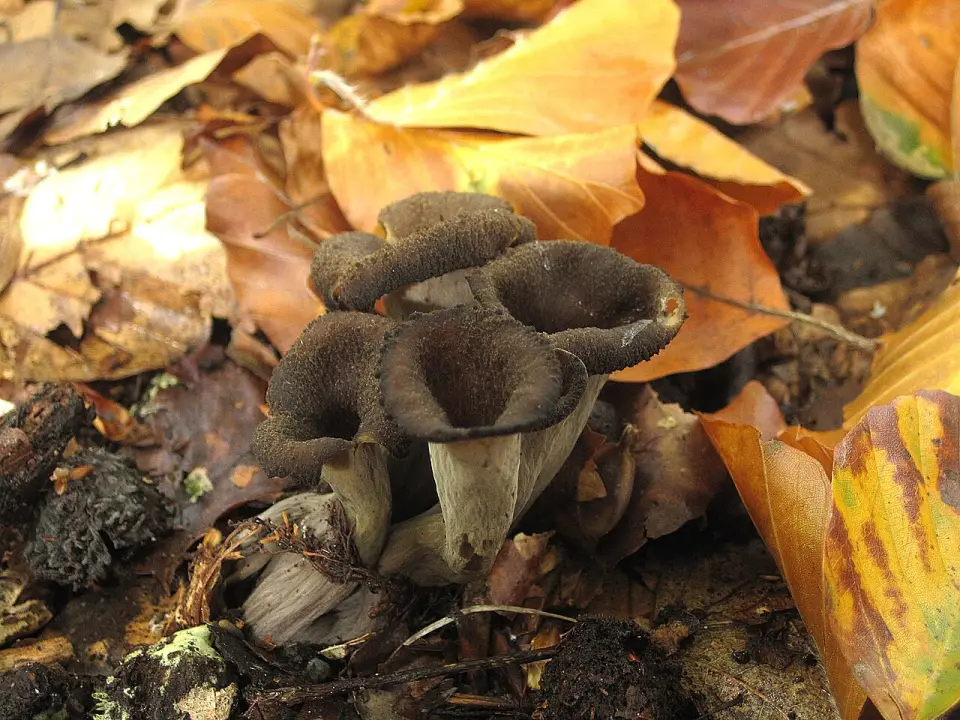
Photo: Jean-Pol GRANDMONT / Wikimedia Commons · CC BY 3.0
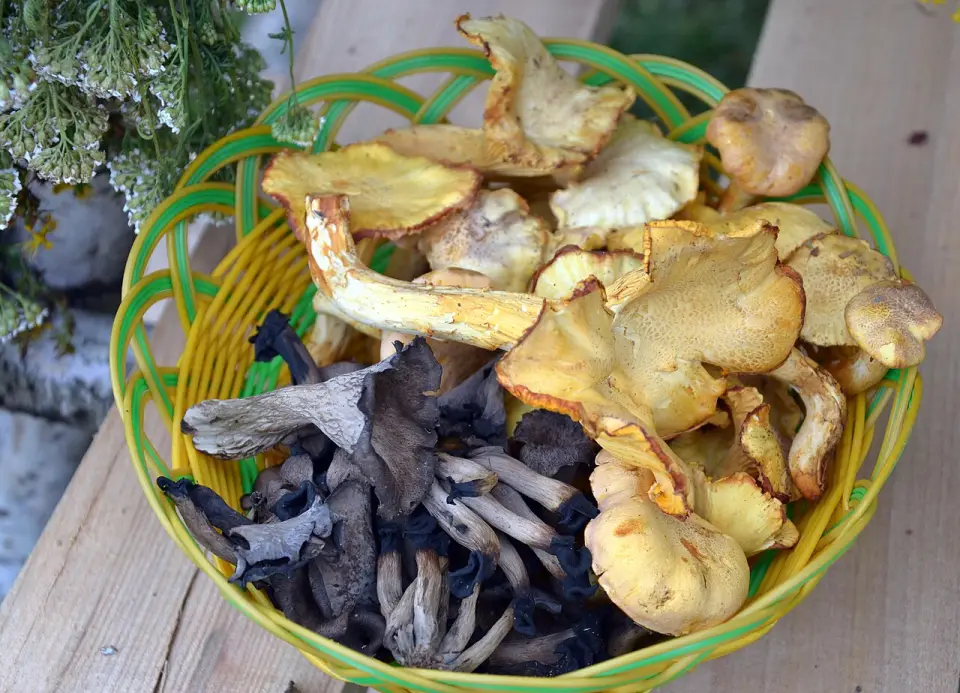
Photo: Silar / Wikimedia Commons · CC BY-SA 4.0
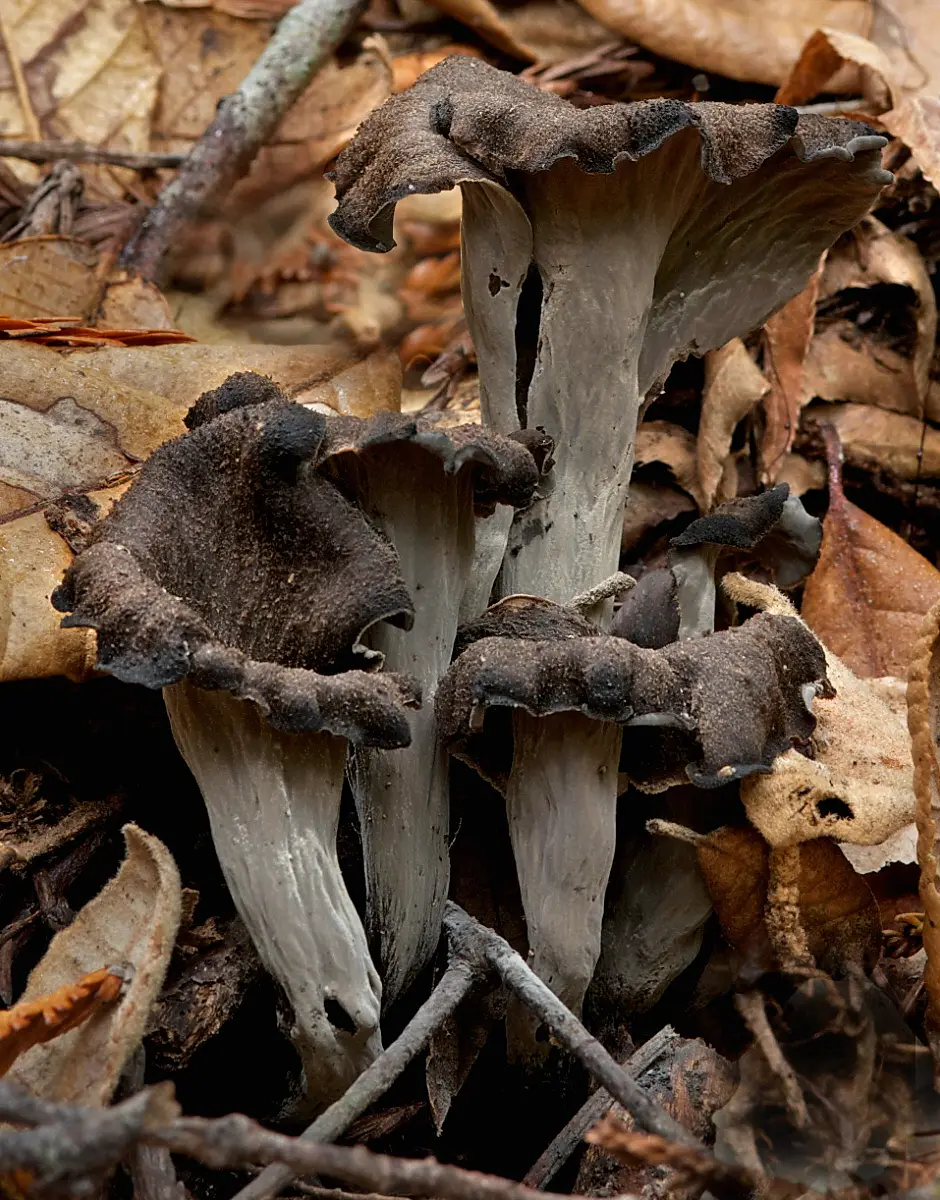
Photo: This image was created by user John Kirkpatrick (natashadak) at Mushroom Observer, a source for mycological images.You can contact this user here. / Wikimedia Commons · CC BY-SA 3.0
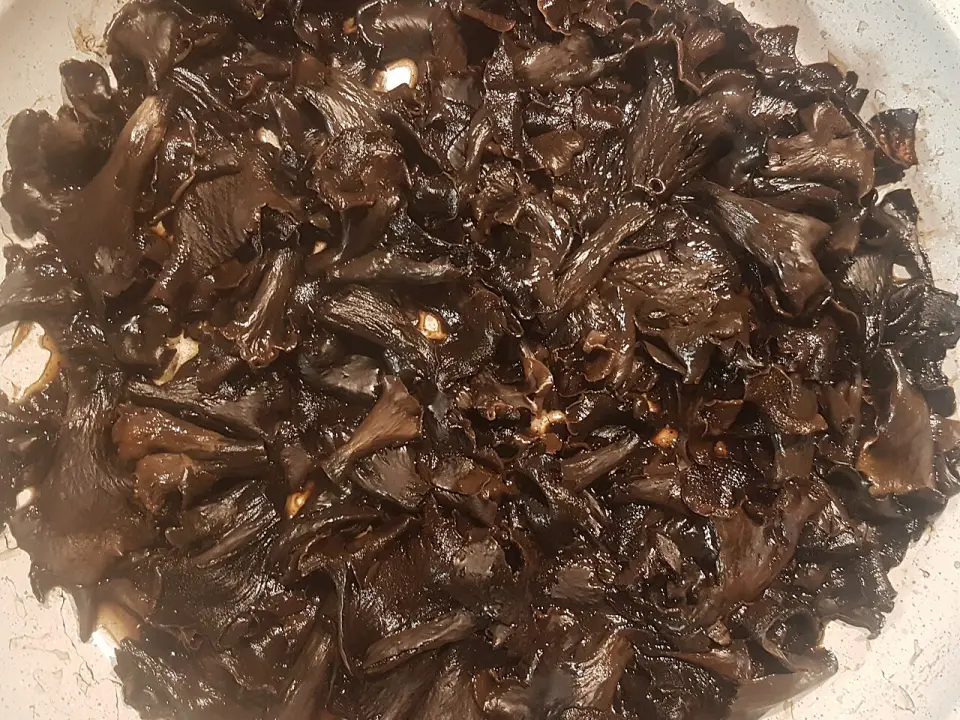
Photo: Fabricio Cardenas / Wikimedia Commons · CC BY-SA 4.0
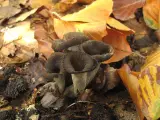
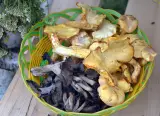
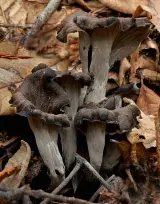
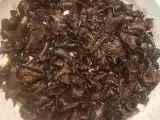
The black trumpet: a mushroom with no gills at all, a thin dark grey funnel open right down to the base. It disappears into the leaf litter, yet grows in dense colonies. Dried it gains a deep, truffle-like aroma, and cooks rate it above fresh.
Quick facts
- Scientific name
- Craterellus cornucopioides (L.) Pers. (1825)
- Family
- Hydnaceae
- Edibility
- Edible
- Season
- Sep–Jan
- Usual altitude
- 182–1,079 m
- Under which trees
- Oak, Beech, Chestnut, Holm oak, Cork oak
- IUCN Red List
- Least concern (LC)
Where it grows
Shaded beech and oak woods, damp hollows, limestone and clay soils. September to January: mostly October and November in the north, December and January in the south.
When it has been found
Finds recorded in Spain, by month: 720 in all, from GBIF. They show when it fruits, and also when people go looking.
Where it has been found
Each square is an area of about 20 km with recorded finds; the darker, the more finds. It does not pinpoint patches: for where it is coming up now, see the forecast map.
Where it comes up
Areas where this species is scoring highest right now.
- Montseny massif MassifsExcellent · peak excellent
- Garrotxa ComarcasExcellent · peak excellent
- la Selva ComarcasExcellent · peak excellent
- Osona ComarcasGood · peak excellent
- Vallés Oriental ComarcasGood · peak excellent
- Gironés ComarcasGood · peak excellent
- Maresme ComarcasGood · peak excellent
- Lower Empordà ComarcasModerate · peak excellent
In guides and news
- Weekend 17–18 October: good-condition area up for all five leading species
State of the forest
Sources
The usual altitude and the trees come from our own fit of the model to those finds and to the Spanish Forest Map (Mapa Forestal de España).
Would you know them from a photograph? →
The description is for reference. Identifying a mushroom from a photograph is unreliable: do not eat anything you are not sure of.