 MicoRadar
Winter chanterelle
Craterellus tubaeformis
Also called: Yellowfoot, Funnel chanterelle
In Spanish: Rebozuelo atrompetado, Angula gris, Angula de monte, Gula de monte · In Catalan: Rossinyol embudat, Rossinyolic embudat, Fals camagroc · In Basque: Saltsa-perretxiko horilun · In Galician: Trompeta do inverno, Trompeta con pregamentos
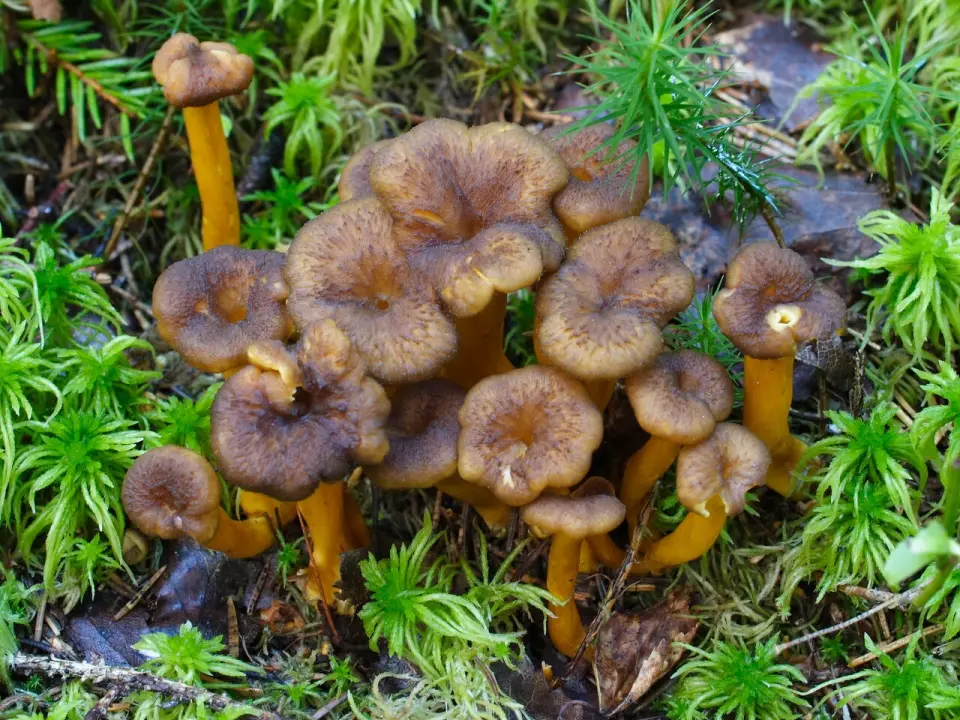
Photo: Miika Silfverberg from Vantaa, Finland / Wikimedia Commons · CC BY-SA 2.0
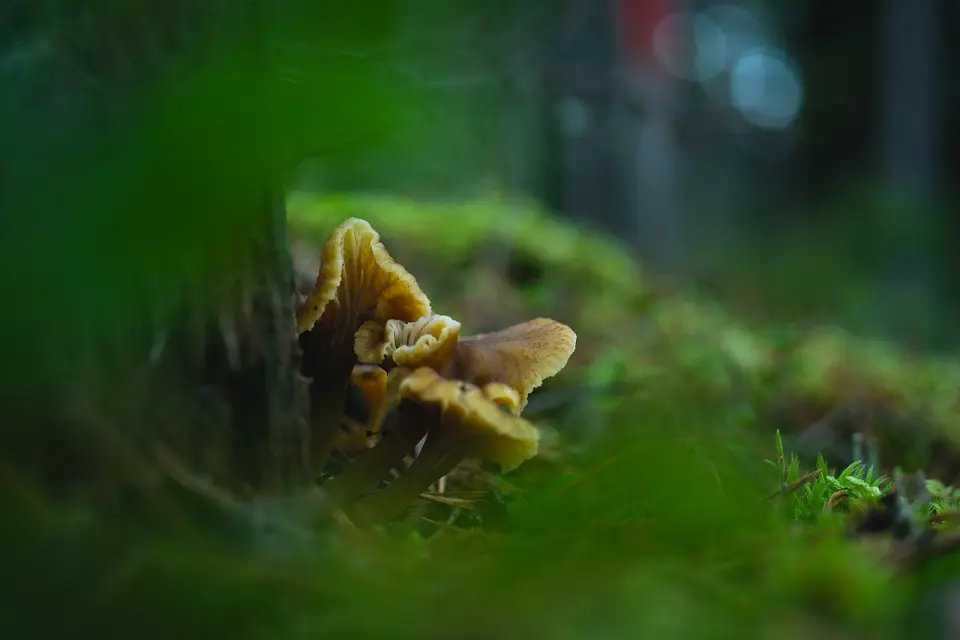
Photo: Tero Karppinen from Finland / Wikimedia Commons · CC BY 2.0
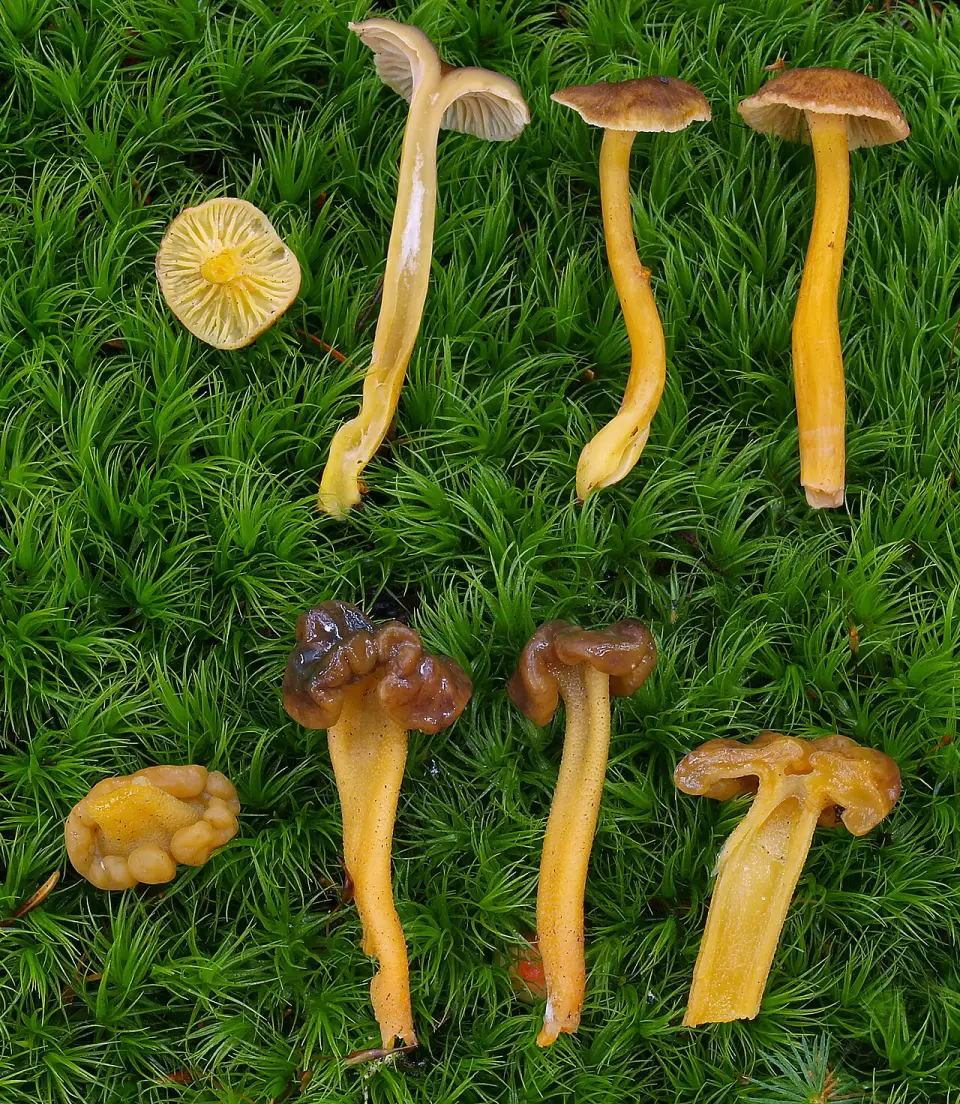
Photo: Andreas Kunze / Wikimedia Commons · CC BY-SA 3.0
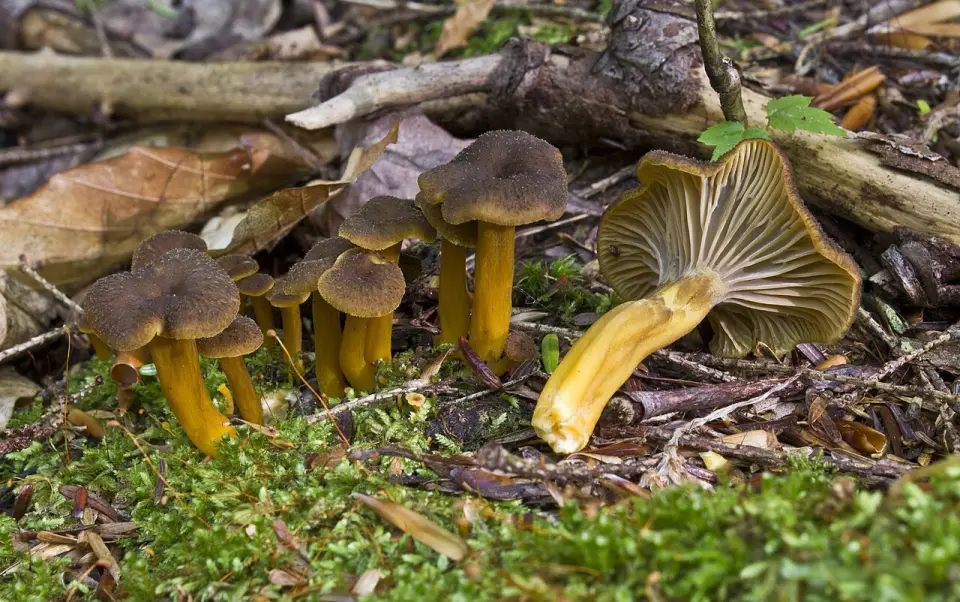
Photo: This image was created by user {{{2}}} at Mushroom Observer, a source for mycological images.You can contact this user here. / Wikimedia Commons · CC BY-SA 3.0
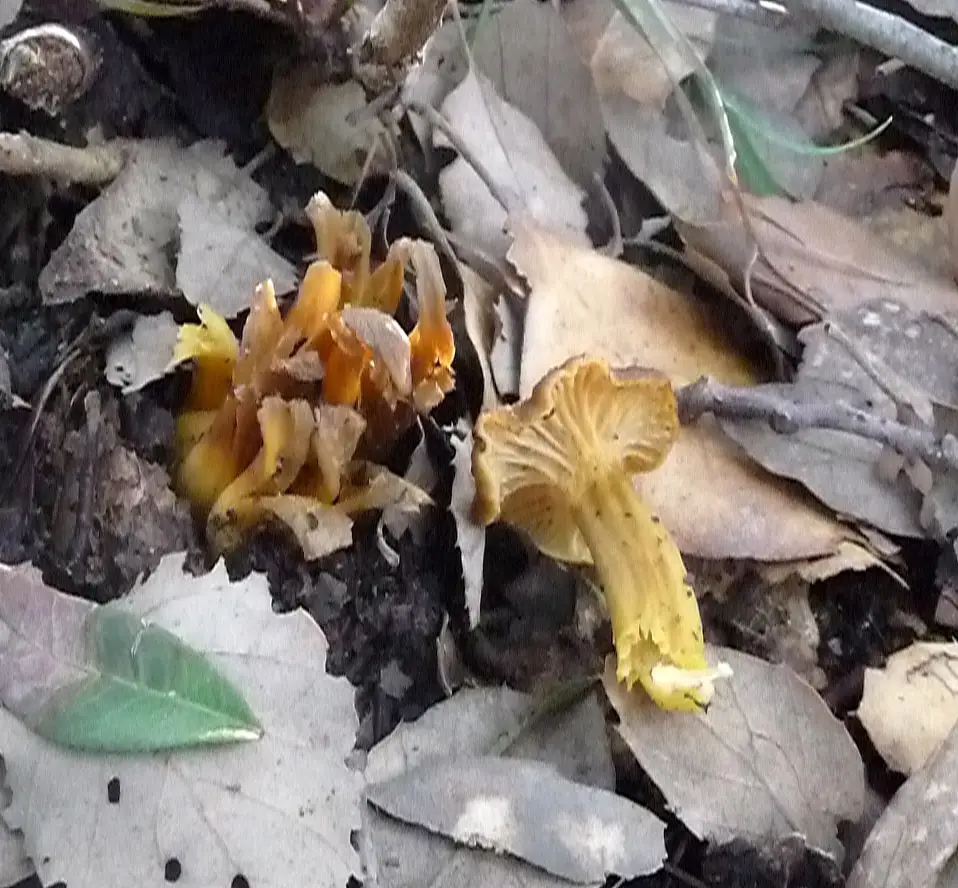
Photo: gailhampshire from Cradley, Malvern, U.K / Wikimedia Commons · CC BY 2.0
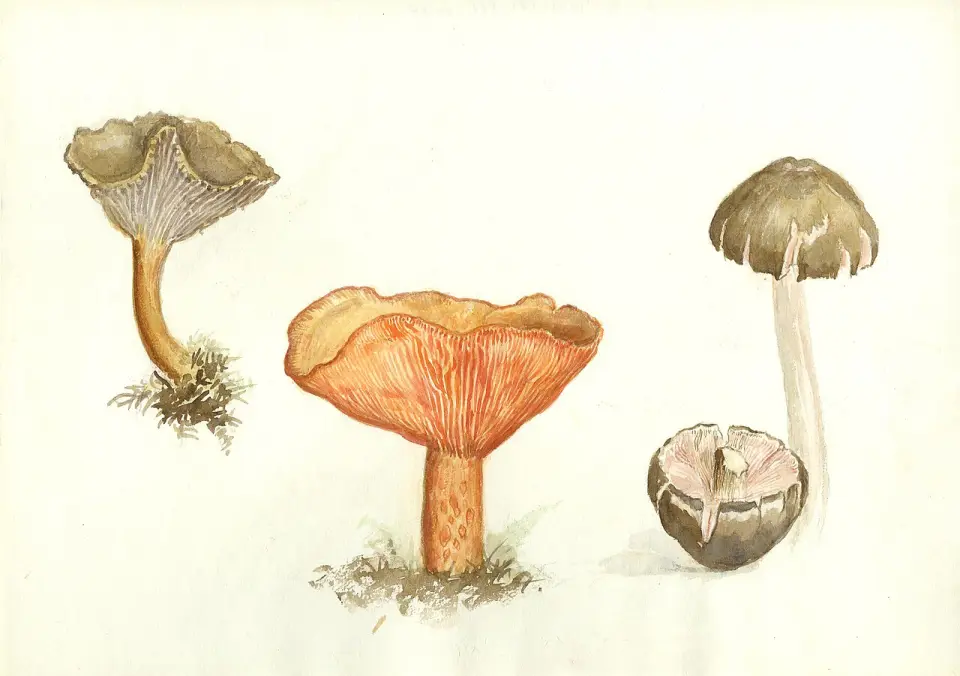
Photo: Nova Scotia Archives / Wikimedia Commons · Public domain
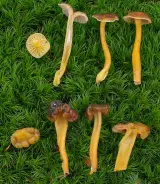
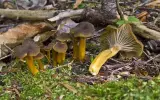
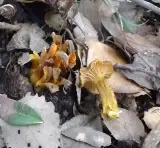
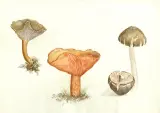
A slender mushroom with a brown, funnel-shaped cap, branching greyish-yellow veins instead of gills, and a hollow yellowish stem. Thin flesh, mild taste; picked in quantity and dried.
Quick facts
- Scientific name
- Craterellus tubaeformis (Fr.) Quél. (1888)
- Family
- Hydnaceae
- Edibility
- Edible
- Season
- Sep–Dec
- Usual altitude
- 122–1,287 m
- Under which trees
- Pine, Beech, Oak, Chestnut
- IUCN Red List
- Least concern (LC)
Where it grows
Damp conifer and mixed woods, on mossy litter and often on rotting wood. One of the latest species — it holds on into winter.
Confused with
- Yellowfoot chanterelleCraterellus lutescens
A smooth underside and a yellow-orange stem. Also edible.
When it has been found
Finds recorded in Spain, by month: 278 in all, from GBIF. They show when it fruits, and also when people go looking.
Where it has been found
Each square is an area of about 20 km with recorded finds; the darker, the more finds. It does not pinpoint patches: for where it is coming up now, see the forecast map.
Where it comes up
Areas where this species is scoring highest right now.
- Ripollés ComarcasGood · peak excellent
- Berguedà ComarcasGood · peak excellent
- Osona ComarcasModerate · peak excellent
- Pirineo ComarcasModerate · peak excellent
- Montseny massif MassifsModerate · peak excellent
- Solsonés ComarcasModerate · peak excellent
- Lluçanès ComarcasModerate · peak excellent
- Garrotxa ComarcasModerate · peak excellent
In guides and news
- Weekend 17–18 October: good-condition area up for all five leading species
State of the forest
Sources
The usual altitude and the trees come from our own fit of the model to those finds and to the Spanish Forest Map (Mapa Forestal de España).
Would you know them from a photograph? →
The description is for reference. Identifying a mushroom from a photograph is unreliable: do not eat anything you are not sure of.