 MicoRadar
Livid entoloma
Entoloma sinuatum
Also called: Livid pinkgill, Lead poisoner
In Spanish: Entoloma lívido, Seta engañosa, Engañosa, Pérfido, Pérfida · In Catalan: Carner bord, Fals carlet, Carlet bord, Fals carlet esblanqueït, Bolet enganyós, Pèrfid · In Basque: Azpiarrosa maltzur, Maltzur · In Galician: Falso limago roxo, Limago roxo falso
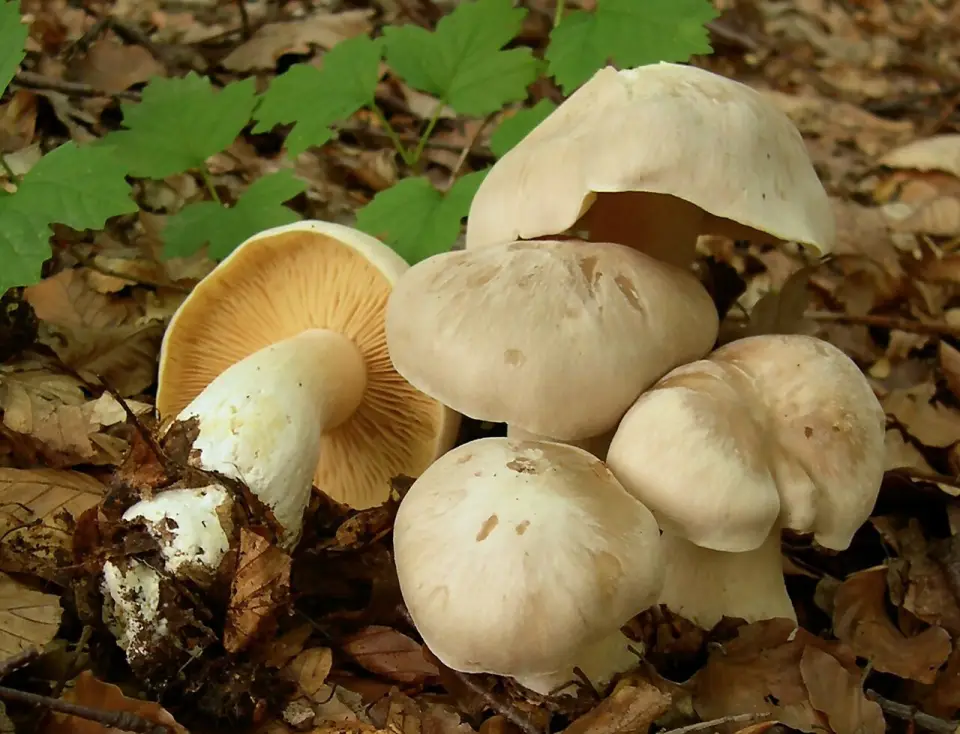
Photo: Archenzo / Wikimedia Commons · CC BY-SA 3.0
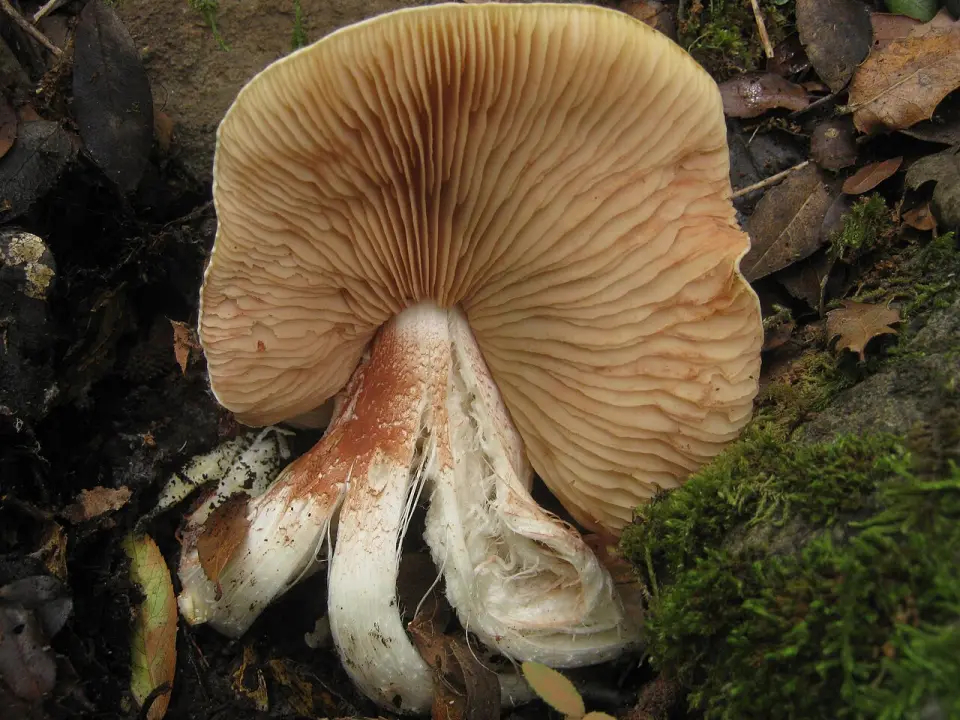
Photo: This image was created by user zaca at Mushroom Observer, a source for mycological images.You can contact this user here. / Wikimedia Commons · CC BY-SA 3.0
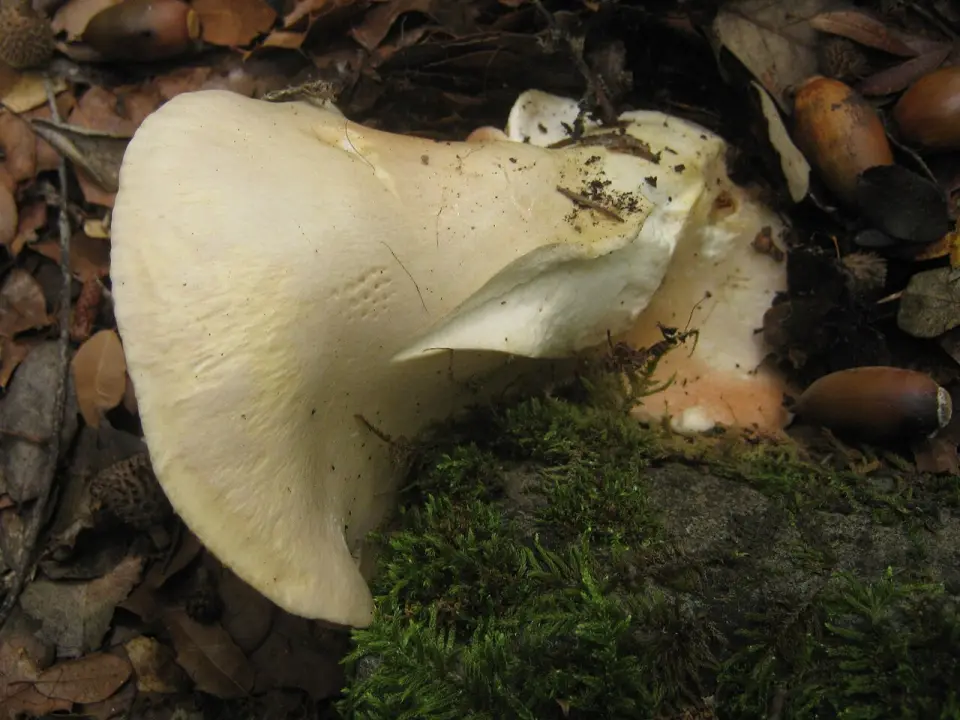
Photo: This image was created by user zaca at Mushroom Observer, a source for mycological images.You can contact this user here. / Wikimedia Commons · CC BY-SA 3.0
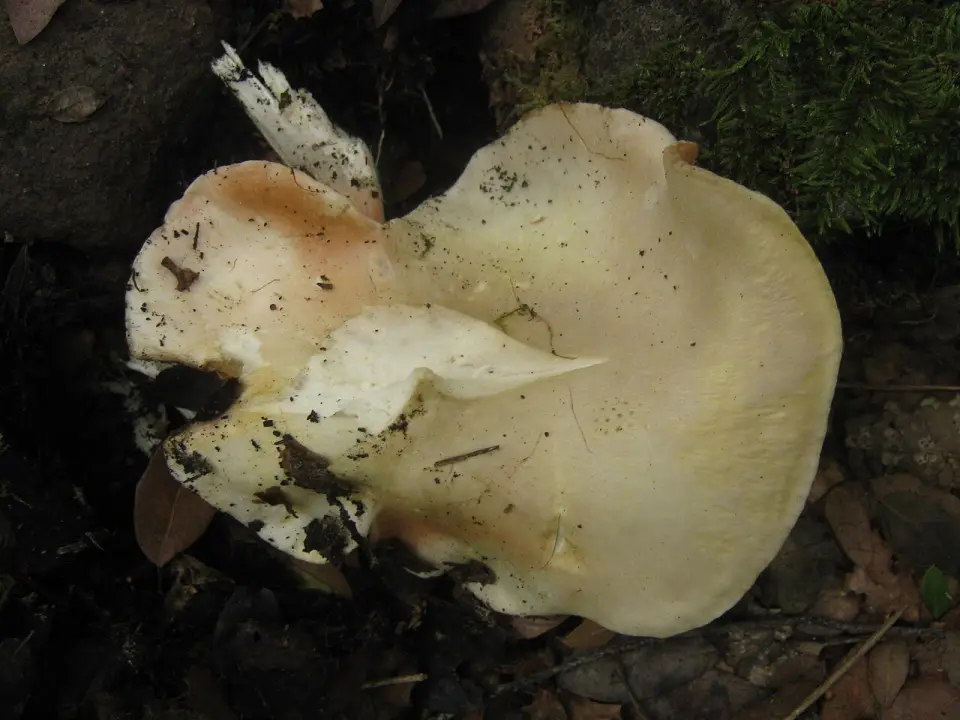
Photo: This image was created by user zaca at Mushroom Observer, a source for mycological images.You can contact this user here. / Wikimedia Commons · CC BY-SA 3.0
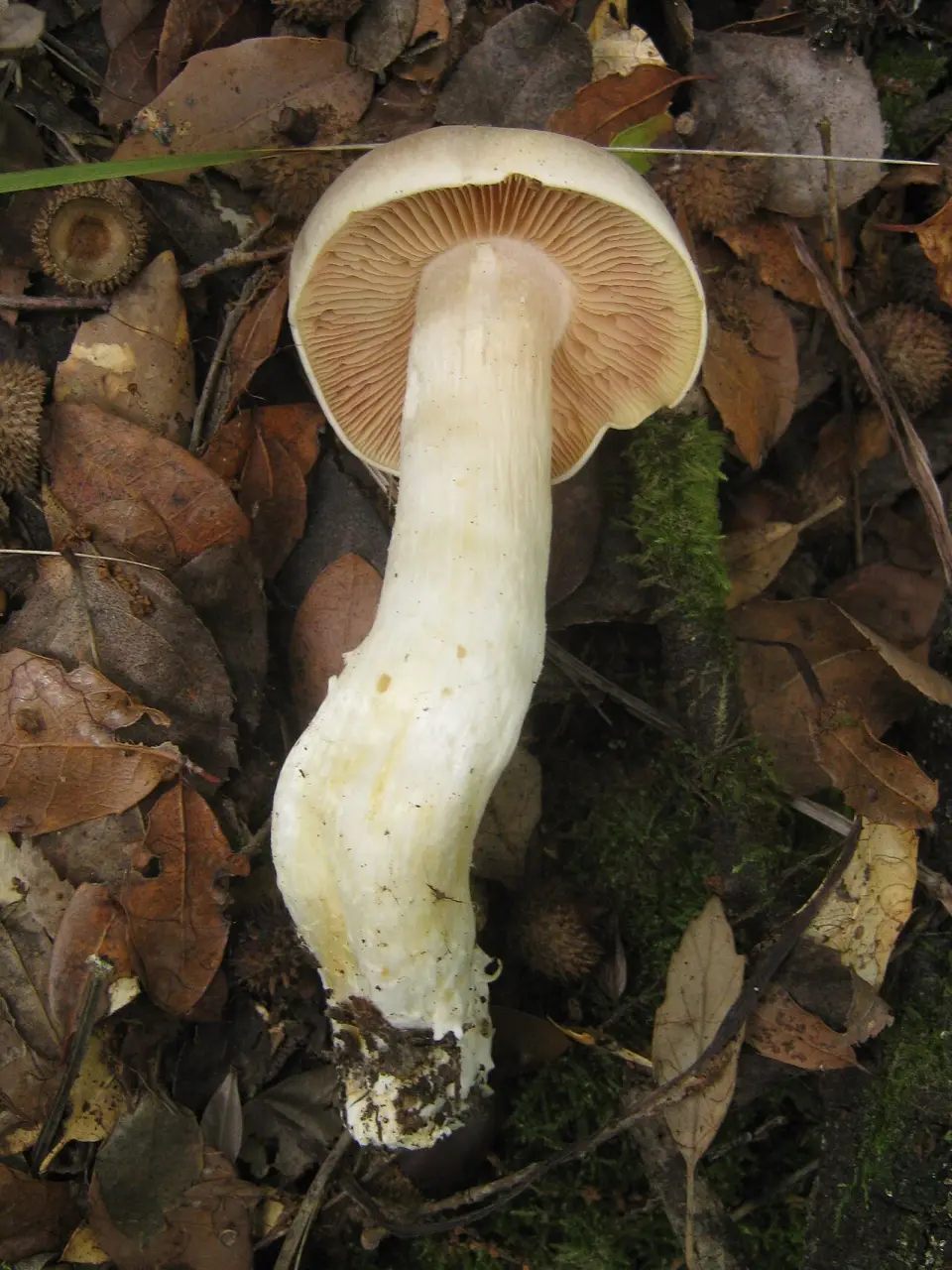
Photo: This image was created by user zaca at Mushroom Observer, a source for mycological images.You can contact this user here. / Wikimedia Commons · CC BY-SA 3.0
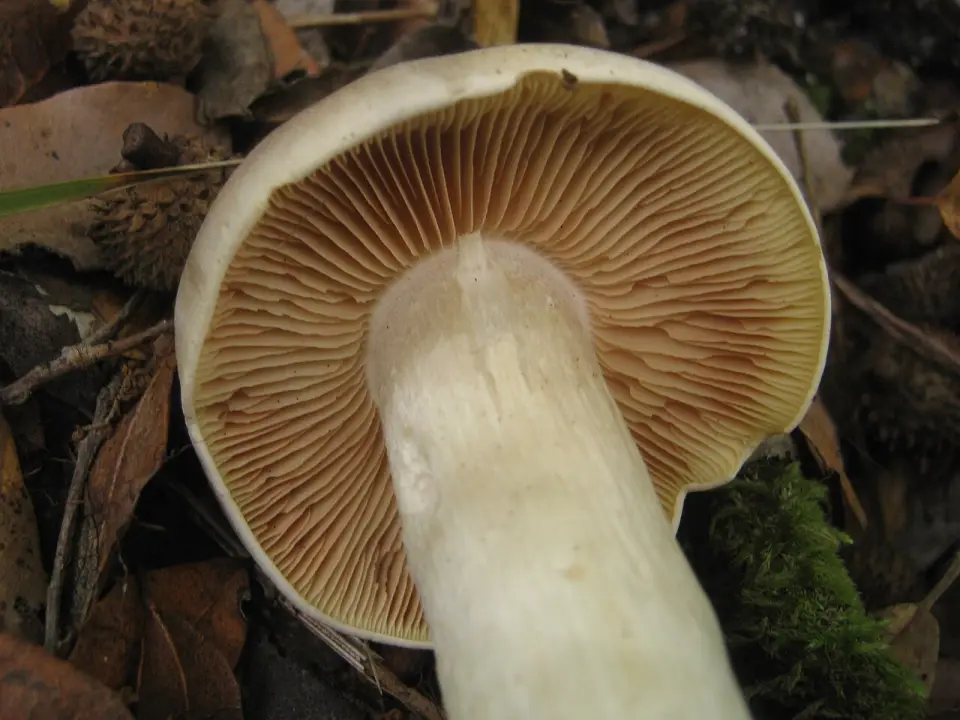
Photo: This image was created by user zaca at Mushroom Observer, a source for mycological images.You can contact this user here. / Wikimedia Commons · CC BY-SA 3.0
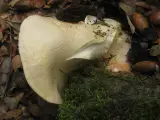
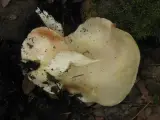
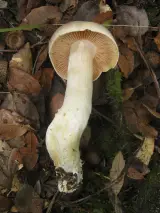
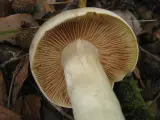
Do not pick and do not taste. It is on the map for reference — so you know it by sight.
A large, fleshy mushroom with an ivory cap shot with lead-grey, a wavy margin, a stout stem with neither ring nor volva, and a strong mealy smell. The gills are the giveaway: yellowish when young, turning pale salmon pink as they mature, because the spore print is pink. It causes violent vomiting and diarrhoea for days; it rarely kills, but it accounts for a good share of Europe's serious poisonings.
Quick facts
- Scientific name
- Entoloma sinuatum (Bull.) P.Kumm. (1871)
- Family
- Entolomataceae
- Edibility
- Toxic
- Season
- Sep–Nov
- Usual altitude
- 236–1,137 m
- Under which trees
- Oak, Holm oak, Cork oak, Beech
- IUCN Red List
- Not evaluated (NE)
Where it grows
Oak and beech on limestone, on cool clay soils, sometimes in parks with old oaks. September to November.
Confused with
- The millerClitopilus prunulus
Edible and with the same mealy smell, but far smaller, with gills running clearly down the stem and soft flesh. The entoloma is solid and its gills stop at the stem.
- St George's mushroomCalocybe gambosa
Also fleshy and mealy, but a spring mushroom, with crowded white gills that never turn pink. Ending up in the same basket as an autumn entoloma should not happen, and yet it does.
When it has been found
Finds recorded in Spain, by month: 312 in all, from GBIF. They show when it fruits, and also when people go looking.
Where it has been found
Each square is an area of about 20 km with recorded finds; the darker, the more finds. It does not pinpoint patches: for where it is coming up now, see the forecast map.
Where it comes up
Areas where this species is scoring highest right now.
- Montseny massif MassifsExcellent · peak excellent
- Garrotxa ComarcasExcellent · peak excellent
- Osona ComarcasExcellent · peak excellent
- la Selva ComarcasGood · peak excellent
- Vallés Oriental ComarcasGood · peak excellent
- Gironés ComarcasGood · peak excellent
- Maresme ComarcasGood · peak excellent
- Ripollés ComarcasGood · peak excellent
Sources
The usual altitude and the trees come from our own fit of the model to those finds and to the Spanish Forest Map (Mapa Forestal de España).
Would you know them from a photograph? →
The description is for reference. Identifying a mushroom from a photograph is unreliable: do not eat anything you are not sure of.