 MicoRadar
Fairy ring champignon
Marasmius oreades
Also called: Fairy ring mushroom, Scotch bonnet
In Spanish: Senderuela, Carrerilla, Seta de carrerilla, Senderilla, Senderina, Seta de corro, Rojilla · In Catalan: Camasec, Carrereta, Camasec de prat, Moixernó de tardor, Fals moixernó · In Basque: Marasmio jangarri, Hankaluze · In Galician: Sendeiriña
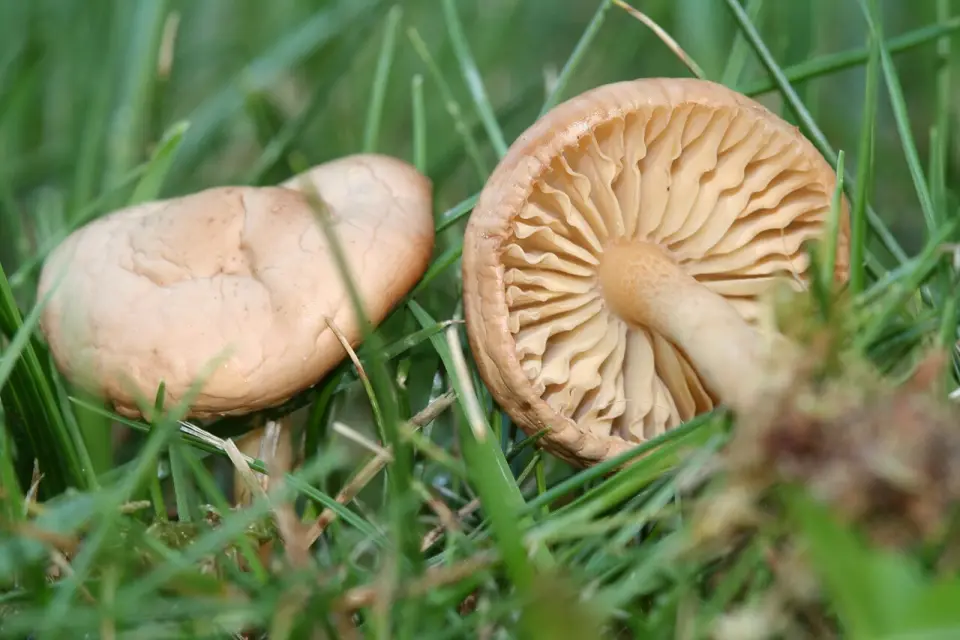
Photo: Strobilomyces / Wikimedia Commons · CC BY-SA 3.0
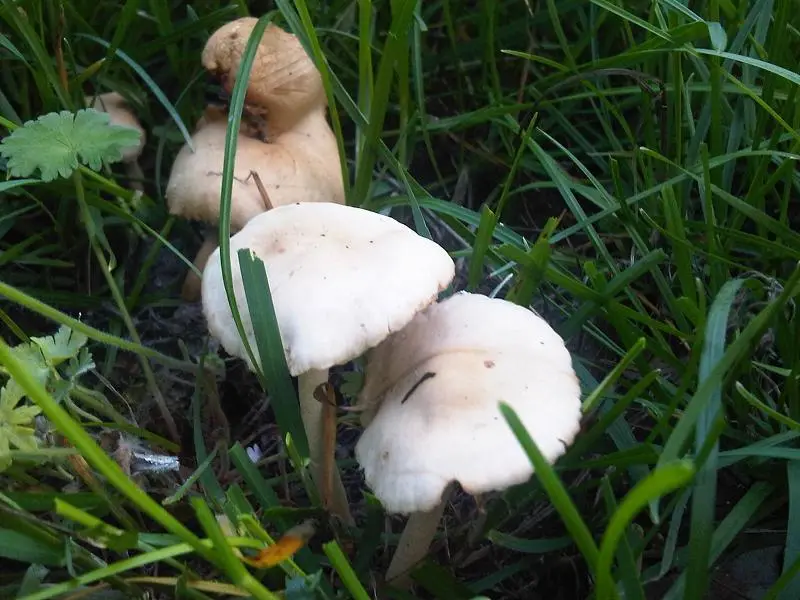
Photo: Emőke Dénes / Wikimedia Commons · CC BY-SA 4.0
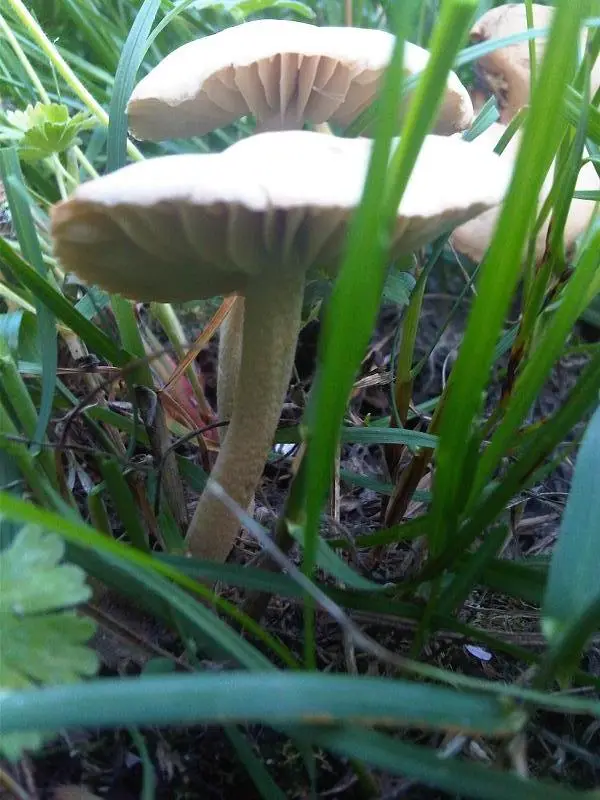
Photo: Emőke Dénes / Wikimedia Commons · CC BY-SA 4.0
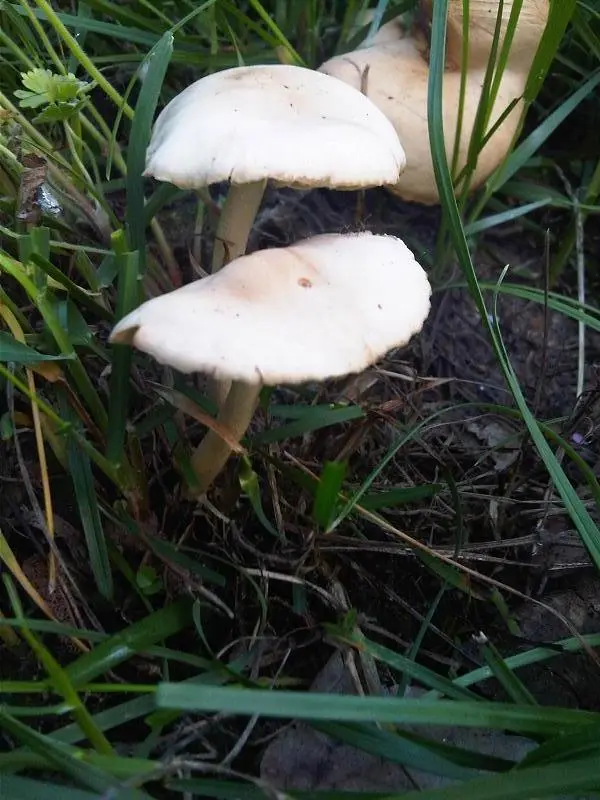
Photo: Emőke Dénes / Wikimedia Commons · CC BY-SA 4.0
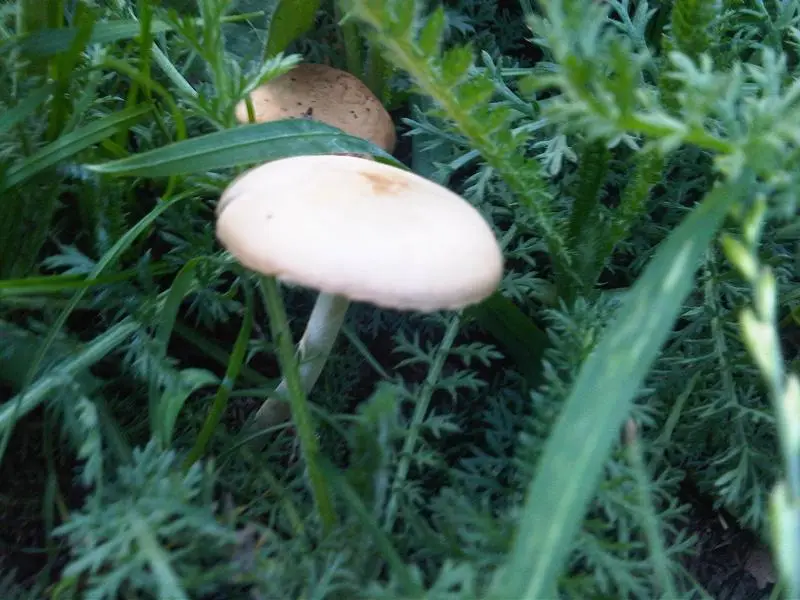
Photo: Emőke Dénes / Wikimedia Commons · CC BY-SA 4.0
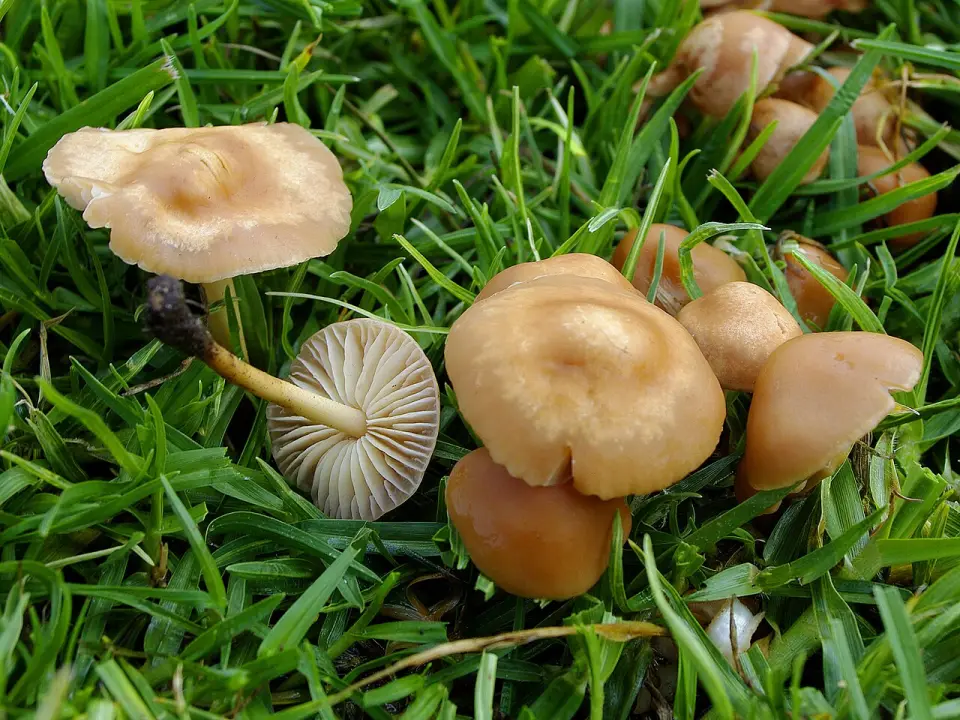
Photo: This image was created by user Lord Mayonnaise at Mushroom Observer, a source for mycological images.You can contact this user here. / Wikimedia Commons · CC BY-SA 3.0
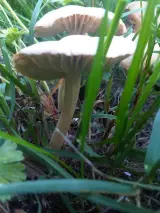
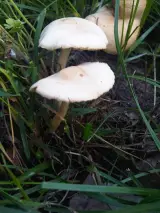
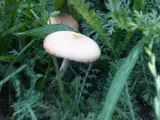
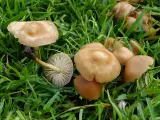
Small and modest-looking: a cap 2–5 cm, buff to tan, bell-shaped then flat with a low boss, paling as it dries. The gills are pale, broad and widely spaced — the cap flesh shows between them. The decisive character is in the stem: thin but extraordinarily tough and springy, it twists on itself without snapping. It smells of hay and bitter almond.
Quick facts
- Scientific name
- Marasmius oreades (Bolton) Fr. (1836)
- Family
- Marasmiaceae
- Edibility
- Edible
- Season
- Apr–Nov
- Usual altitude
- 183–1,495 m
- Dangerous look-alike
- Fool's funnel · Clitocybe rivulosa
- IUCN Red List
- Not evaluated (NE)
Where it grows
Rings and arcs on short grass: meadows, verges, parks, golf courses and grazed pasture. The grass of the ring grows darker and taller than the grass around it, which is how the ring is spotted from a distance. Its season is very long, April to November, and it answers a single rain within days; afterwards it dries in place and revives with the next water.
Confused with
- Fool's funnelClitocybe rivulosadangerous
The serious confusion, and it grows in the same rings on the same turf. It is white or chalky white, its gills crowded and running down the stem, and the stem snaps cleanly instead of twisting. It contains muscarine in quantity and causes severe poisoning.
- Deadly dapperlingLepiota brunneoincarnatadangerous
Deadly, and it shares the fairy ring champignon's habitat: urban lawns, parks and path edges. It has a ring, pinkish-brown scales on the cap and crowded white gills — none of which the champignon has, and it has no ring at all.
When it has been found
Finds recorded in Spain, by month: 1,326 in all, from GBIF. They show when it fruits, and also when people go looking.
Where it has been found
Each square is an area of about 20 km with recorded finds; the darker, the more finds. It does not pinpoint patches: for where it is coming up now, see the forecast map.
Sources
The usual altitude and the trees come from our own fit of the model to those finds and to the Spanish Forest Map (Mapa Forestal de España).
Would you know them from a photograph? →
The description is for reference. Identifying a mushroom from a photograph is unreliable: do not eat anything you are not sure of.