 MicoRadar
Scarletina bolete
Neoboletus erythropus
Also called: Red foot bolete, Dotted stem bolete
In Spanish: Pie rojo, Boleto de pie rojo, Mataparientes, Hongo de pie rojo, Boleto de pie rojizo · In Catalan: Mataparent de cama roja, Mataparent de peu vermell · In Basque: Onddo hankagorri, Errementi onto · In Galician: Andoa de pé vermello, Madeirudo de pé vermello
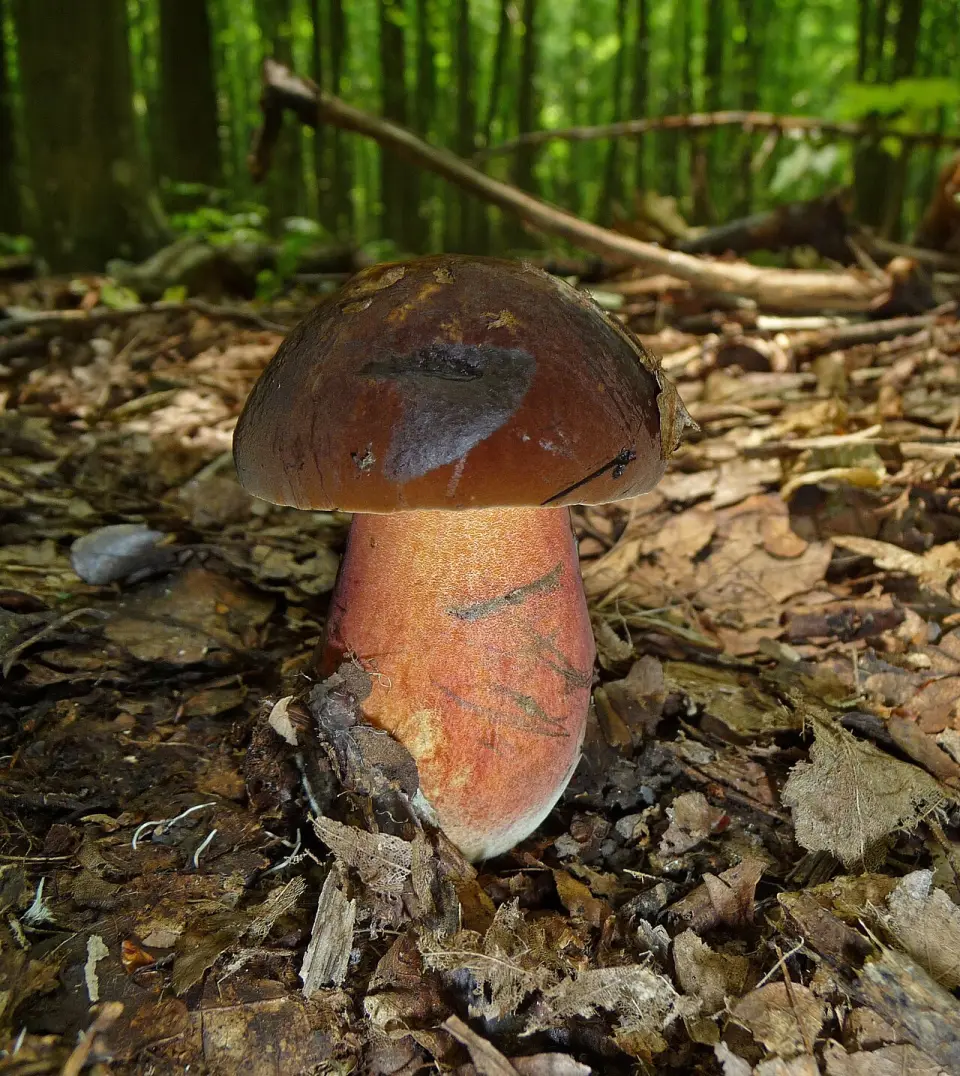
Photo: George Chernilevsky / Wikimedia Commons · Public domain
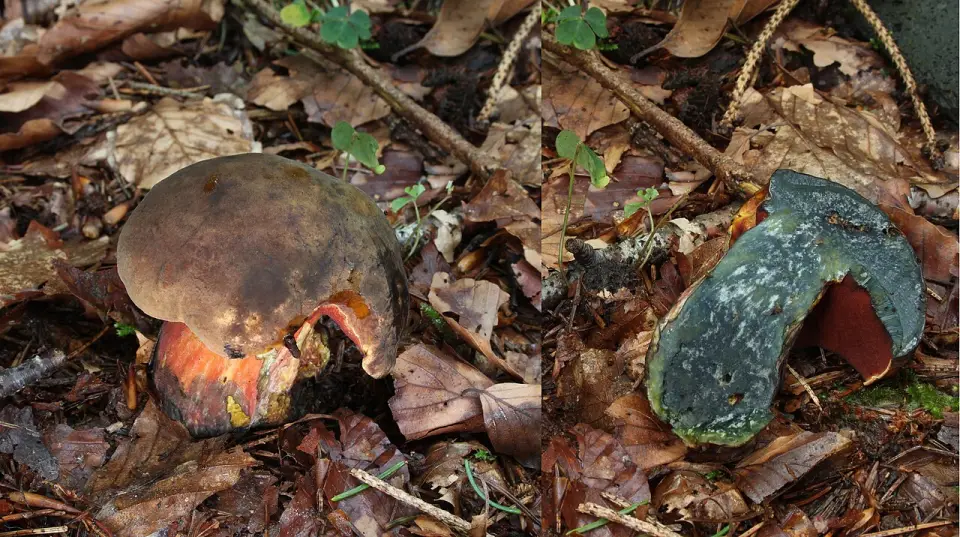
Photo: Holger Krisp / Wikimedia Commons · CC BY 3.0
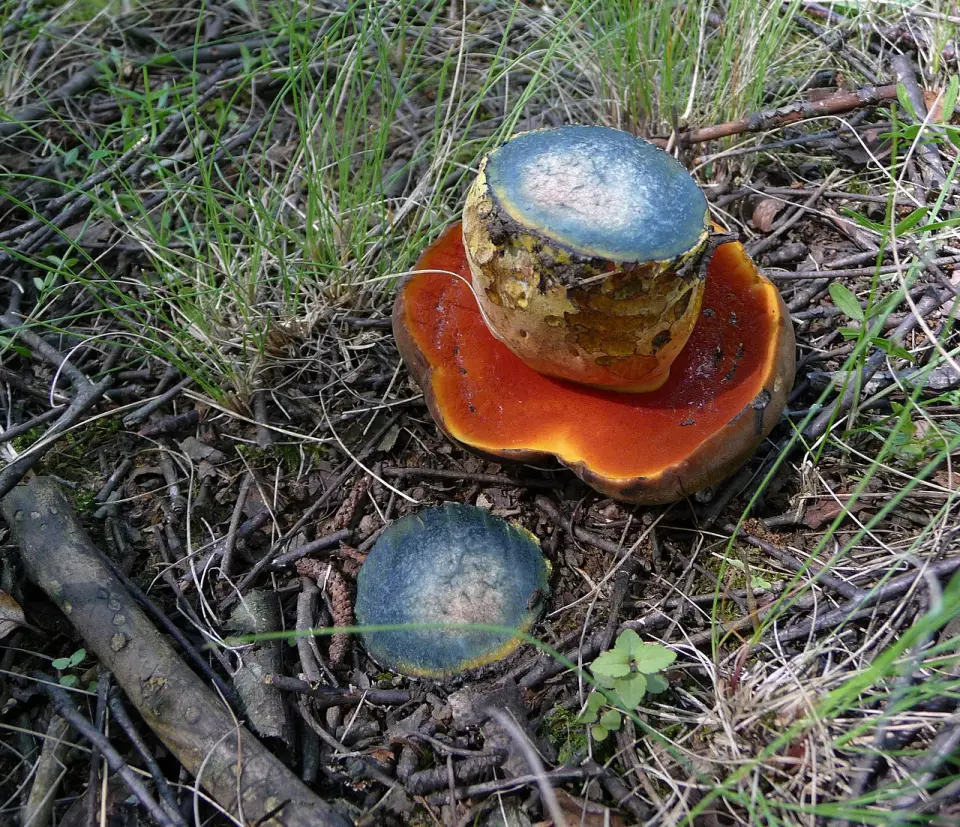
Photo: George Chernilevsky / Wikimedia Commons · Public domain
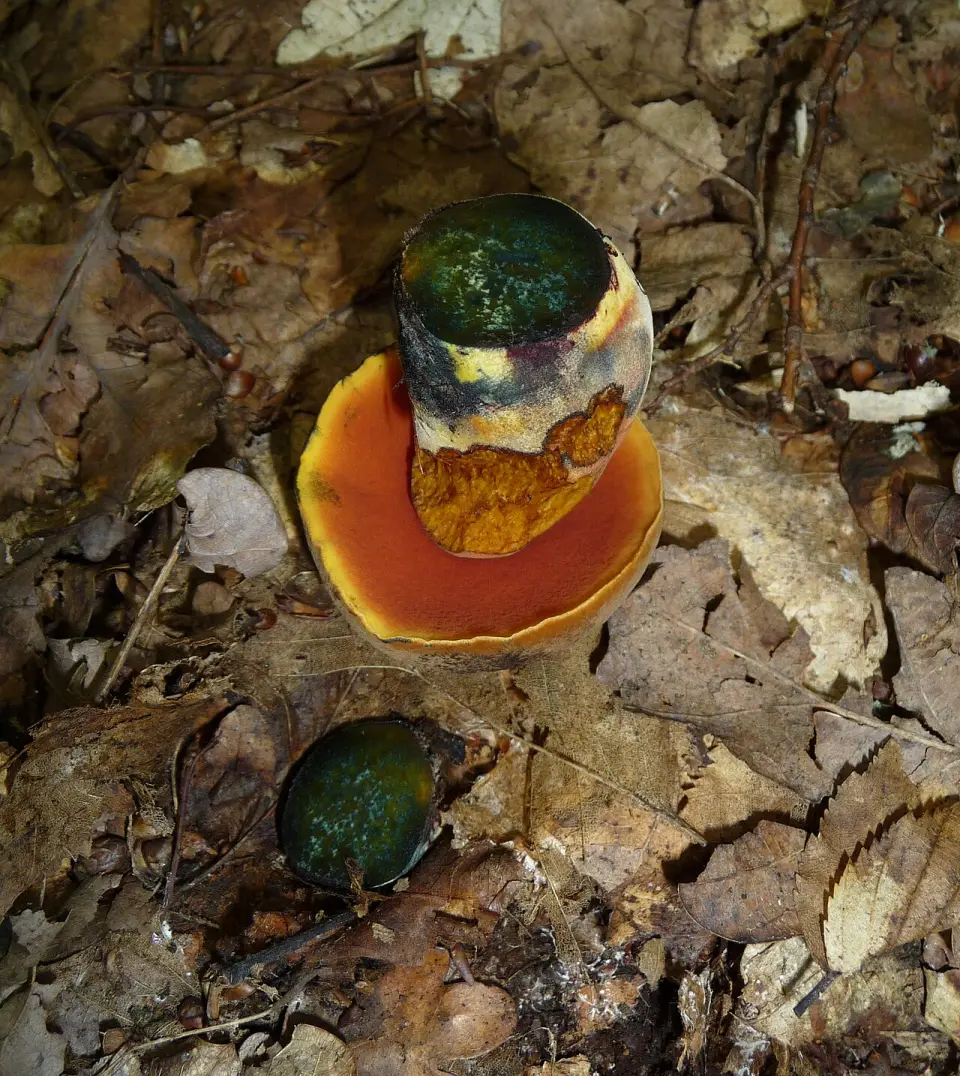
Photo: George Chernilevsky / Wikimedia Commons · Public domain
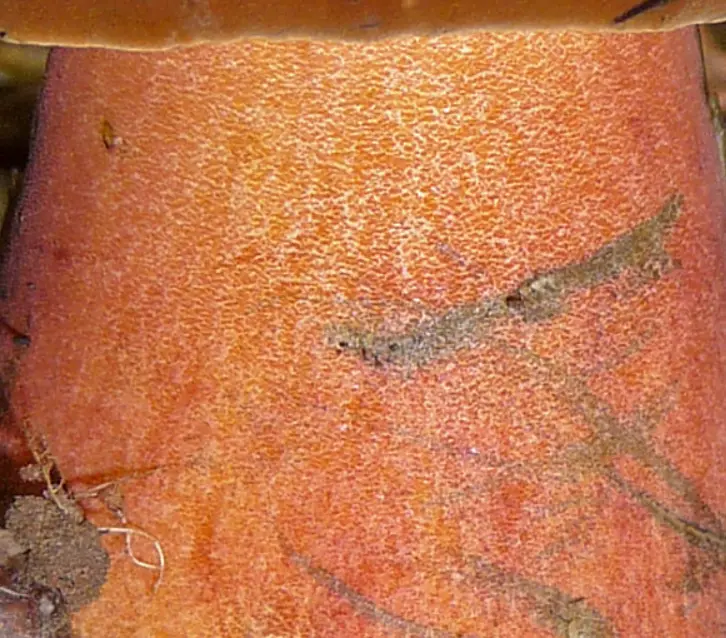
Photo: George Chernilevsky / Wikimedia Commons · CC0
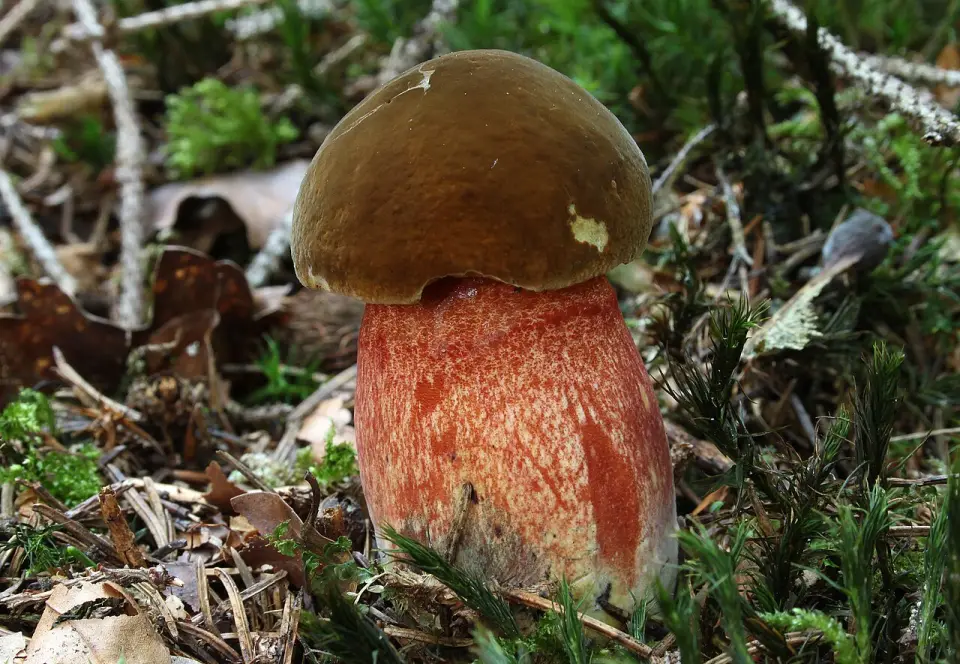
Photo: Holger Krisp / Wikimedia Commons · CC BY 3.0
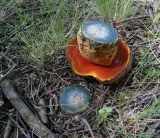
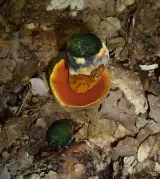
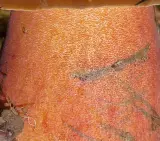
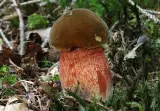
A large bolete with a velvety dark brown cap, red-orange pores and a stem covered in fine red dots rather than a net. The flesh blues instantly and strongly when cut. Edible and good, but only thoroughly cooked: raw or underdone it causes gastric upset.
Quick facts
- Scientific name
- Neoboletus erythropus (Pers.) C.Hahn (2015)
- Family
- Boletaceae
- Edibility
- Edible with caution
- Season
- Jun–Nov
- Usual altitude
- 207–1,563 m
- Under which trees
- Beech, Oak, Pine
- Dangerous look-alike
- Devil's bolete · Rubroboletus satanas
- IUCN Red List
- Least concern (LC)
Where it grows
Beech and oak woods, less often pine; acid soils and damp slopes. It fruits from June to November.
Confused with
- Devil's boleteRubroboletus satanasdangerous
A whitish or ashen cap with the same red pores — a pale cap combined with red pores is where you stop.
When it has been found
Finds recorded in Spain, by month: 692 in all, from GBIF. They show when it fruits, and also when people go looking.
Where it has been found
Each square is an area of about 20 km with recorded finds; the darker, the more finds. It does not pinpoint patches: for where it is coming up now, see the forecast map.
Where it comes up
Areas where this species is scoring highest right now.
- Ripollés ComarcasExcellent · peak excellent
- Berguedà ComarcasExcellent · peak excellent
- Pirineo ComarcasGood · peak excellent
- Lluçanès ComarcasGood · peak excellent
- Osona ComarcasGood · peak excellent
- Garrotxa ComarcasGood · peak excellent
- Prepirineo ComarcasGood · peak excellent
- Solsonés ComarcasModerate · peak excellent
In guides and news
- Weekend 17–18 October: good-condition area up for all five leading species
State of the forest
Sources
The usual altitude and the trees come from our own fit of the model to those finds and to the Spanish Forest Map (Mapa Forestal de España).
Would you know them from a photograph? →
The description is for reference. Identifying a mushroom from a photograph is unreliable: do not eat anything you are not sure of.