 MicoRadar
Jack-o'-lantern
Omphalotus olearius
Also called: Jack-o'-lantern mushroom
In Spanish: Seta de olivo · In Catalan: Bolet d'oliu, Gírgola d'olivera, Flota d'olivera, Rossinyol bord, Pixacà · In Basque: Apo-ziza, Zapo-ziza, Ziza hori faltsu · In Galician: Cogumelo vagalume
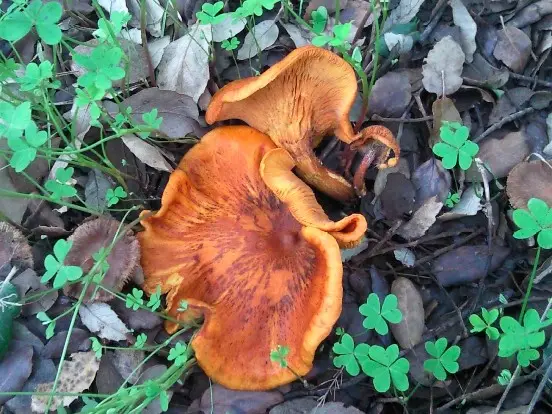
Photo: Souhila Aouali / Wikimedia Commons · CC BY-SA 3.0
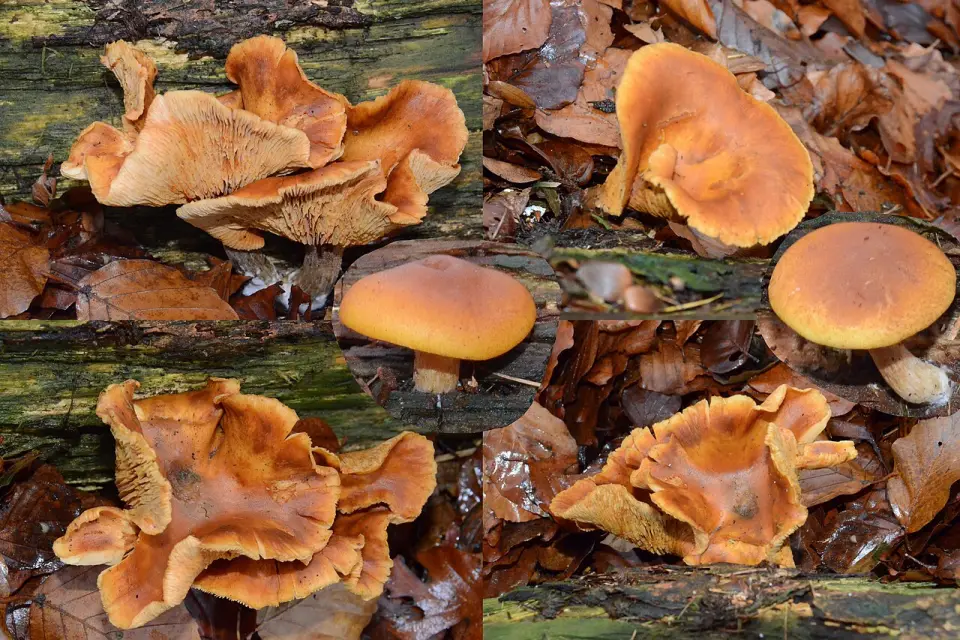
Photo: Henk Monster / Wikimedia Commons · CC BY 3.0
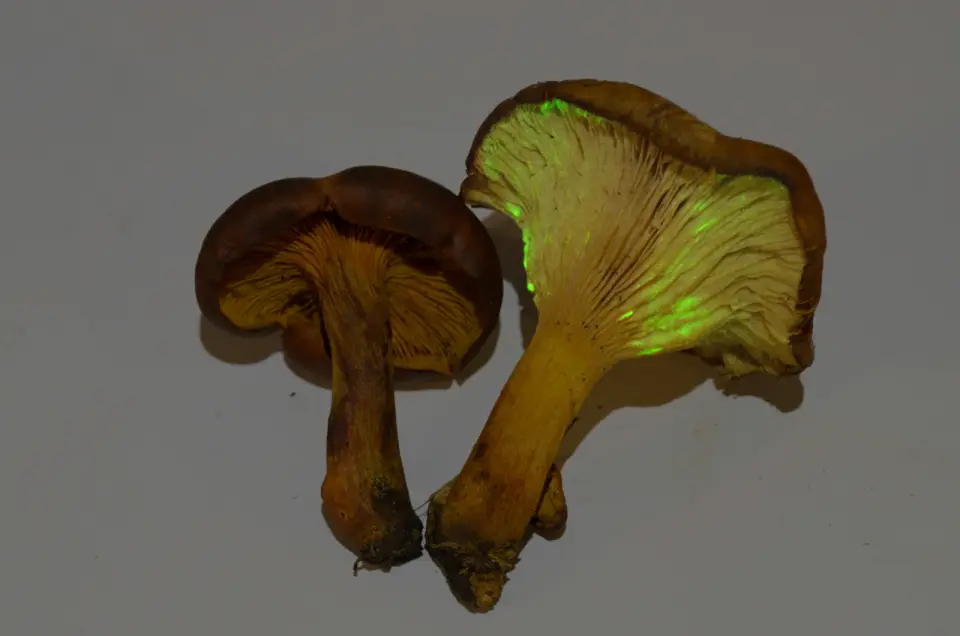
Photo: The Brook / Wikimedia Commons · CC BY-SA 4.0
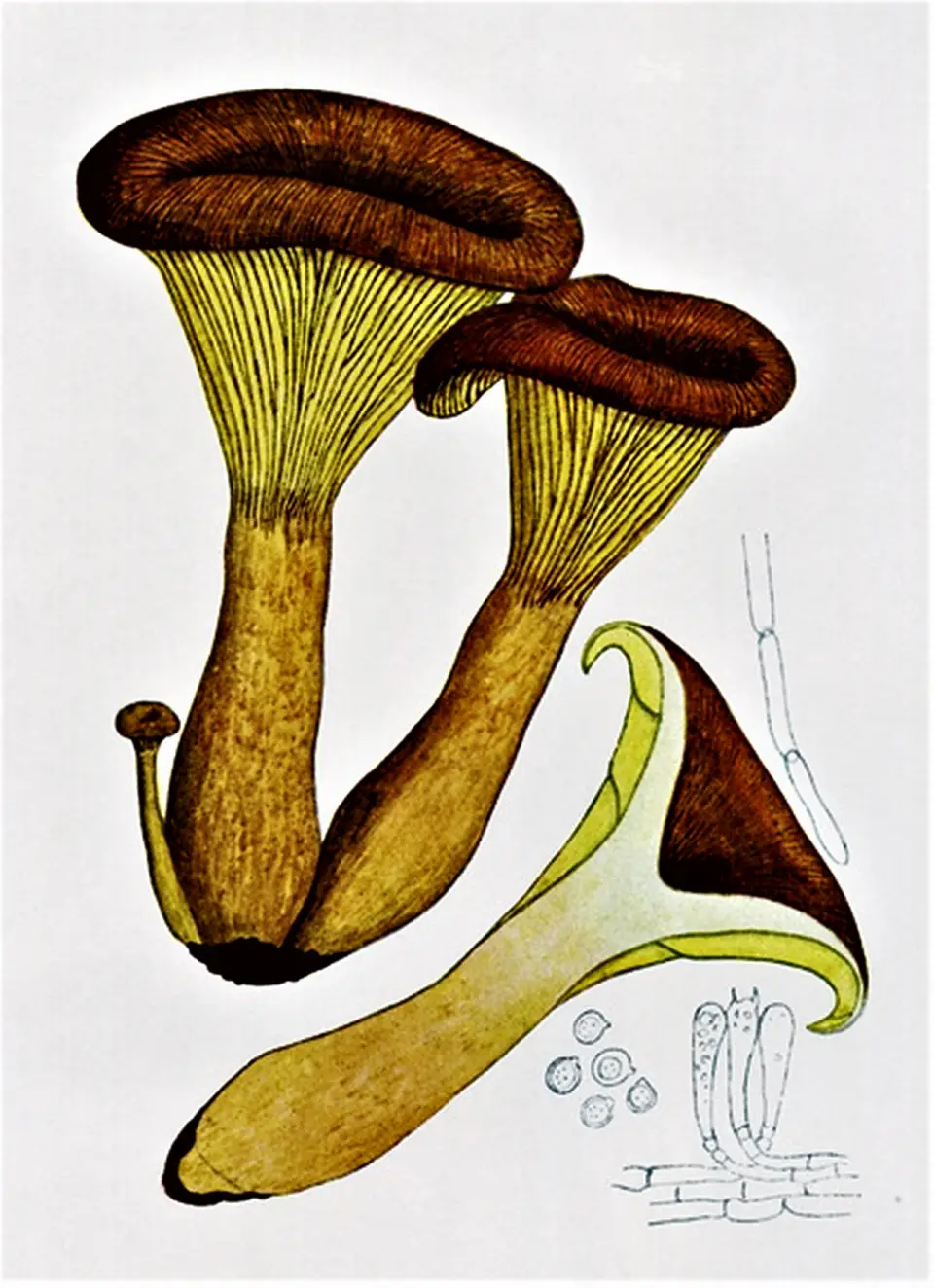
Photo: Giacomo Bresadola / Wikimedia Commons · Public domain
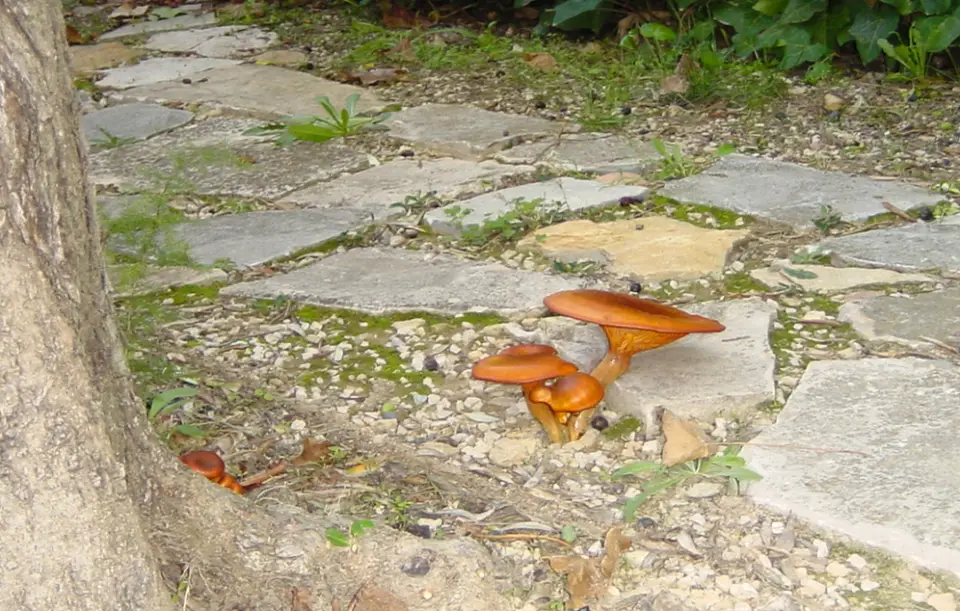
Photo: Papypierre1 / Wikimedia Commons · CC BY-SA 3.0
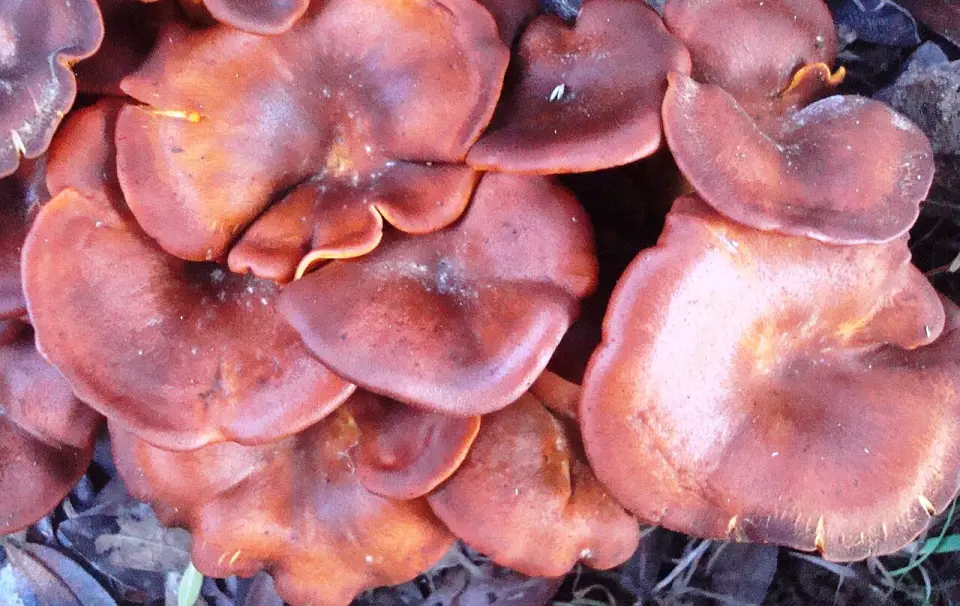
Photo: Leghmizi / Wikimedia Commons · CC BY-SA 3.0
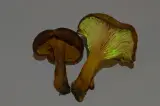
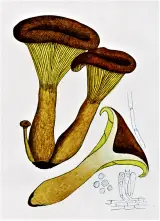
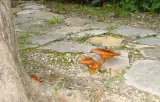
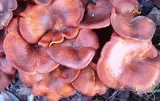
Do not pick and do not taste. It is on the map for reference — so you know it by sight.
Orange from top to bottom and in dense tufts on the stumps, roots and base of olive and holm oak. It has true gills — thin, crowded and running well down the stem — not the blunt folds of a chanterelle, and in the dark they give off a greenish light visible once your eyes have adjusted for a few minutes. It causes hours of violent vomiting and cramps.
Quick facts
- Scientific name
- Omphalotus olearius (DC.) Singer (1948)
- Family
- Omphalotaceae
- Edibility
- Toxic
- Season
- Oct–Dec
- Usual altitude
- 57–743 m
- Under which trees
- Holm oak, Cork oak, Oak, Pine
- IUCN Red List
- Not evaluated (NE)
Where it grows
Olive groves, holm oak and Portuguese oak woods of the Mediterranean, always on wood — living or dead — although it can look as if it came out of the ground when it grows on buried roots. September to December.
Confused with
- ChanterelleCantharellus cibarius
A chanterelle has thick blunt folds, whitish flesh inside and a smell of apricot; the jack-o'-lantern has real gills and flesh orange to the core. If they are bunched on a stump, they are not chanterelles — but coming out of the ground proves nothing the other way, because the jack-o'-lantern also sprouts from buried roots.
When it has been found
Finds recorded in Spain, by month: 611 in all, from GBIF. They show when it fruits, and also when people go looking.
Where it has been found
Each square is an area of about 20 km with recorded finds; the darker, the more finds. It does not pinpoint patches: for where it is coming up now, see the forecast map.
Where it comes up
Areas where this species is scoring highest right now.
- Montseny massif MassifsExcellent · peak excellent
- Pla de l'Estany ComarcasExcellent · peak excellent
- Gironés ComarcasExcellent · peak excellent
- Bajo Llobregat ComarcasGood · peak excellent
- Vallés Oriental ComarcasGood · peak excellent
- Garrotxa ComarcasGood · peak excellent
- Barcelonés ComarcasGood · peak excellent
- Lower Empordà ComarcasGood · peak excellent
Sources
The usual altitude and the trees come from our own fit of the model to those finds and to the Spanish Forest Map (Mapa Forestal de España).
Would you know them from a photograph? →
The description is for reference. Identifying a mushroom from a photograph is unreliable: do not eat anything you are not sure of.