 MicoRadar
Panther cap
Amanita pantherina
Also called: Panther amanita, False blusher
In Spanish: Amanita pantera, Falso galipierno · In Catalan: Pixacà, Pigat bord, Cogoma pigada, Cogomella pigada · In Basque: Lanperna txar, Zapoziza · In Galician: Cacaforra cincenta
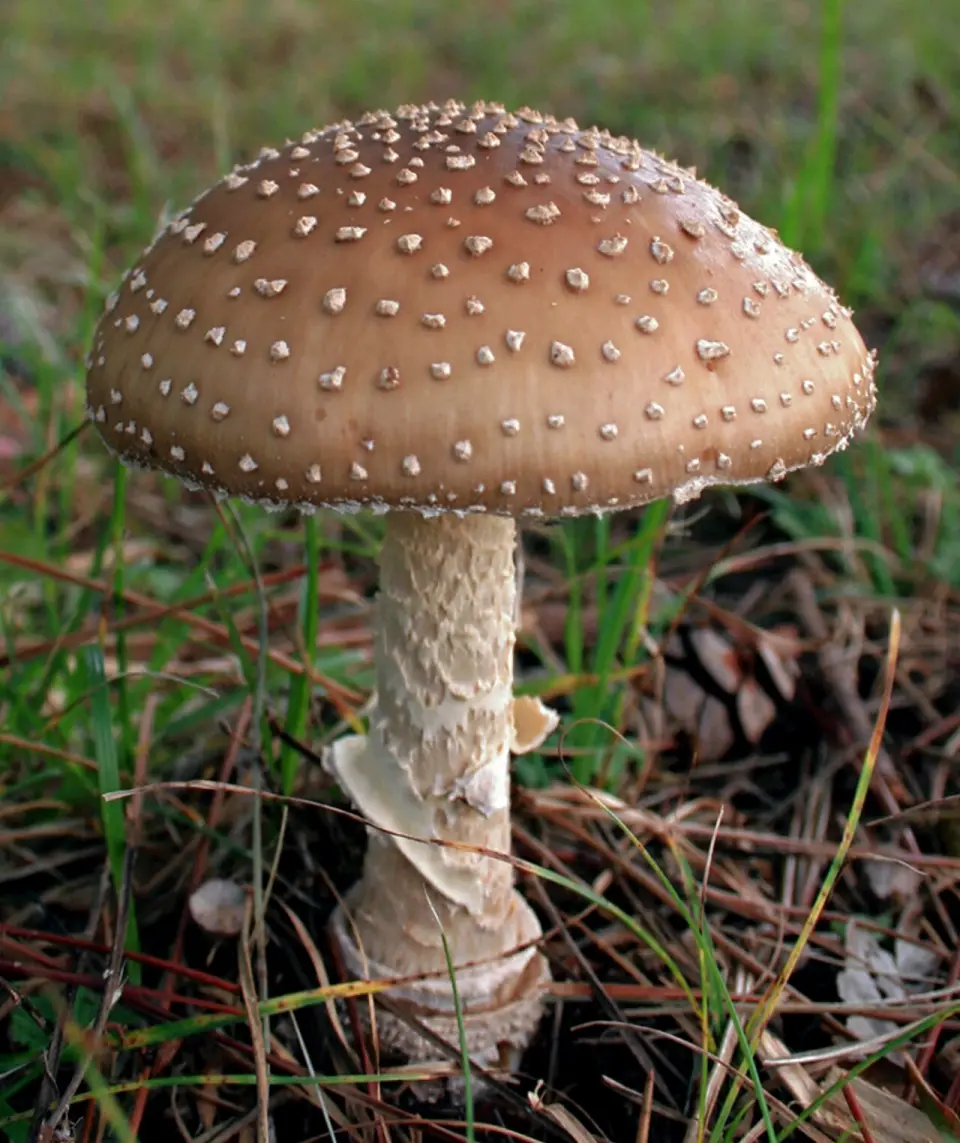
Photo: ccfarmer / Wikimedia Commons · CC BY-SA 3.0
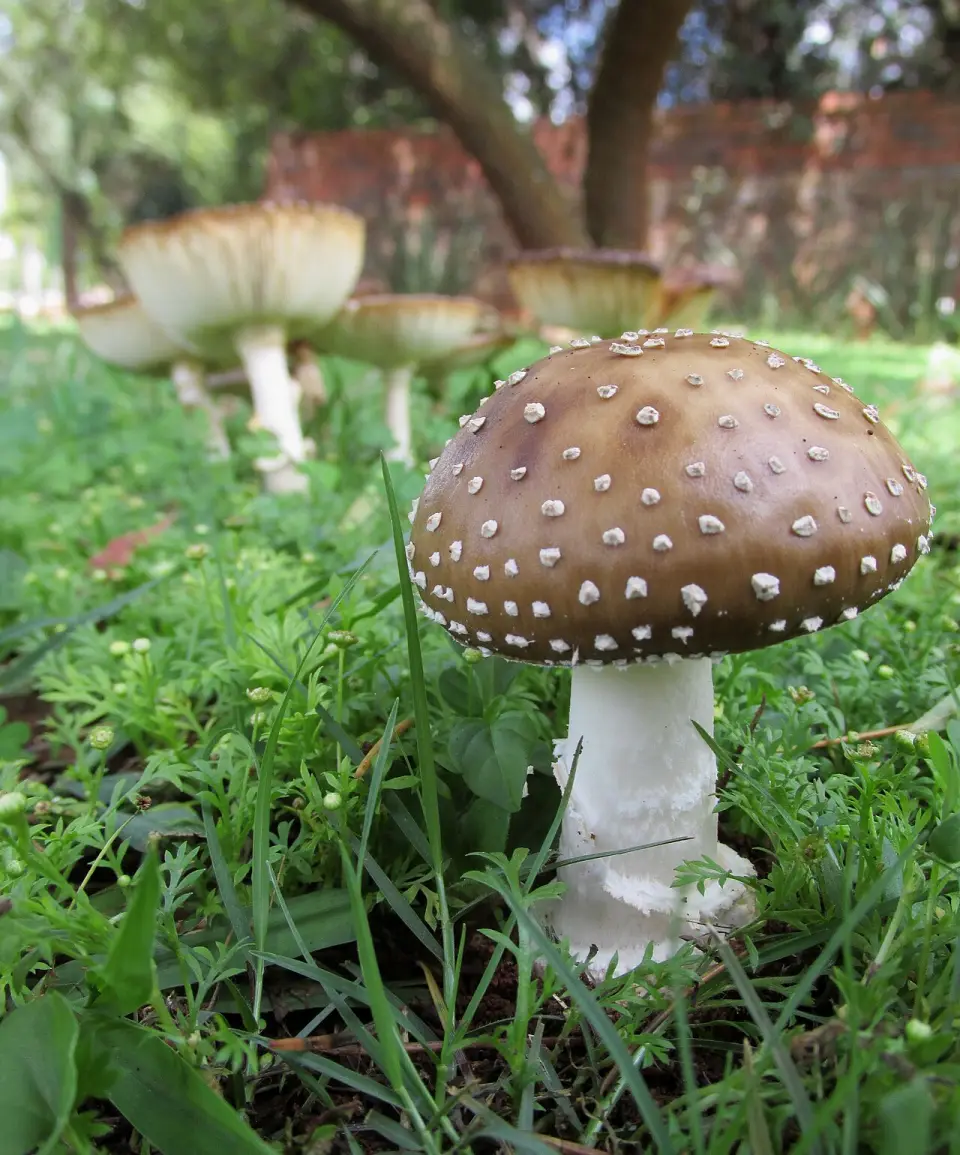
Photo: This image was created by user Liz Popich (Lizzie) at Mushroom Observer, a source for mycological images.You can contact this user here. / Wikimedia Commons · CC BY-SA 3.0
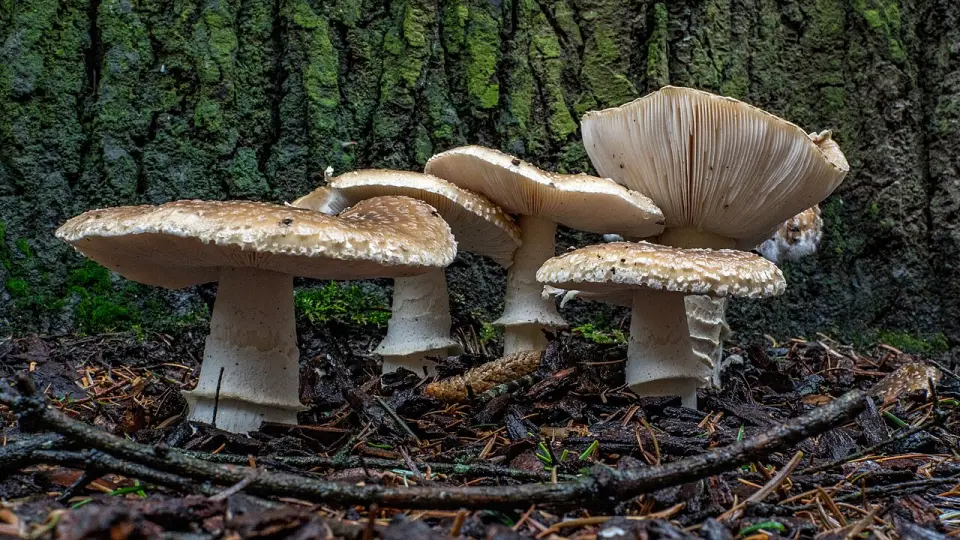
Photo: Twelvizm / Wikimedia Commons · CC BY-SA 4.0
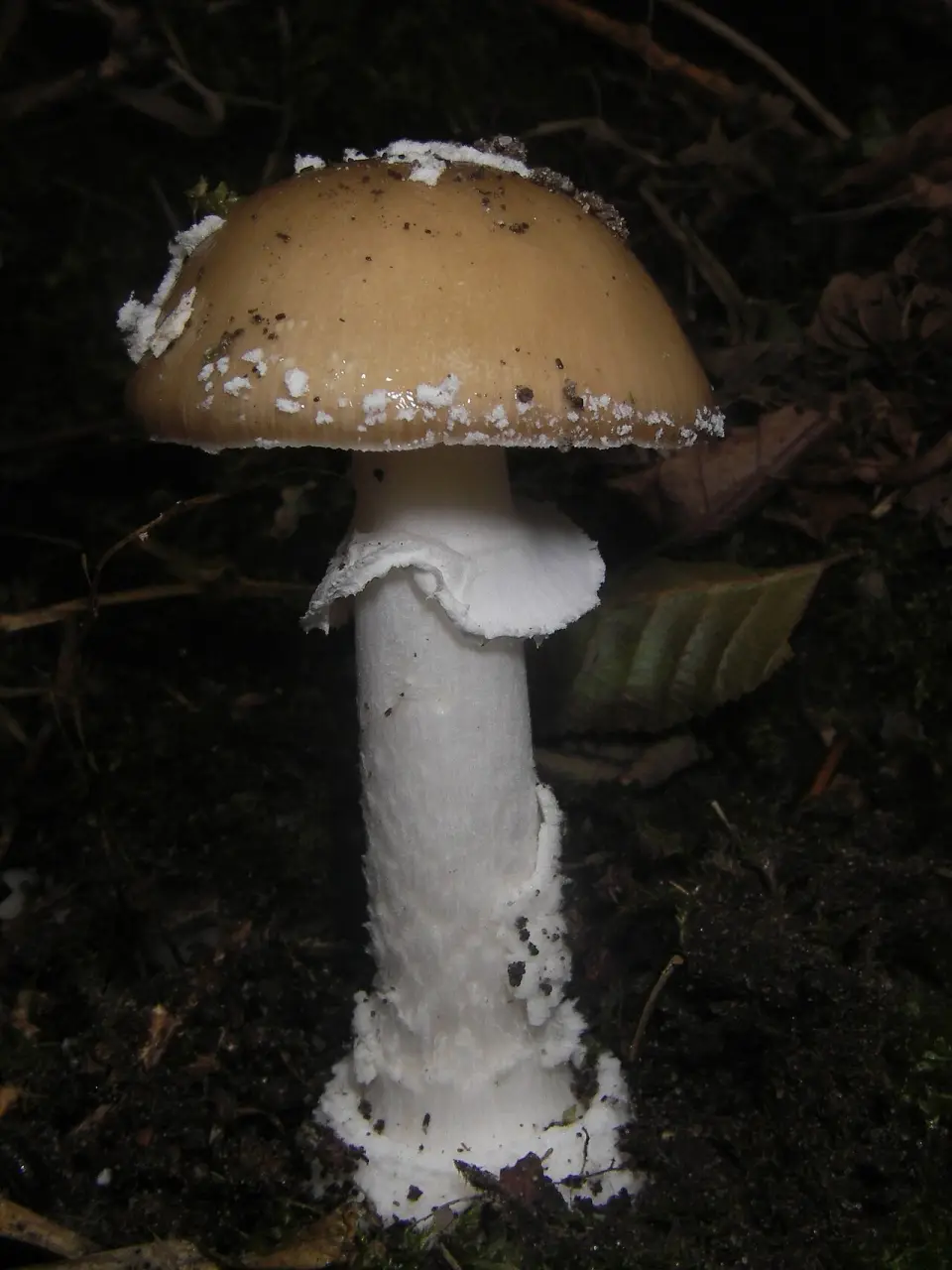
Photo: Thomas Pruß / Wikimedia Commons · CC BY-SA 3.0
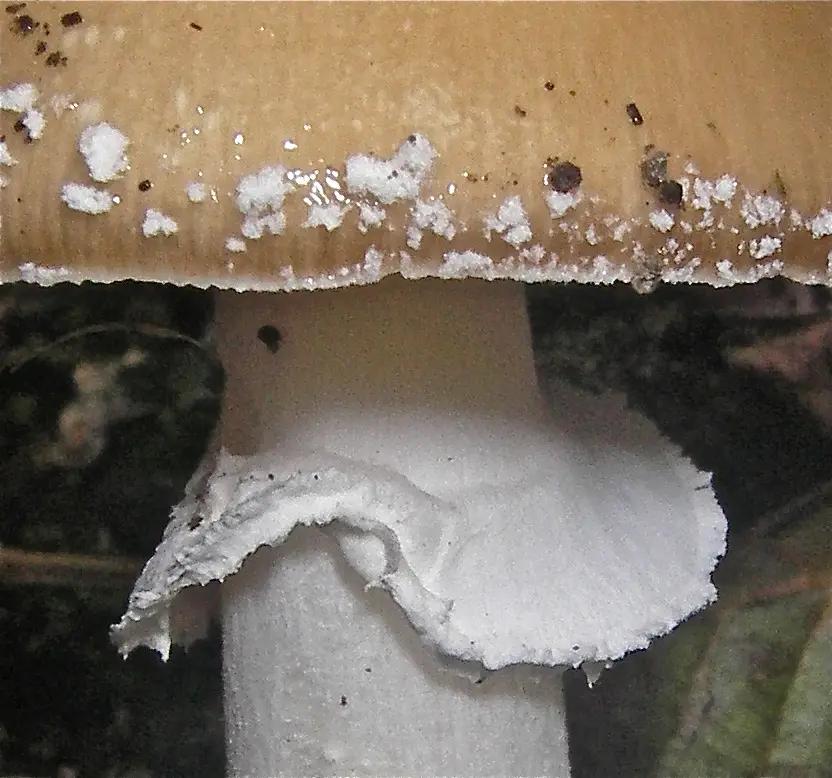
Photo: Thomas Pruß / Wikimedia Commons · CC BY-SA 3.0
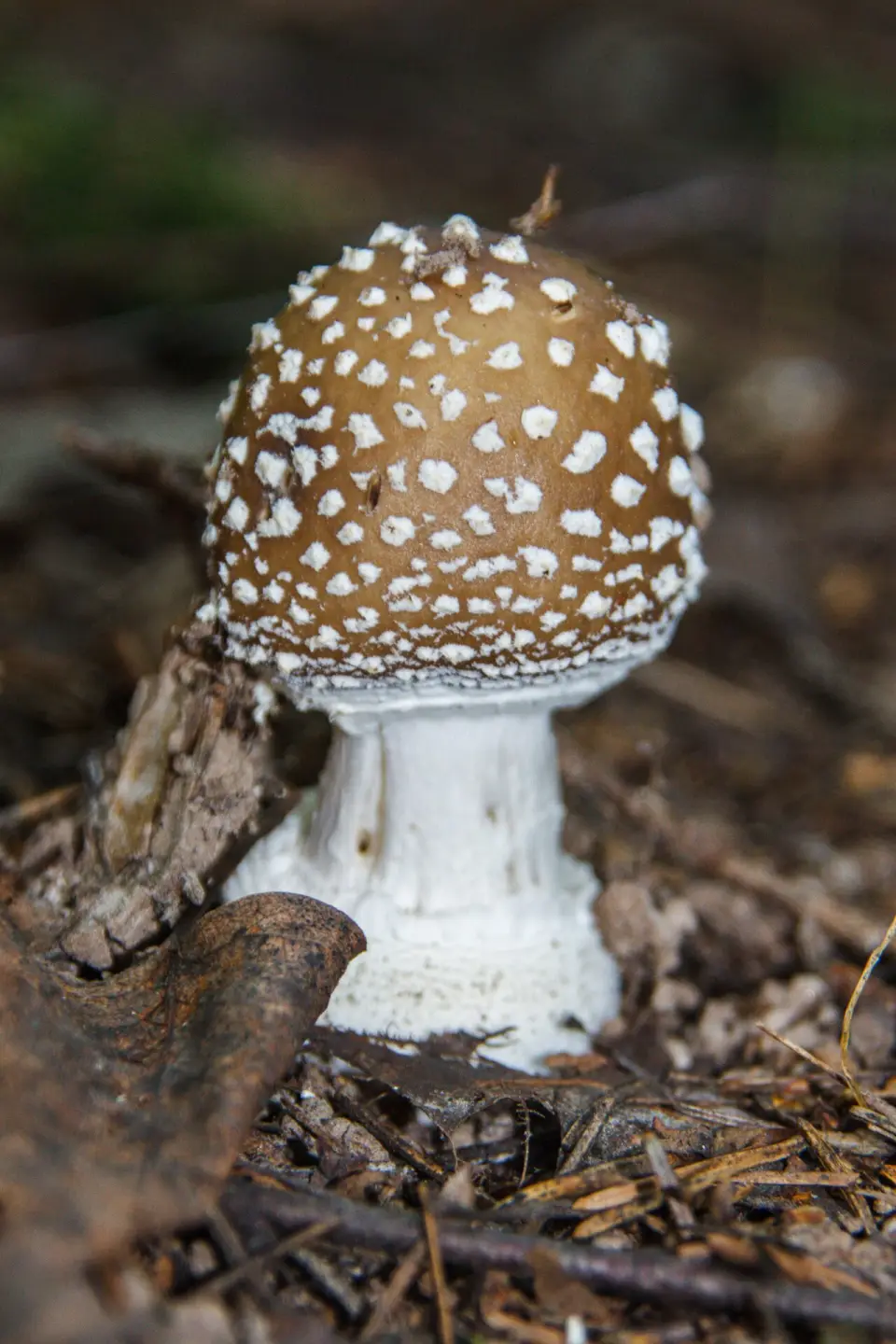
Photo: Andrey Gaverdovsky / Wikimedia Commons · CC BY 2.0
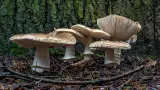
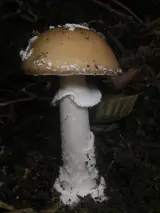
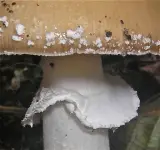
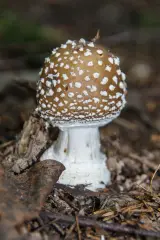
Do not pick and do not taste. It is on the map for reference — so you know it by sight.
A dark brown cap covered in pure white warts set in concentric rings, with a clearly grooved margin. White gills, a smooth ring, and at the base a bulb with a sharp collar-like rim. It carries more ibotenic acid and muscimol than the fly agaric: confusion, agitation, hallucinations and sometimes coma. Serious poisonings are more common than with its red relative.
Quick facts
- Scientific name
- Amanita pantherina (DC.) Krombh. (1846)
- Family
- Amanitaceae
- Edibility
- Toxic
- Season
- Sep–Nov
- Usual altitude
- 148–1,346 m
- Under which trees
- Pine, Beech, Oak, Holm oak, Cork oak, Birch
- IUCN Red List
- Not evaluated (NE)
Where it grows
Beech, oak, pine and birch woods, on acid and limestone alike. September to November, across the northern half and in the southern mountains.
Confused with
- BlusherAmanita rubescens
The flesh reddens when cut and the warts are greyish rather than pure white; the margin is not grooved. Edible when well cooked — which is exactly why this confusion ends badly.
- Grey spotted amanitaAmanita excelsa
Dirty grey warts, an unstriated margin and a bulb with no collar. Of no culinary interest, but telling it apart is the only way not to take the panther home.
When it has been found
Finds recorded in Spain, by month: 1,355 in all, from GBIF. They show when it fruits, and also when people go looking.
Where it has been found
Each square is an area of about 20 km with recorded finds; the darker, the more finds. It does not pinpoint patches: for where it is coming up now, see the forecast map.
Where it comes up
Areas where this species is scoring highest right now.
- Montseny massif MassifsExcellent · peak excellent
- Garrotxa ComarcasExcellent · peak excellent
- Osona ComarcasExcellent · peak excellent
- Lluçanès ComarcasExcellent · peak excellent
- Ripollés ComarcasExcellent · peak excellent
- Berguedà ComarcasExcellent · peak excellent
- Pirineo ComarcasGood · peak excellent
- la Selva ComarcasGood · peak excellent
In guides and news
- Weekend 17–18 October: good-condition area up for all five leading species
State of the forest
- Cataluña, 17–18 October: conditions better than a week ago
State of the forest
Sources
The usual altitude and the trees come from our own fit of the model to those finds and to the Spanish Forest Map (Mapa Forestal de España).
Would you know them from a photograph? →
The description is for reference. Identifying a mushroom from a photograph is unreliable: do not eat anything you are not sure of.