 MicoRadar
Death cap
Amanita phalloides
In Spanish: Oronja verde, Cicuta verde, Oronja mortal · In Catalan: Farinera borda, Cogoma borda, Pentinella borda, Farinera verinosa, Cogoma verda · In Basque: Hiltzaile berde, Ilkorra, Kuleto berde, Txapel biribil · In Galician: Cacaforra da morte, Pan da morte, Pan do demo
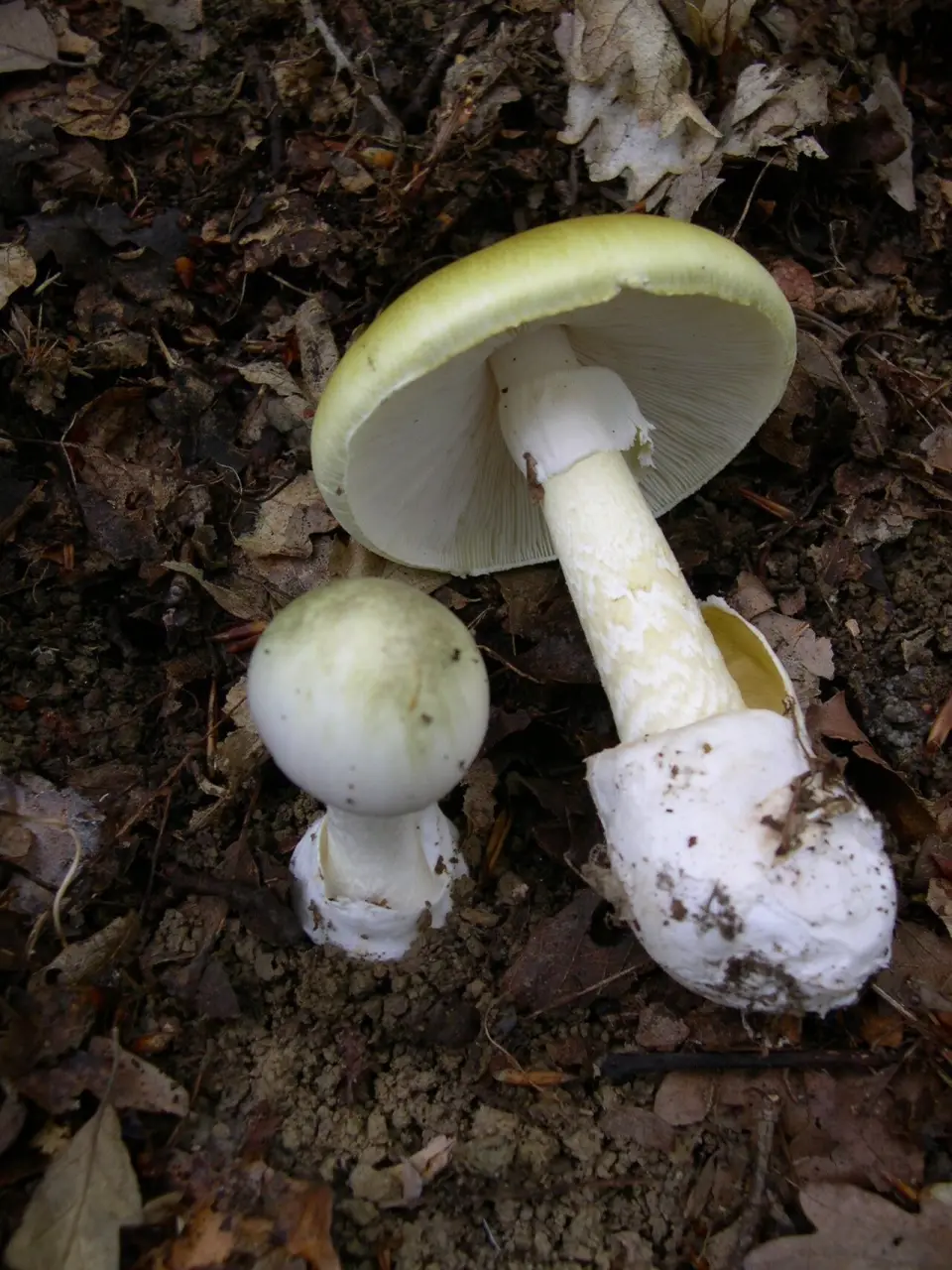
Photo: Archenzo / Wikimedia Commons · CC BY-SA 3.0
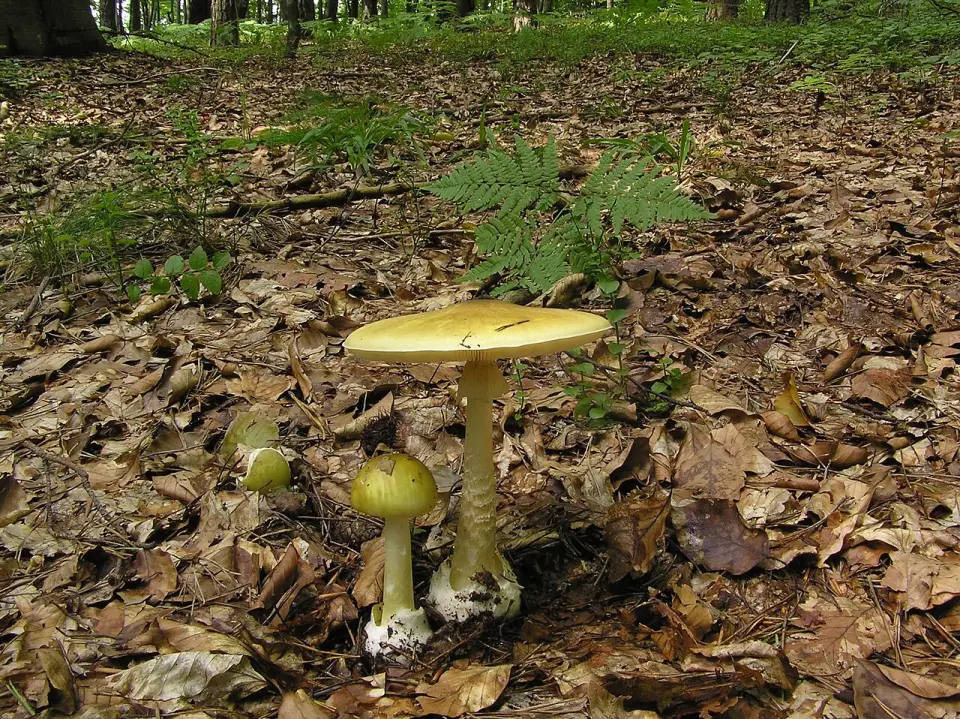
Photo: Krzysztof Ślusarczyk (upload by Marek Ślusarczyk) / Wikimedia Commons · CC BY 3.0
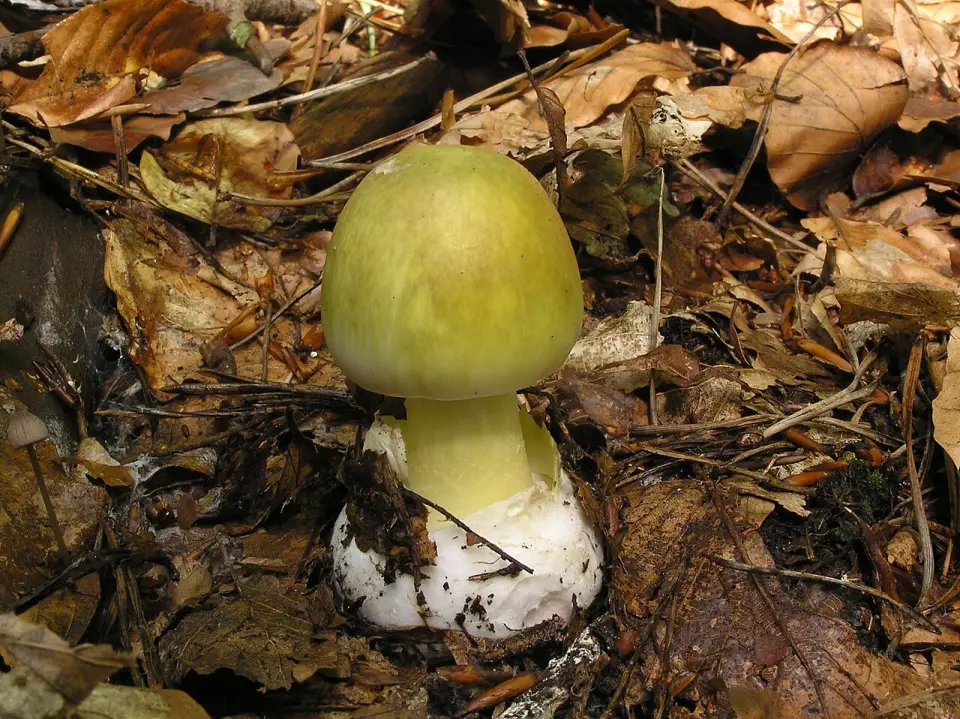
Photo: Krzysztof Ślusarczyk (upload by Marek Ślusarczyk) / Wikimedia Commons · CC BY 3.0
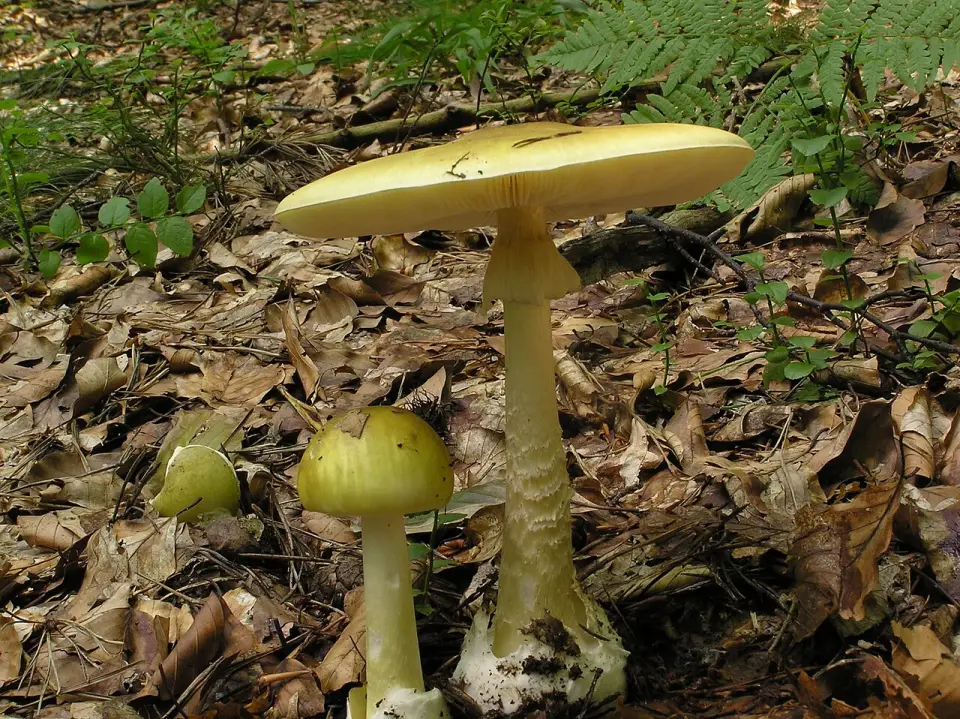
Photo: Krzysztof Ślusarczyk (upload by Marek Ślusarczyk) / Wikimedia Commons · CC BY 3.0
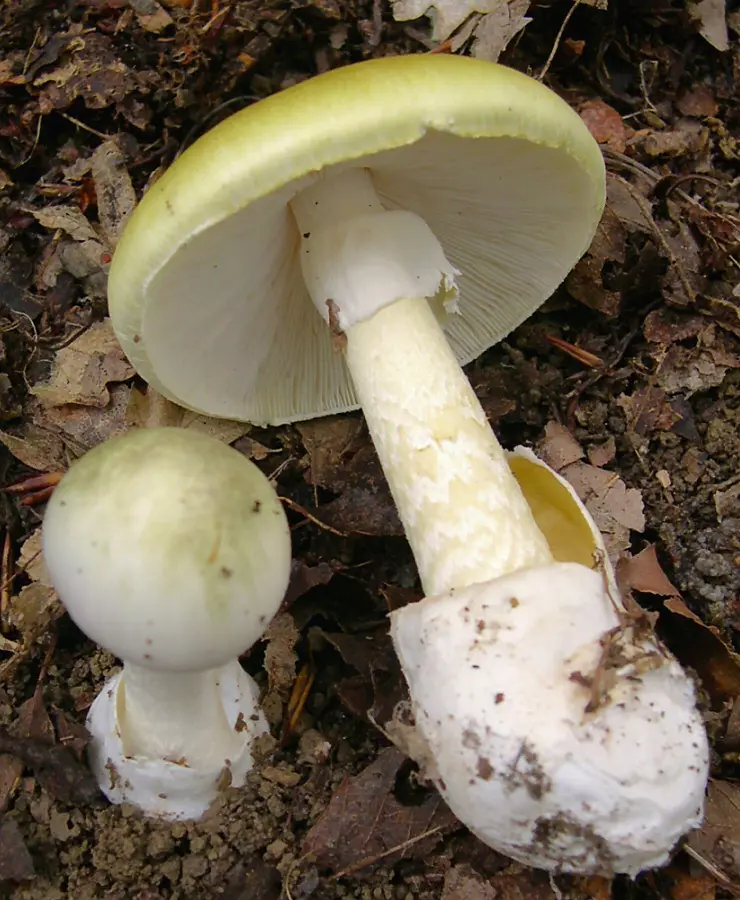
Photo: Amanita_phalloides_1.JPG: User:Archenzo derivative work: Ak ccm / Wikimedia Commons · CC BY-SA 3.0
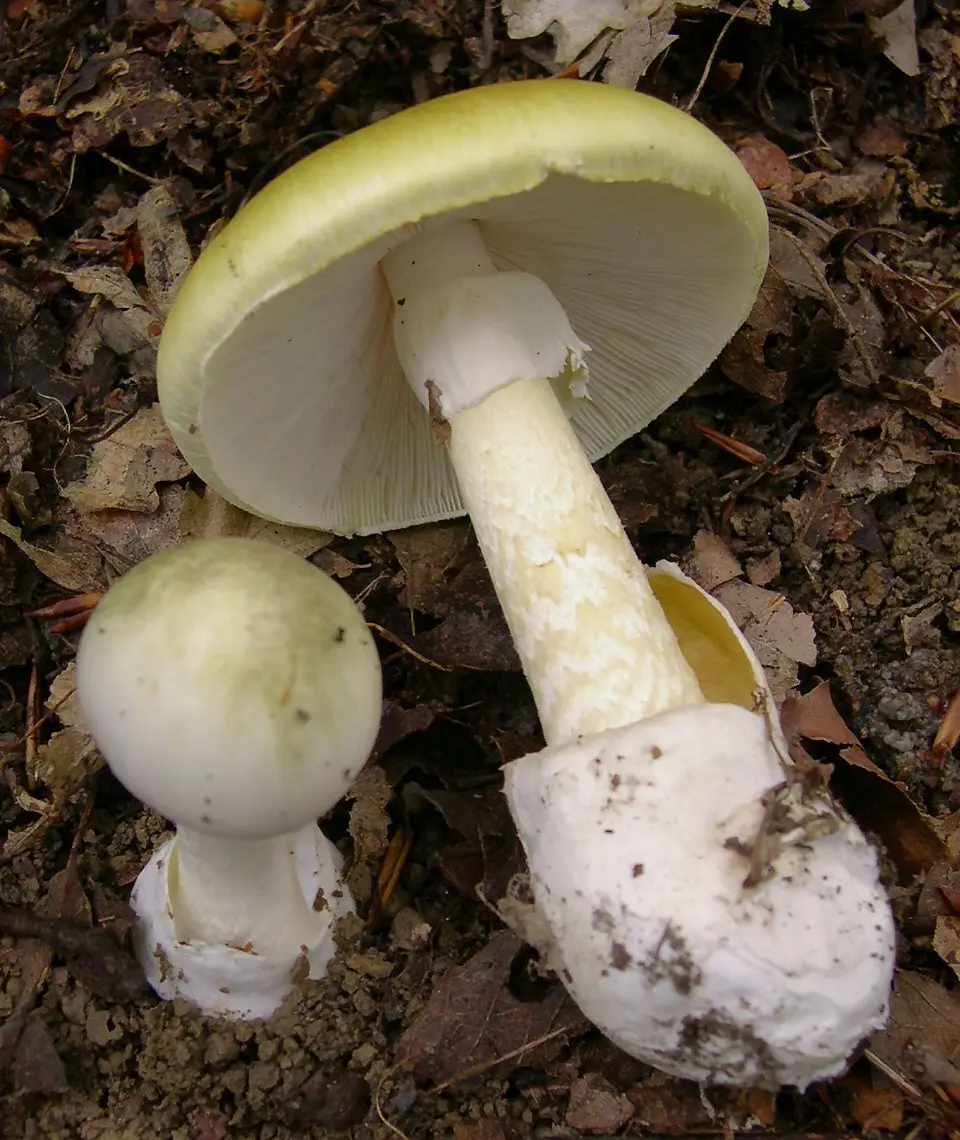
Photo: Amanita_phalloides_1.JPG: Archenzo derivative work: Ak ccm (talk) / Wikimedia Commons · CC BY-SA 3.0
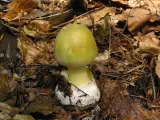
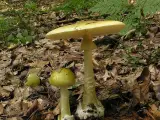
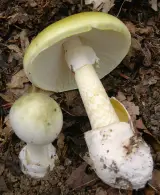
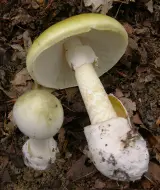
Do not pick and do not taste. It is on the map for reference — so you know it by sight.
The deadliest mushroom in Europe: most fatal poisonings are laid at its door. An olive-green cap with radial fibres, gills that are always white, a ring on the stem and a white bag-like volva at the base. Amatoxins survive both cooking and drying; symptoms arrive six to twenty-four hours later, by which time the liver is already damaged. One fruit body is enough to kill an adult.
Quick facts
- Scientific name
- Amanita phalloides (Vaill. ex Fr.) Link (1833)
- Family
- Amanitaceae
- Edibility
- Deadly
- Season
- Sep–Dec
- Usual altitude
- 177–1,134 m
- Under which trees
- Oak, Holm oak, Cork oak, Beech, Chestnut, Hazel
- IUCN Red List
- Not evaluated (NE)
Where it grows
Oak, chestnut and beech woods and eucalyptus plantations; throughout the country, September to November.
Confused with
- Charcoal burnerRussula cyanoxantha
An edible russula, with neither ring nor volva. Look at the base of the stem — lift the whole mushroom out rather than cutting it.
- Caesar's mushroomAmanita caesarea
In the "egg" stage they look identical from outside; cut open, the Caesar's cap is orange and the death cap's is white or greenish.
- Field mushroomAgaricus campestris
A field mushroom's gills turn pink and then black with age, and there is no volva; the death cap's gills stay white for ever.
When it has been found
Finds recorded in Spain, by month: 1,422 in all, from GBIF. They show when it fruits, and also when people go looking.
Where it has been found
Each square is an area of about 20 km with recorded finds; the darker, the more finds. It does not pinpoint patches: for where it is coming up now, see the forecast map.
Where it comes up
Areas where this species is scoring highest right now.
- Montseny massif MassifsExcellent · peak excellent
- Garrotxa ComarcasExcellent · peak excellent
- la Selva ComarcasExcellent · peak excellent
- Osona ComarcasExcellent · peak excellent
- Gironés ComarcasGood · peak excellent
- Vallés Oriental ComarcasGood · peak excellent
- Maresme ComarcasGood · peak excellent
- Ripollés ComarcasGood · peak excellent
In guides and news
Sources
The usual altitude and the trees come from our own fit of the model to those finds and to the Spanish Forest Map (Mapa Forestal de España).
Would you know them from a photograph? →
The description is for reference. Identifying a mushroom from a photograph is unreliable: do not eat anything you are not sure of.