 MicoRadar
Poplar mushroom
Cyclocybe aegerita
Also called: Poplar fieldcap, Velvet pioppini
In Spanish: Seta de chopo · In Catalan: Pollancró, Bolet de pollanc, Flota de pollancre, Bolet d'arbre, Clopissa, Gírgola de poll · In Basque: Makal-ziza · In Galician: Cogomelo dos chopos, Cogumelo dos choupos, Cogumelo dos lamigueiros
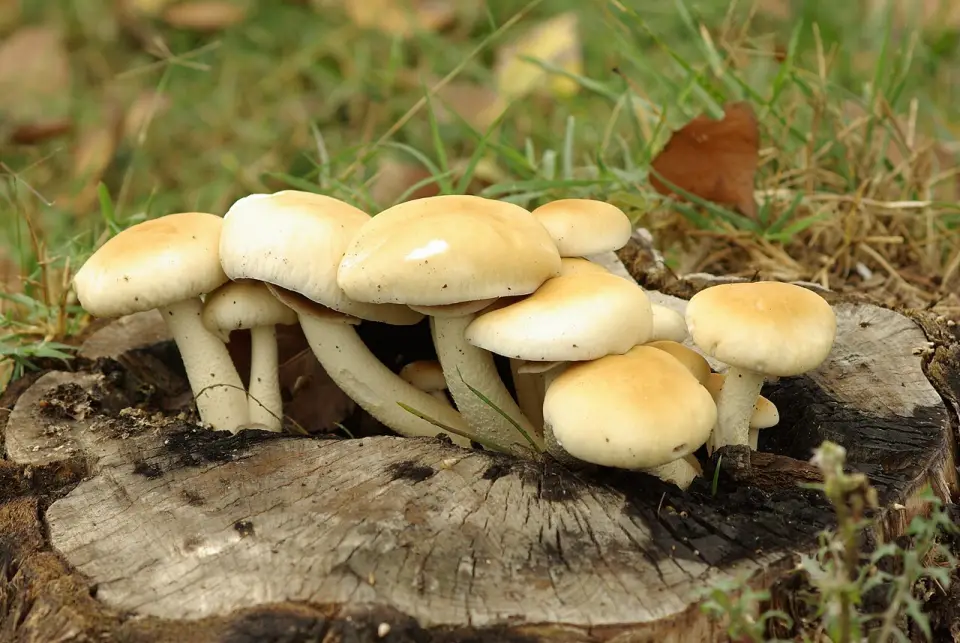
Photo: Ramiro Barreiro / Wikimedia Commons · CC BY-SA 3.0
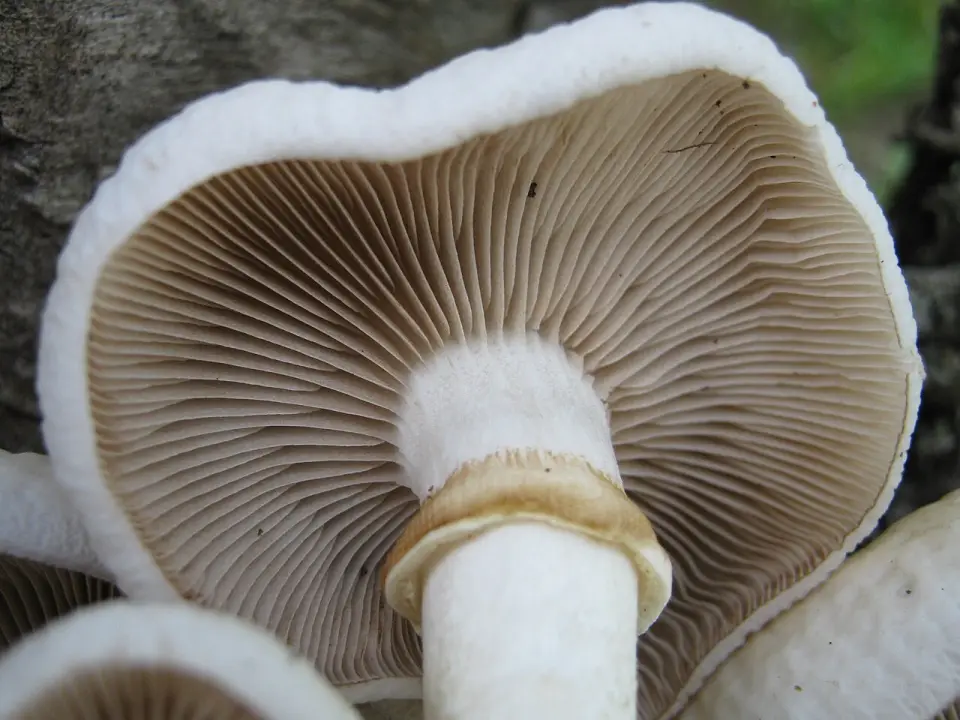
Photo: This image was created by user zaca at Mushroom Observer, a source for mycological images.You can contact this user here. / Wikimedia Commons · CC BY-SA 3.0
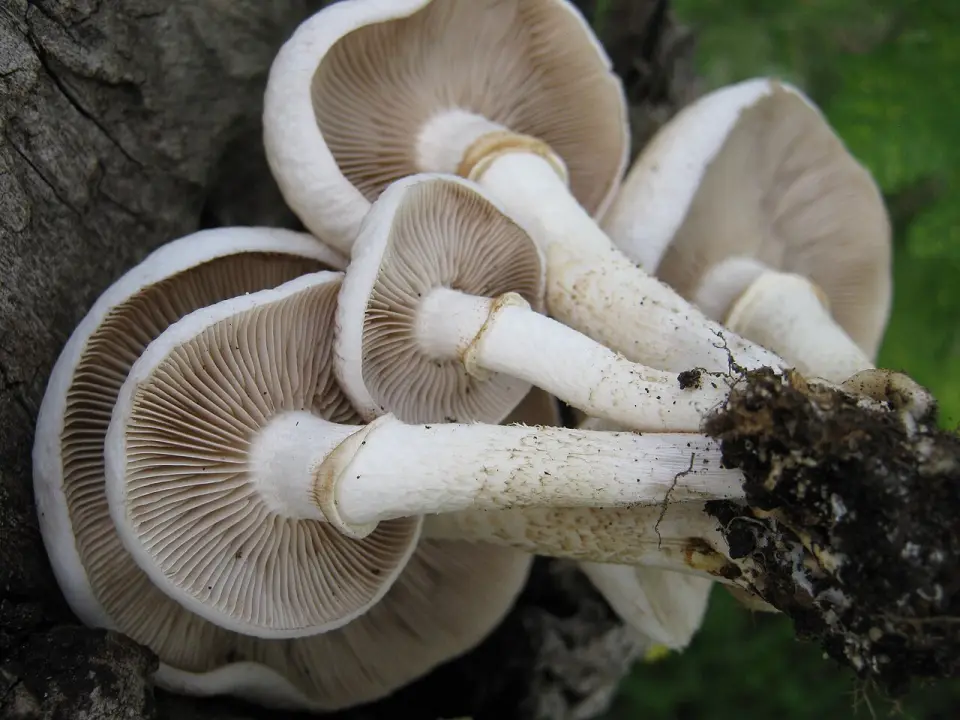
Photo: This image was created by user zaca at Mushroom Observer, a source for mycological images.You can contact this user here. / Wikimedia Commons · CC BY-SA 3.0
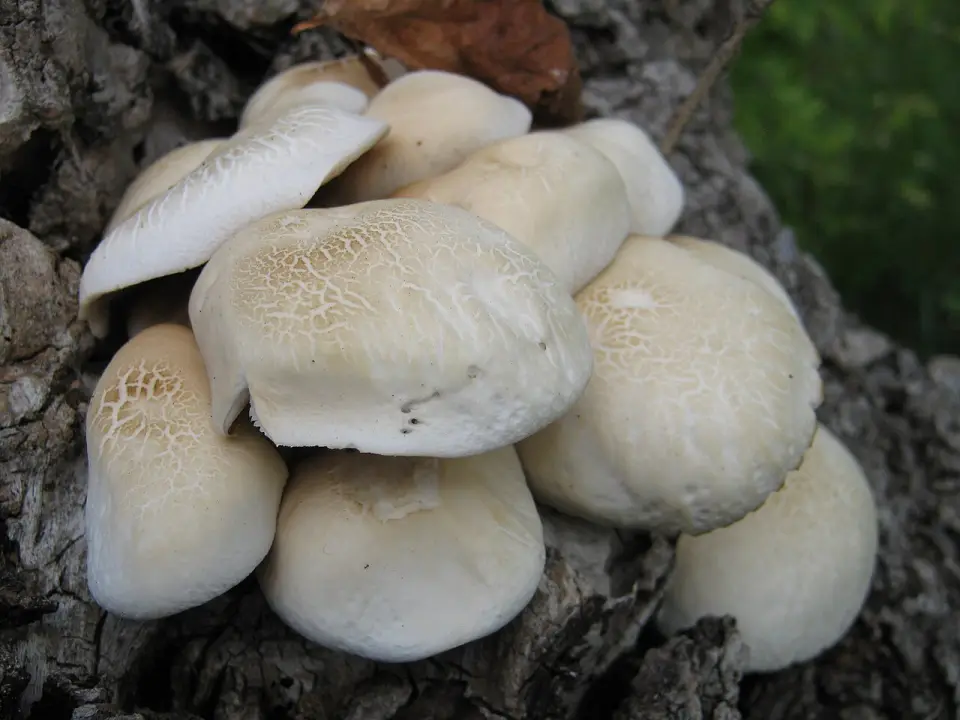
Photo: This image was created by user zaca at Mushroom Observer, a source for mycological images.You can contact this user here. / Wikimedia Commons · CC BY-SA 3.0
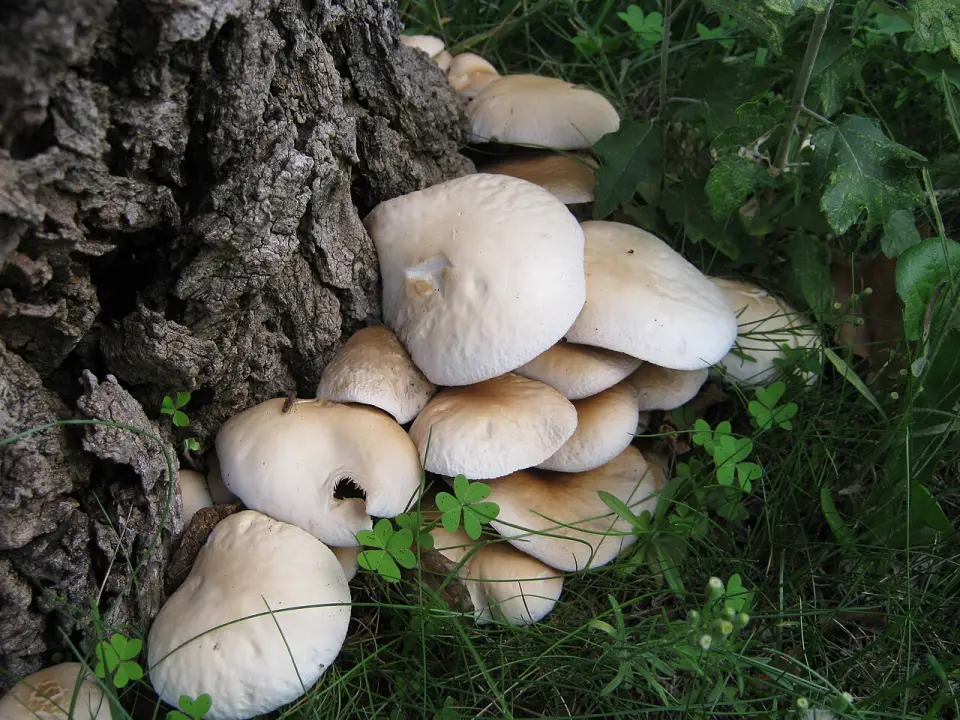
Photo: This image was created by user zaca at Mushroom Observer, a source for mycological images.You can contact this user here. / Wikimedia Commons · CC BY-SA 3.0
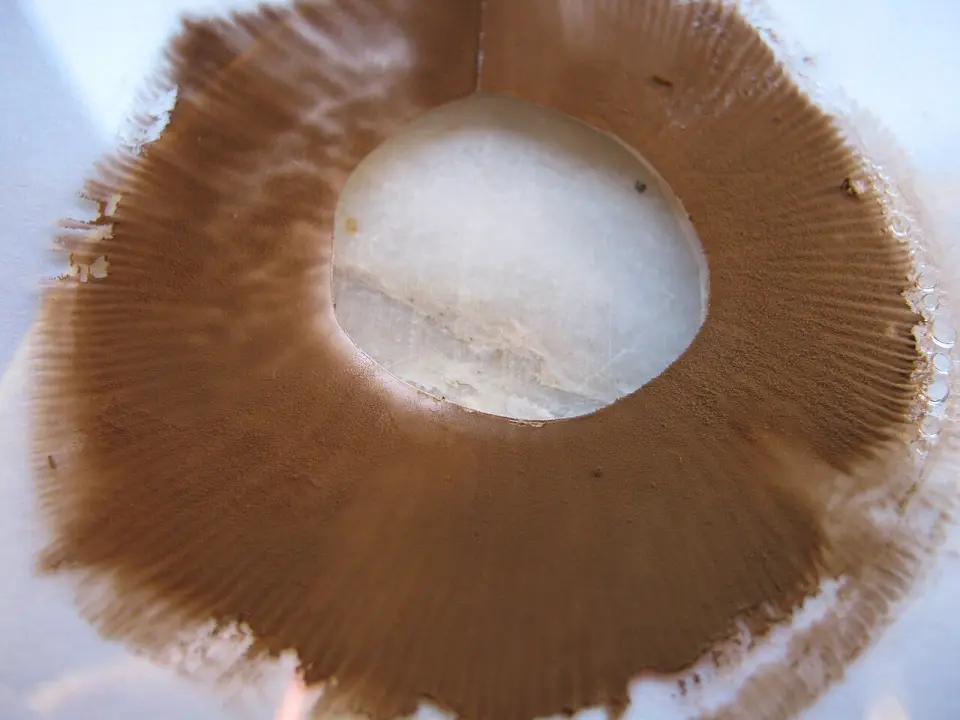
Photo: This image was created by user zaca at Mushroom Observer, a source for mycological images.You can contact this user here. / Wikimedia Commons · CC BY-SA 3.0
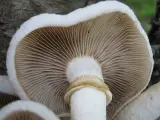
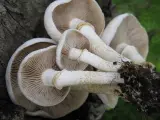
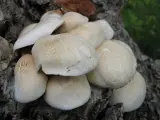
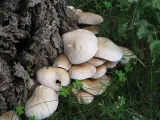

It grows in tight clusters on wood. The cap, 4–10 cm, starts dark brown and cracks finely as it dries, paling from the centre until it is almost hazel with a lighter rim. The gills are pale at first and turn cinnamon as the spores ripen. The stem is fibrous and tough, with a white membranous ring that persists. It smells pleasantly of wine and flour.
Quick facts
- Scientific name
- Cyclocybe aegerita (V.Brig.) Vizzini (2014)
- Family
- Tubariaceae
- Edibility
- Edible
- Season
- Oct–Apr
- Usual altitude
- 188–840 m
- Under which trees
- Riverside woodland, Aspen
- Dangerous look-alike
- Funeral bell · Galerina marginata
- IUCN Red List
- Not evaluated (NE)
Where it grows
On living trunks and stumps of poplar, and also willow, elm, ash and even fig, in riverside woodland, poplar plantations and irrigated farmland. It is a mushroom of wood rather than soil, which is why it appears on the flat and near water. It fruits during mild, damp spells from autumn through to late spring, and returns to the same trunk for years.
Confused with
- Funeral bellGalerina marginatadangerous
Deadly, carrying the same amatoxins as the death cap. It is much smaller, with a honey-brown hygrophanous cap, and grows on the dead wood of conifers and broadleaves alike — poplar included — often on stumps and logging debris: the tree will not tell them apart. Any small brown ringed mushroom coming up on wood should be left alone.
- Sulphur tuftHypholoma fascicularedangerous
It comes up in dense tufts on stumps just as the poplar mushroom does, but it is a uniform sulphur yellow, its gills turn greenish with age, and the taste is intensely bitter. Toxic.
When it has been found
Finds recorded in Spain, by month: 39 in all, from GBIF. They show when it fruits, and also when people go looking.
Where it has been found
Each square is an area of about 20 km with recorded finds; the darker, the more finds. It does not pinpoint patches: for where it is coming up now, see the forecast map.
Where it comes up
Areas where this species is scoring highest right now.
- Ribera Alta del Ebro ComarcasWeak · peak good
- Gironés ComarcasVery weak · peak good
- Garrotxa ComarcasVery weak · peak good
- la Selva ComarcasVery weak · peak good
- Pla de l'Estany ComarcasVery weak · peak weak
- Zaragoza ComarcasVery weak · peak good
- Montseny massif MassifsVery weak · peak moderate
- Osona ComarcasVery weak · peak moderate
Sources
The usual altitude and the trees come from our own fit of the model to those finds and to the Spanish Forest Map (Mapa Forestal de España).
Would you know them from a photograph? →
The description is for reference. Identifying a mushroom from a photograph is unreliable: do not eat anything you are not sure of.