 MicoRadar
Hedgehog mushroom
Hydnum repandum
Also called: Wood hedgehog, Sweet tooth
In Spanish: Lengua de vaca, Gamuza, Lengua de gato, Pie de cordero · In Catalan: Llengua de bou, Vaqueta, Llémena, Agulletes, Bolet d'agulles, Picornell pelut · In Basque: Tripaki argi, Negu-ziza, Tripaki, Zizauri · In Galician: Lingua de vaca, Lingua de ovella
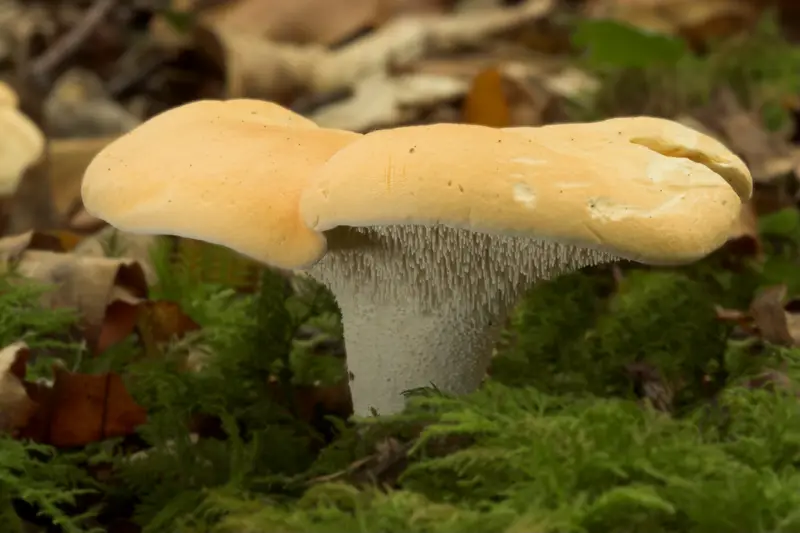
Photo: D J Kelly / Wikimedia Commons · Public domain
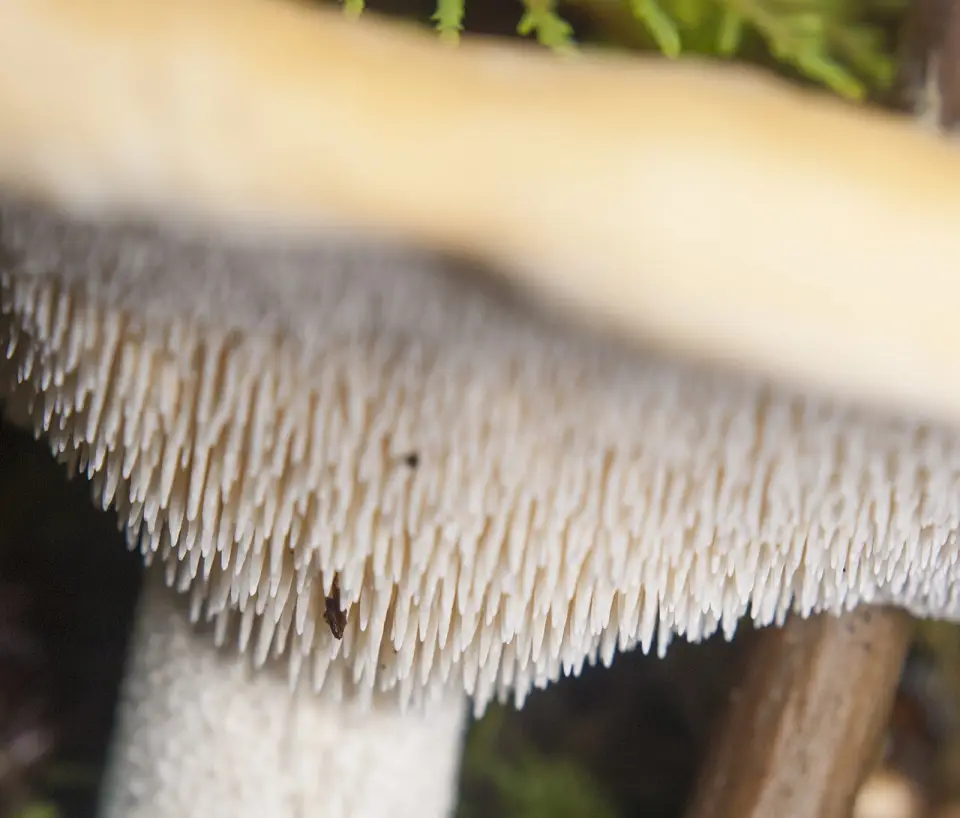
Photo: Scott Darbey from Canada / Wikimedia Commons · CC BY 2.0
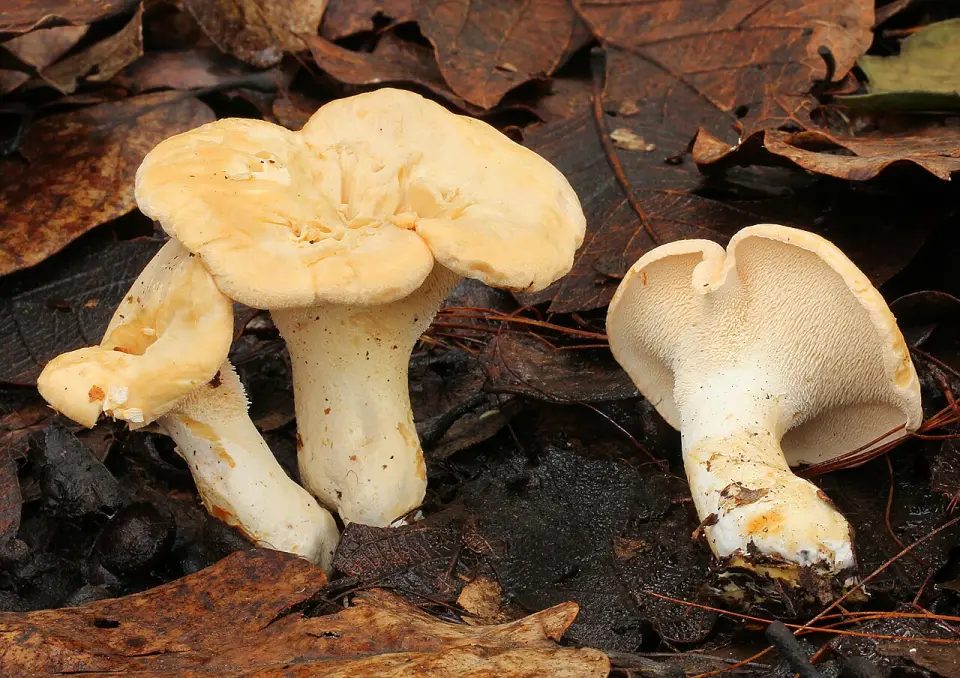
Photo: This image was created by user Alan Rockefeller (Alan Rockefeller) at Mushroom Observer, a source for mycological images.You can contact this user here. / Wikimedia Commons · CC BY-SA 3.0
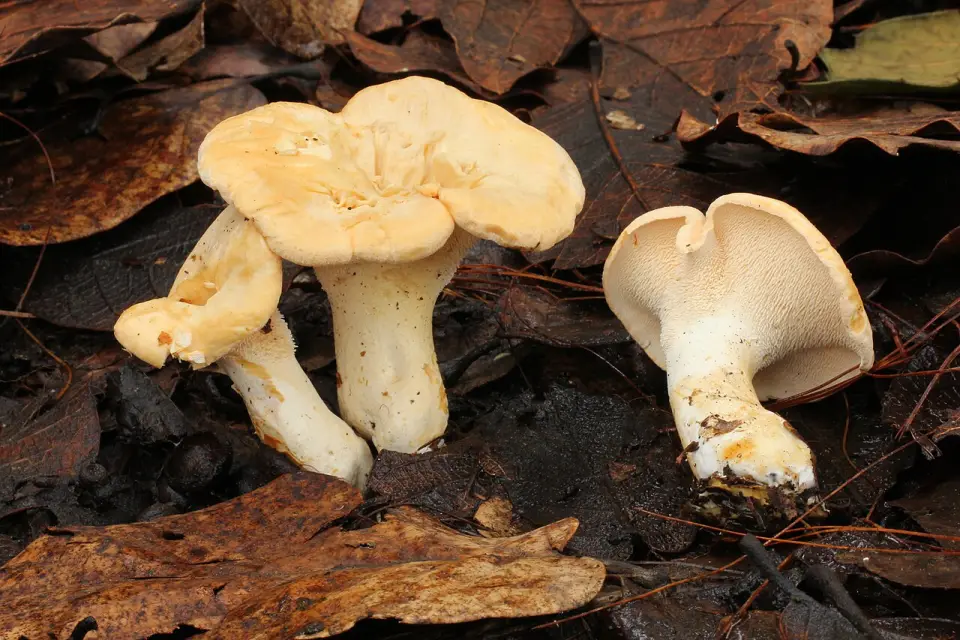
Photo: This image was created by user Alan Rockefeller (Alan Rockefeller) at Mushroom Observer, a source for mycological images.You can contact this user here. / Wikimedia Commons · CC BY-SA 3.0
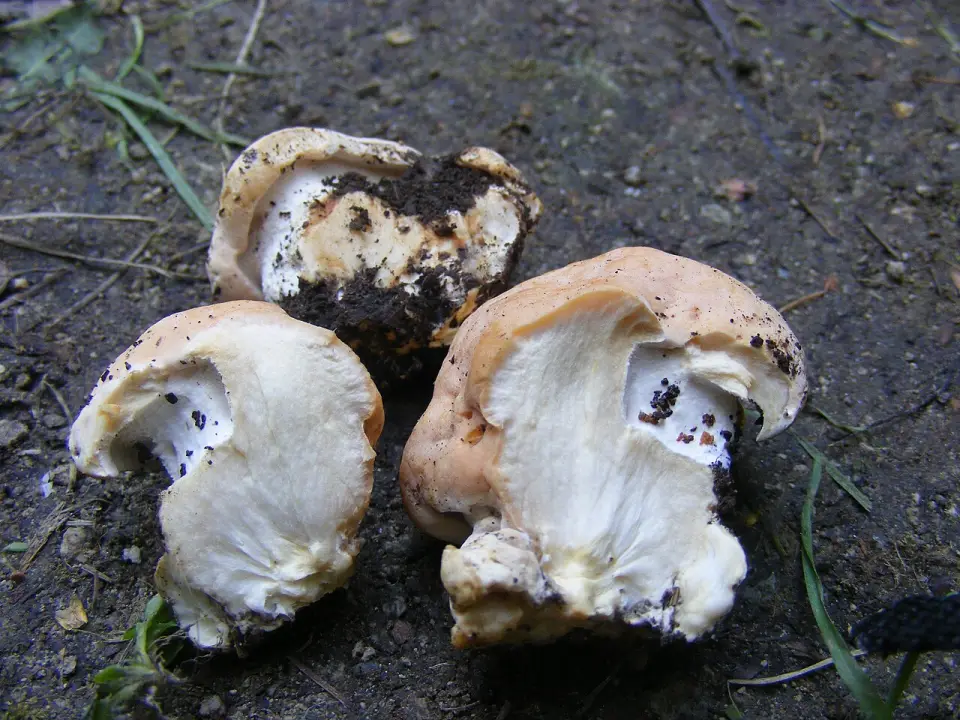
Photo: Szabi237 / Wikimedia Commons · CC BY 3.0
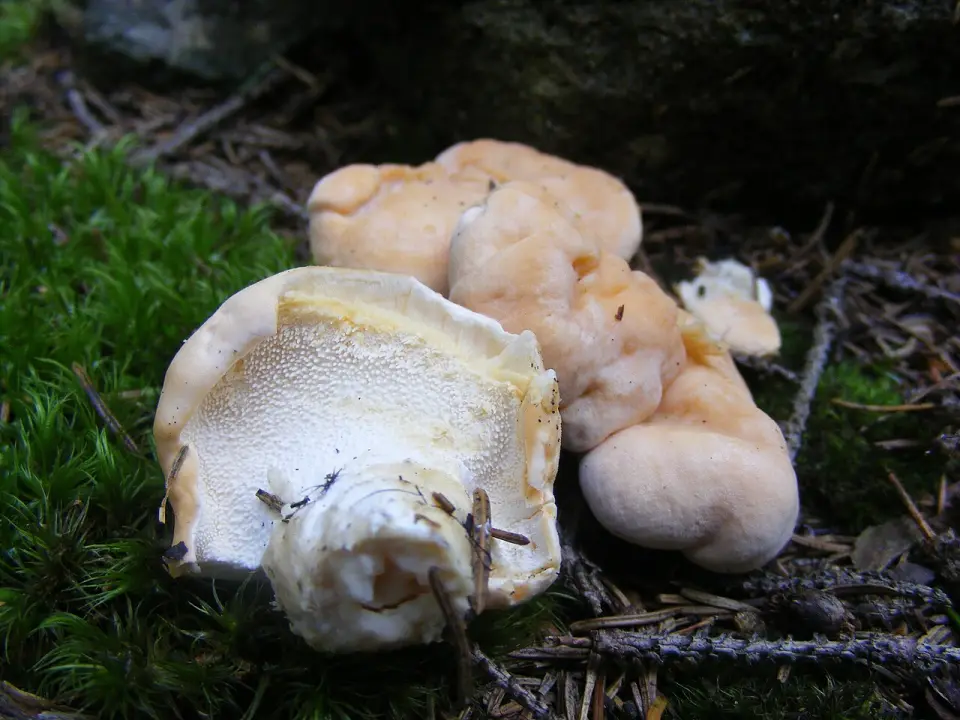
Photo: Szabi237 / Wikimedia Commons · CC BY 3.0
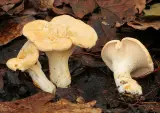
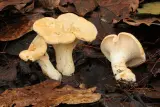
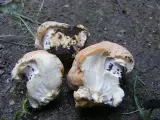
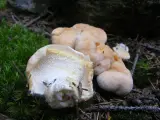
A creamy ochre mushroom with an irregular cap; underneath, instead of gills, it carries soft brittle spines that make it impossible to mistake. Firm flesh which turns bitter in old specimens — then the spines are scraped off. It hardly ever goes maggoty.
Quick facts
- Scientific name
- Hydnum repandum L. (1753)
- Family
- Hydnaceae
- Edibility
- Edible
- Season
- Sep–Jan
- Usual altitude
- 225–1,159 m
- Under which trees
- Pine, Oak, Holm oak, Beech, Chestnut
- IUCN Red List
- Least concern (LC)
Where it grows
Conifer and broadleaf woods, in moss and litter, often in fairy rings and rows. From October into winter.
When it has been found
Finds recorded in Spain, by month: 1,371 in all, from GBIF. They show when it fruits, and also when people go looking.
Where it has been found
Each square is an area of about 20 km with recorded finds; the darker, the more finds. It does not pinpoint patches: for where it is coming up now, see the forecast map.
Where it comes up
Areas where this species is scoring highest right now.
- Montseny massif MassifsExcellent · peak excellent
- Osona ComarcasExcellent · peak excellent
- Garrotxa ComarcasExcellent · peak excellent
- Ripollés ComarcasExcellent · peak excellent
- Lluçanès ComarcasGood · peak excellent
- Pirineo ComarcasGood · peak excellent
- Berguedà ComarcasGood · peak excellent
- Moianès ComarcasGood · peak excellent
In guides and news
- Weekend 17–18 October: good-condition area up for all five leading species
State of the forest
- Cataluña, 17–18 October: conditions better than a week ago
State of the forest
Sources
The usual altitude and the trees come from our own fit of the model to those finds and to the Spanish Forest Map (Mapa Forestal de España).
Would you know them from a photograph? →
The description is for reference. Identifying a mushroom from a photograph is unreliable: do not eat anything you are not sure of.