 MicoRadar
Caesar's mushroom
Amanita caesarea
Also called: Caesar's amanita
In Spanish: Oronja, Amanita de los césares, Huevo de rey, Yema de huevo, Tana · In Catalan: Ou de reig, Reig, Rovell d'ou, Cocou, Oriol · In Basque: Kuleto, Gorringo, Kuletro, Arrautza-perretxiko, Kurrinto · In Galician: Raíña, Amanita dos césares
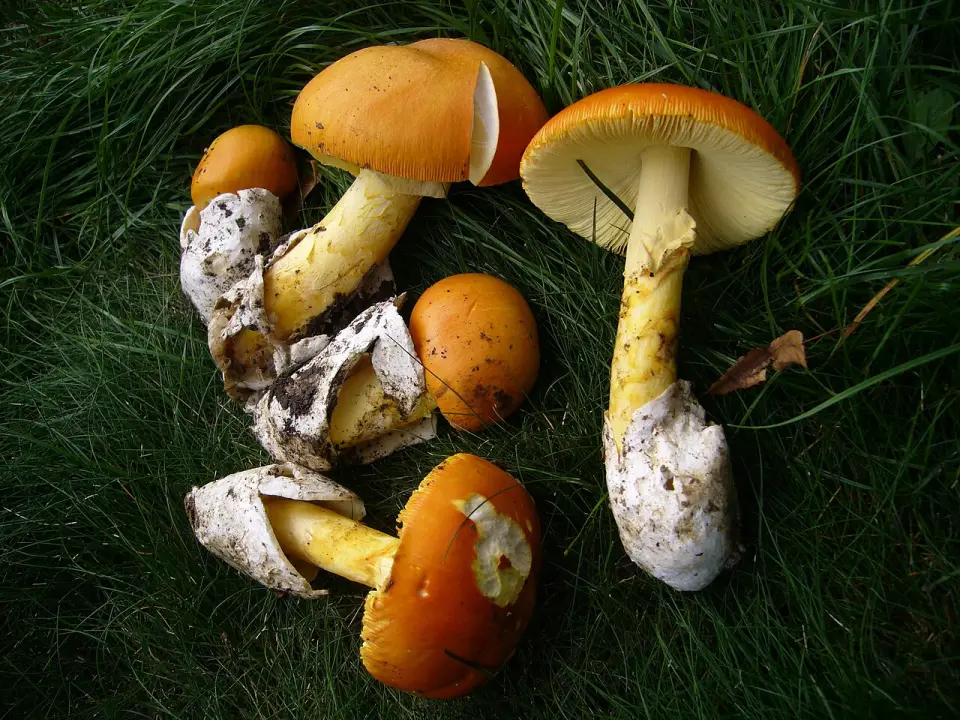
Photo: Yaqui / Wikimedia Commons · CC BY-SA 3.0
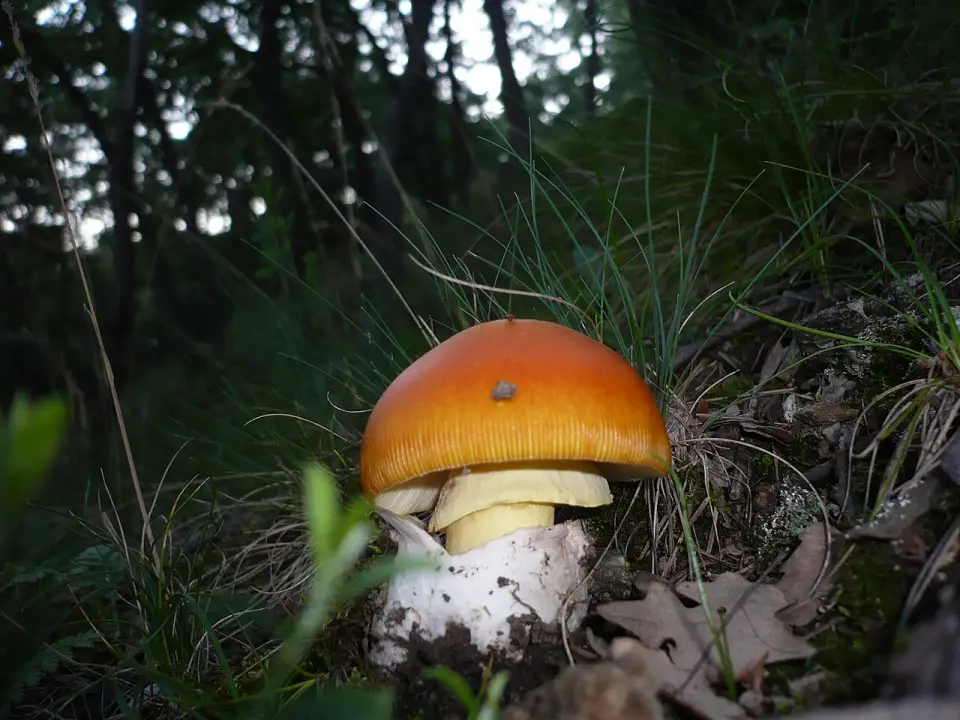
Photo: This image was created by user Gerhard Koller (Gerhard) at Mushroom Observer, a source for mycological images.You can contact this user here. / Wikimedia Commons · CC BY-SA 3.0
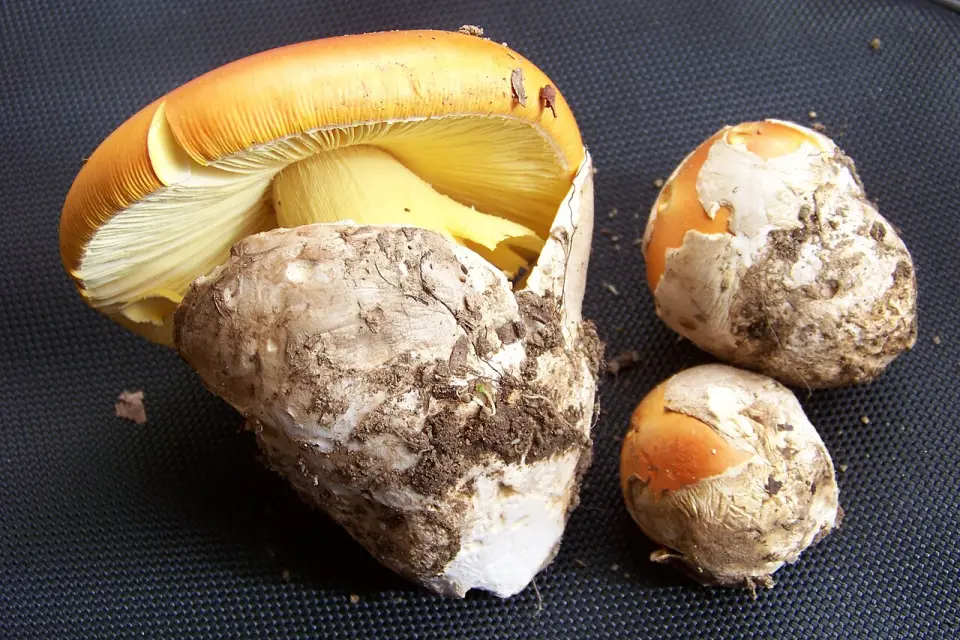
Photo: This image was created by user Murselin Guney (Beyrek) at Mushroom Observer, a source for mycological images.You can contact this user here. / Wikimedia Commons · CC BY-SA 3.0
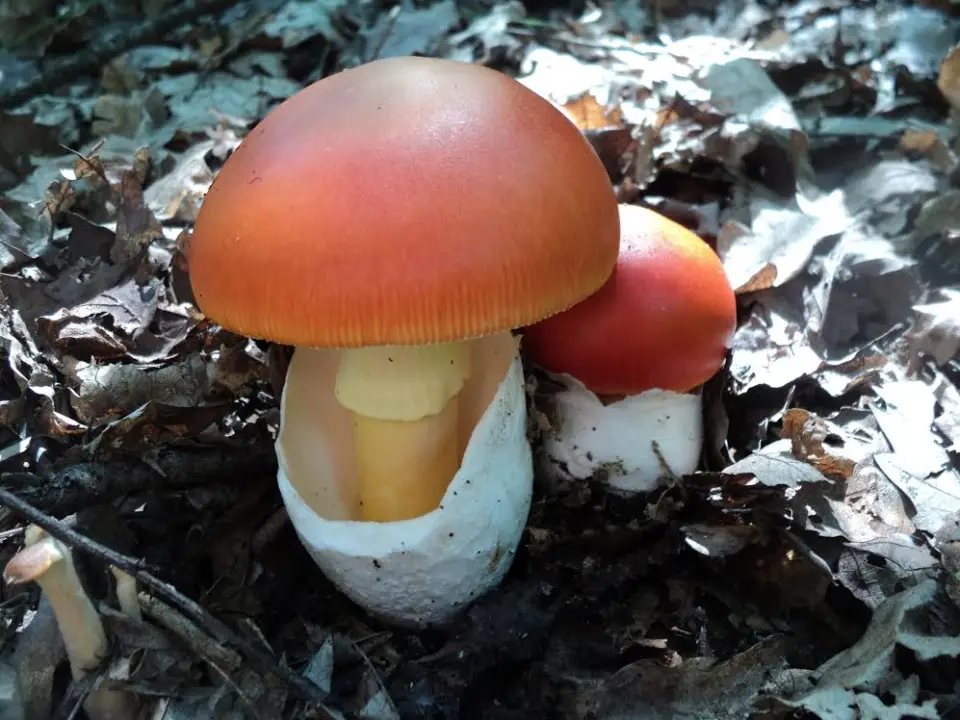
Photo: GLJIVARSKO DRUSTVO NIS from Serbia / Wikimedia Commons · CC BY 2.0
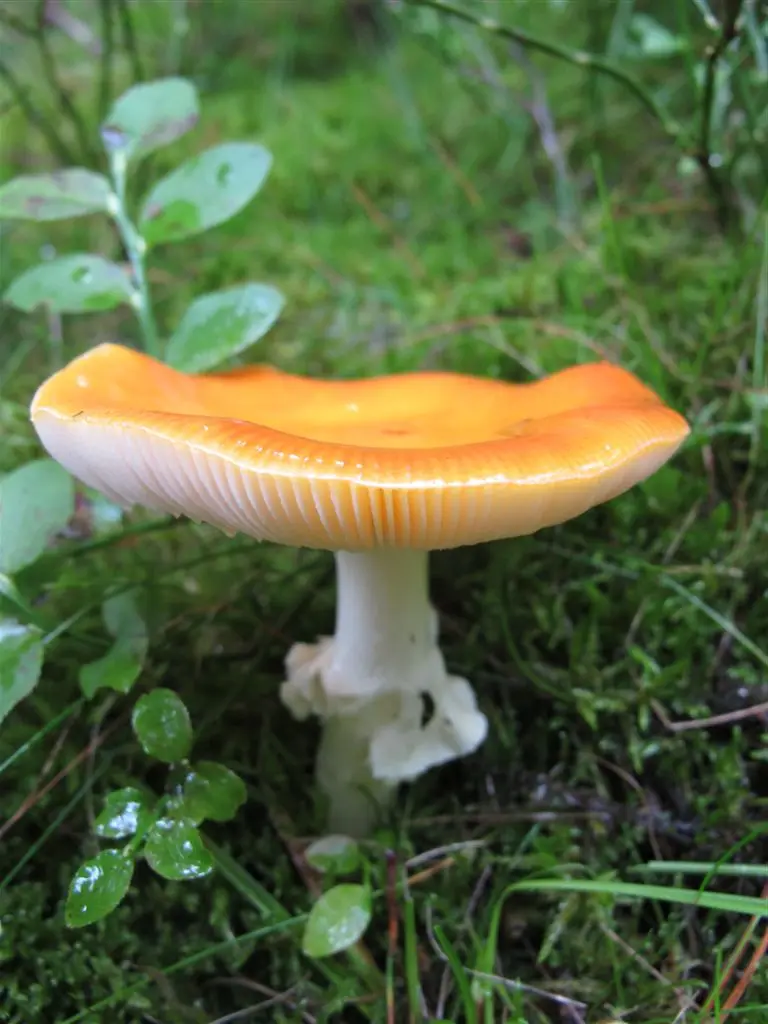
Photo: Dr. Hans-Günter Wagner / Wikimedia Commons · CC BY-SA 2.0
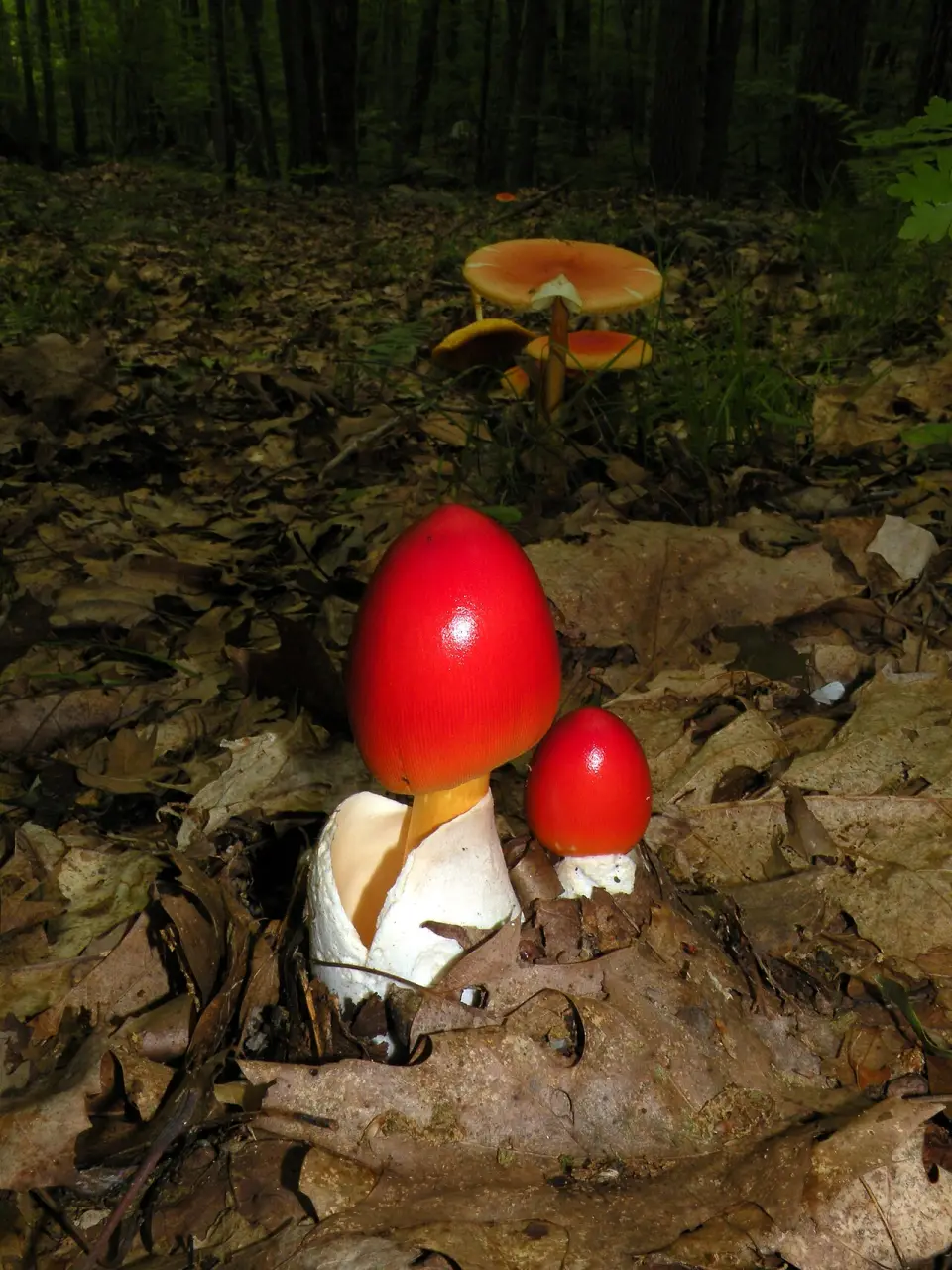
Photo: Doug McGrady from Warwick, RI, USA / Wikimedia Commons · CC BY 2.0
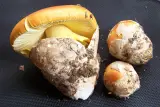
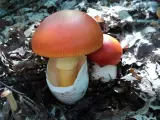
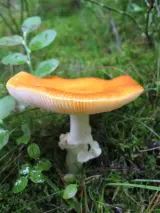
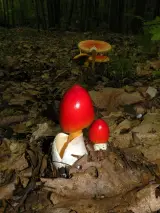
The best of the amanitas and one of the priciest mushrooms in the Mediterranean: a smooth orange-red cap with an evenly grooved margin, vivid yellow gills, a yellow stem with a yellow ring, and a white bag-like volva at the base. The young fruit body emerges from a white "egg" — and that is exactly the stage at which it is confused with its deadly relatives.
Quick facts
- Scientific name
- Amanita caesarea (Scop.) Pers. (1801)
- Family
- Amanitaceae
- Edibility
- Edible
- Season
- Sep–Nov
- Usual altitude
- 124–1,145 m
- Under which trees
- Oak, Holm oak, Cork oak, Chestnut
- Dangerous look-alike
- Fly agaric · Amanita muscaria
- IUCN Red List
- Least concern (LC)
Where it grows
Warm holm oak, cork oak and chestnut woods and dehesas; holm, cork, Pyrenean and Portuguese oak and chestnut, and in the north also pedunculate, sessile and downy oak; rarely pine. It fruits September to November, from late August in the north, after storms. Foothills and low mountains: nearly every record sits below 1100 m.
Confused with
- Fly agaricAmanita muscariadangerous
White gills, a white stem and white flecks on the cap, compared with the yellow gills and yellow stem of the Caesar. Toxic.
- Death capAmanita phalloidesdangerous
In the "egg" stage it cannot be told apart without cutting: it is deadly. Every white amanita egg is sliced lengthways and the colour of the cap inside is checked.
When it has been found
Finds recorded in Spain, by month: 614 in all, from GBIF. They show when it fruits, and also when people go looking.
Where it has been found
Each square is an area of about 20 km with recorded finds; the darker, the more finds. It does not pinpoint patches: for where it is coming up now, see the forecast map.
Where it comes up
Areas where this species is scoring highest right now.
- Montseny massif MassifsExcellent · peak excellent
- Garrotxa ComarcasExcellent · peak excellent
- la Selva ComarcasExcellent · peak excellent
- Gironés ComarcasGood · peak excellent
- Vallés Oriental ComarcasGood · peak excellent
- Osona ComarcasGood · peak excellent
- Maresme ComarcasGood · peak excellent
- Upper Empordà ComarcasGood · peak excellent
In guides and news
- Soria: permit and rules for mushroom picking
Permits and rules
- Cataluña, 17–18 October: conditions better than a week ago
State of the forest
Sources
The usual altitude and the trees come from our own fit of the model to those finds and to the Spanish Forest Map (Mapa Forestal de España).
Would you know them from a photograph? →
The description is for reference. Identifying a mushroom from a photograph is unreliable: do not eat anything you are not sure of.