 MicoRadar
St George's mushroom
Calocybe gambosa
In Spanish: Perrechico, Seta de San Jorge, Perretxico, Usón, Seta de primavera, Seta de mayo, Muchardón, Seta de Orduña · In Catalan: Moixernó, Moixeró, Moixernó de primavera, Bolet de Sant Jordi, Moixernó ver · In Basque: Udaberriko zizazuri, Zizazuri, Perretxiko, Ziza, Maiatzeko ziza, Udaberri-ziza · In Galician: Cogomelo de San Xurxo, Cogumelo de San Xorxe
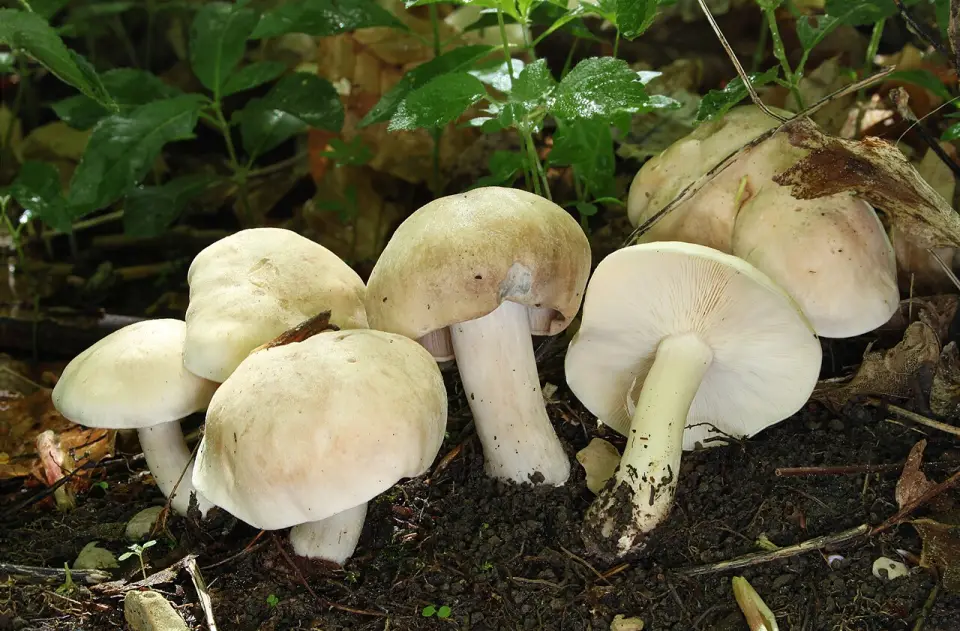
Photo: Holger Krisp / Wikimedia Commons · CC BY 3.0
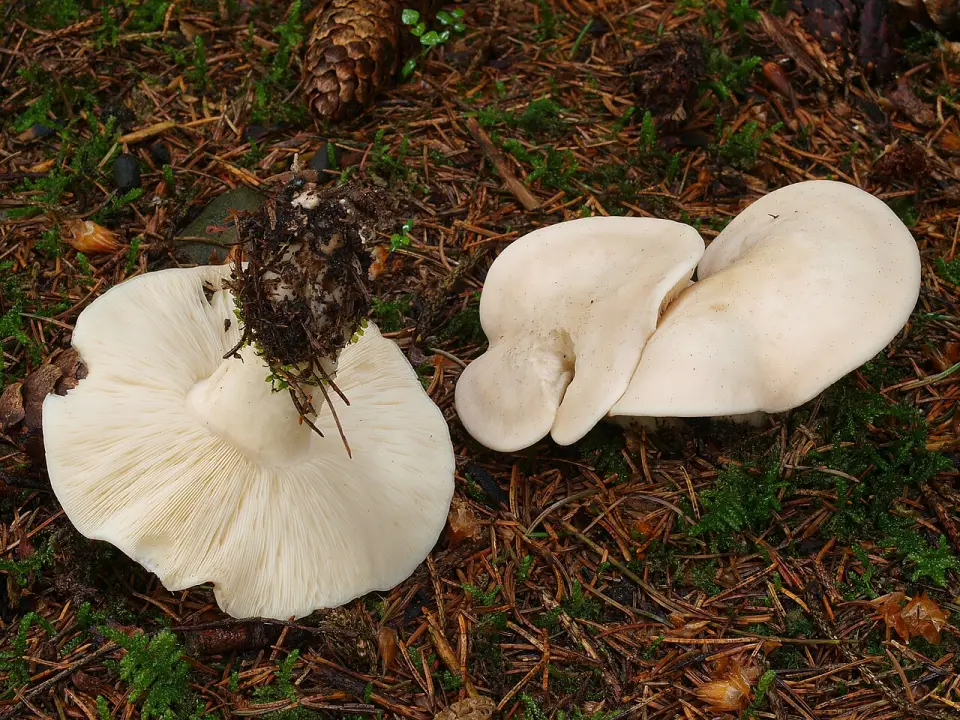
Photo: Andreas Kunze / Wikimedia Commons · CC BY-SA 3.0
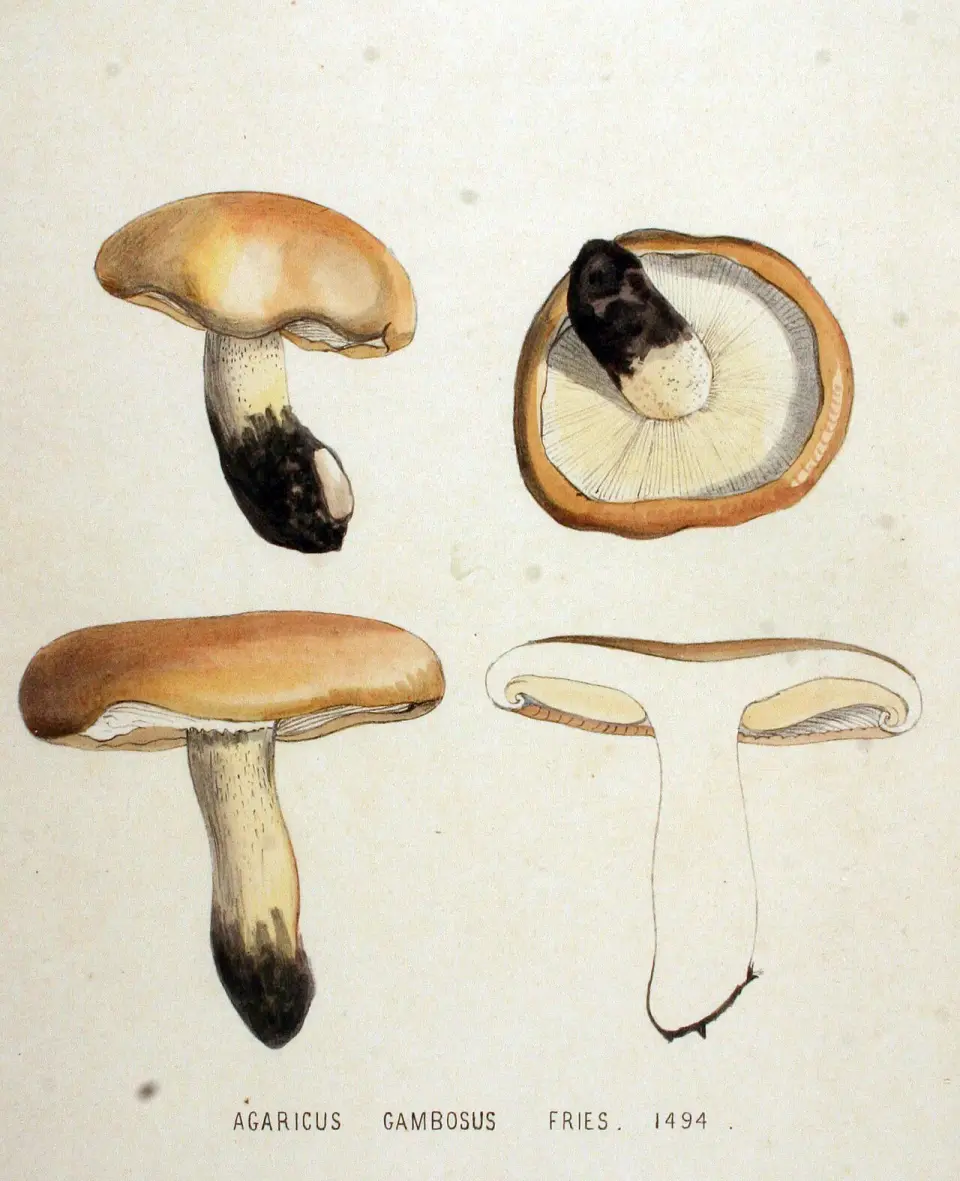
Photo: Jan Kops / Wikimedia Commons · Public domain
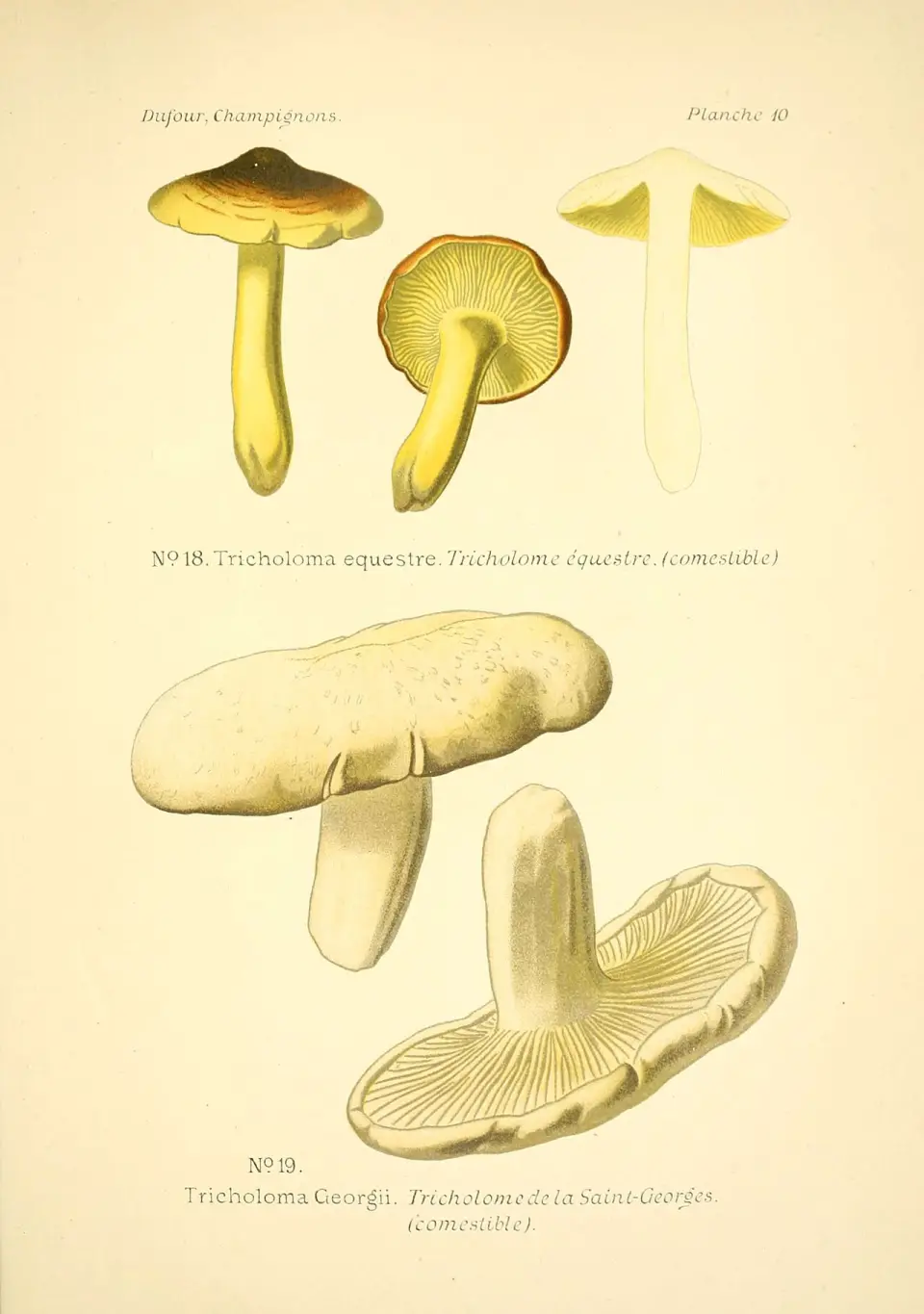
Photo: Dufour, L. / Wikimedia Commons · Public domain
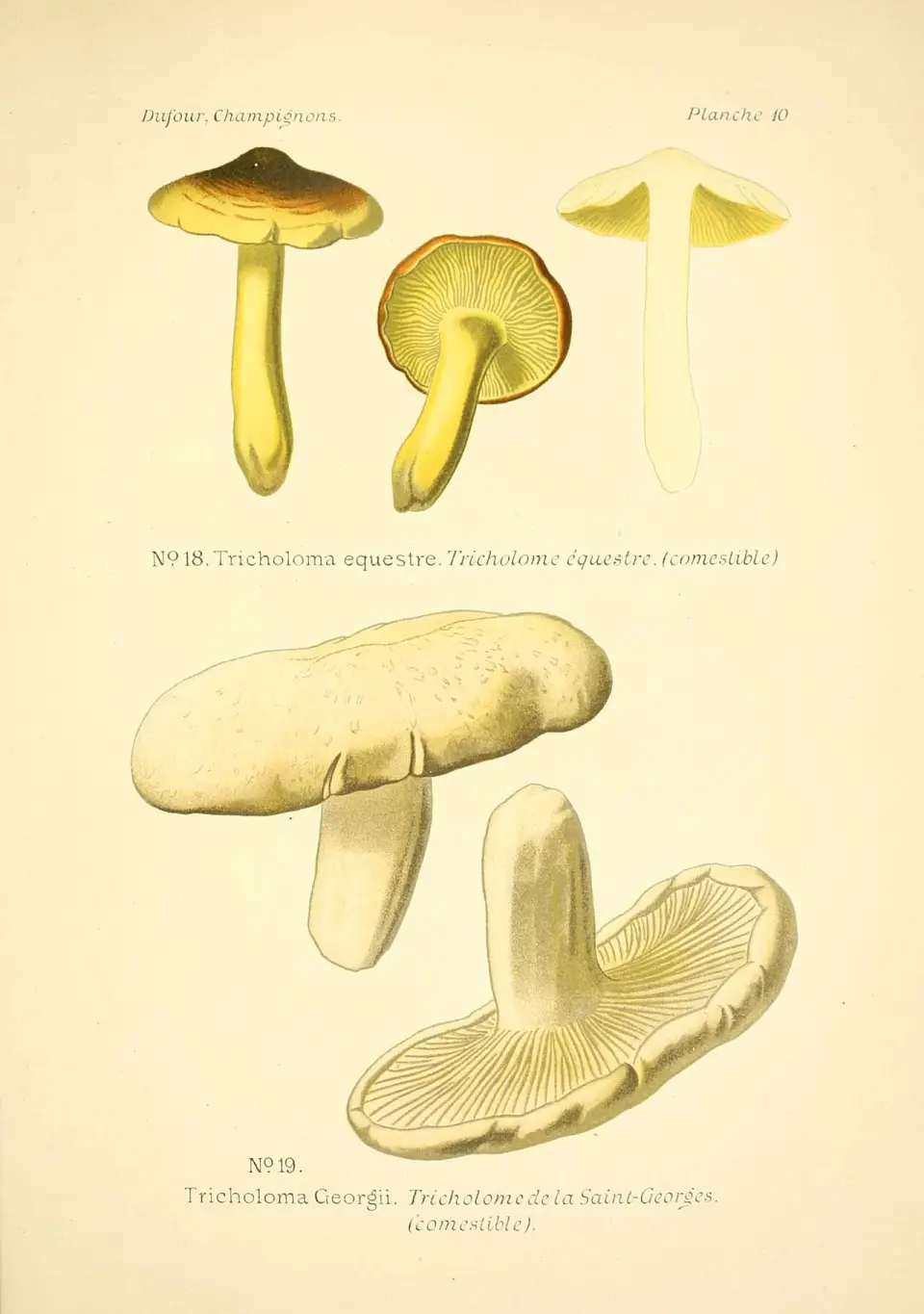
Photo: Dufour, L. / Wikimedia Commons · Public domain
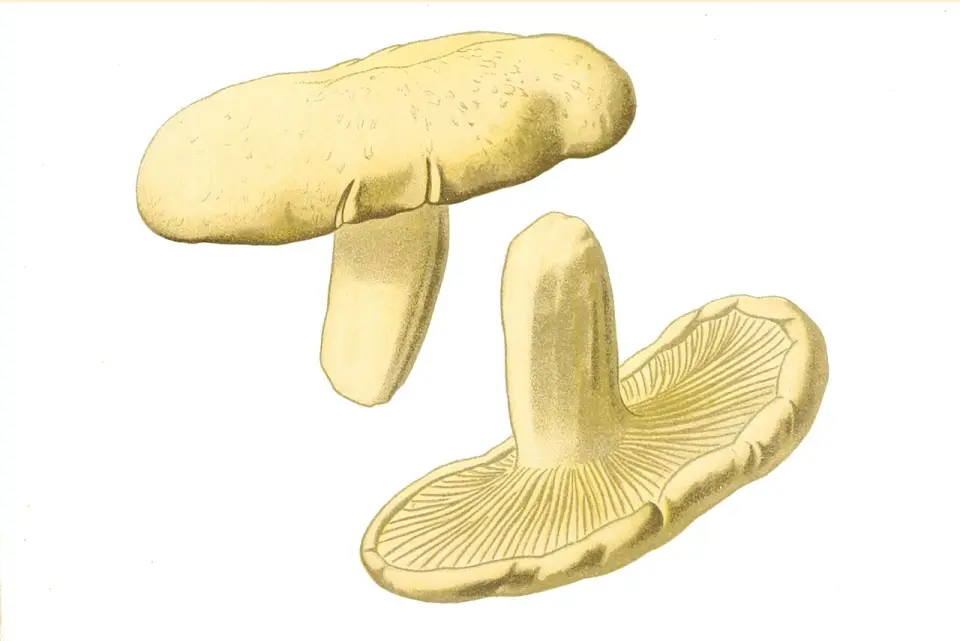
Photo: Léon Dufour († 1865) / Wikimedia Commons · Public domain
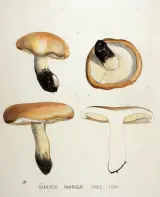
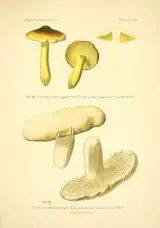
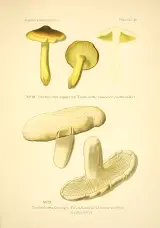

A firm, fleshy spring mushroom: a cream to buff cap 4–12 cm across, keeping its margin rolled under for a long time, with white gills that are narrow and very crowded. The stem is short, thick and solid, the same colour. The character that identifies it is not visual but a smell: a strong, clean scent of fresh flour, noticeable before you have even picked it.
Quick facts
- Scientific name
- Calocybe gambosa (Fr.) Donk (1962)
- Family
- Lyophyllaceae
- Edibility
- Edible
- Season
- Apr–Jun
- Usual altitude
- 312–1,528 m
- Dangerous look-alike
- Fool's mushroom · Amanita verna
- IUCN Red List
- Not evaluated (NE)
How to recognise it
- Cap
- Cream-white to buff, 4–12 cm, fleshy and matt, margin rolled under
- Gills, pores or pits
- Gills white to cream, narrow, very crowded, adnate or notched; never pink
- Stem
- Short, thick and solid, whitish; no ring or volva
- Flesh when cut
- White, thick and firm; strong smell of fresh flour
- Spore print
- White
Where it grows
Limestone pasture, field margins and hedgerows, in rings and arcs on grass — never inside closed woodland. It is the mushroom of the northern belt: Álava, Navarra, northern Burgos, La Rioja and Soria, between 500 and 1200 m. It fruits April to June, and a ring tends to come back to the same spot year after year; the Spanish name comes from St George's day, 23 April, which marks the opening of the season.
Confused with
- Fool's mushroomAmanita vernadangerous
- Cap
- White, sometimes cream at the centre, 5–10 cm, smooth
- Gills, pores or pits
- Gills white, free, crowded
- Stem
- White and slender, fragile membranous ring, buried sac-like volva
- Flesh when cut
- White and thin; does not change colour when cut
- Spore print
- White
- Where and when
- Holm oak, cork oak, oak and pine woods; March to June
How to tell them apart: A sac-like volva at the base — dig it out — free gills and a ring, which may have fallen off; St George's mushroom has neither volva nor ring.
White like the St George's mushroom, and it comes up in the same months along the edges of holm oak and oak woods that border the meadows. What separates it is the ring on the stem — fragile, it may have fallen off — the free gills and the sac-like volva at the base, nearly always buried: lift the whole mushroom out. The St George's mushroom has neither ring nor volva and smells strongly of flour. It is deadly, and the symptoms take 6 to 24 hours to appear, by which time the liver is already damaged.
- Deadly fibrecapInocybe erubescensdangerous
- Cap
- Conical with an umbo, 3–8 cm, cream, radially fibrous, splits and reddens
- Gills, pores or pits
- Gills whitish, turning clay brown; they stain red
- Stem
- White, fibrous, stains red; no ring or volva
- Flesh when cut
- White, may slowly redden; fruity smell, never floury
- Spore print
- Ochre-brown
- Where and when
- Beech, oak and parkland on limestone; spring to autumn
How to tell them apart: A brown spore print and gills that end up brown, against the white print and white gills of St George's mushroom; it also stains red.
It fruits from spring to autumn, and in spring it overlaps with the St George's mushroom in clearings and at the edges of beech and oak woods, and in parks. It may redden where it is touched or cut, has a fibrous, radially streaked cap and a mild, slightly fruity smell, never floury. The reliable test is the spore print: brown, against the St George's mushroom's white. It contains muscarine in doses that can kill.
- Livid entolomaEntoloma sinuatumdangerous
- Cap
- Ivory to lead-grey, 6–20 cm, smooth, wavy margin
- Gills, pores or pits
- Gills yellowish when young, then salmon pink; notched, fairly distant
- Stem
- Stout, white, sometimes bulbous; no ring or volva
- Flesh when cut
- White and firm; can smell of flour, like St George's mushroom
- Spore print
- Salmon pink
- Where and when
- Oak and beech on limestone or clay; summer to autumn
How to tell them apart: Gills that turn salmon pink and a pink spore print, against white gills and a white print in St George's mushroom; the floury smell proves nothing.
It also smells of flour, and that is the trouble: smell alone does not separate them. It fruits from late summer into autumn; what turns up in spring, in the same hedgerows, is the Entoloma clypeatum group. The test covers all of them: they are considerably larger and their gills turn salmon-pink as they mature, while those of the St George's mushroom stay white; a pink spore print confirms it. It causes severe poisoning.
- The millerClitopilus prunulus
- Cap
- White to pale grey, 2–10 cm, feels like chamois leather, often depressed
- Gills, pores or pits
- Gills running well down the stem, crowded, white then pink
- Stem
- Short, white, often off-centre; no ring or volva
- Flesh when cut
- White, soft and fragile; strong smell of flour
- Spore print
- Pink
- Where and when
- Conifer and broadleaf woods and their clearings; summer and autumn
How to tell them apart: Gills that run down the stem and end up pink, and a pink spore print; St George's mushroom has white gills that do not run down the stem.
Edible, with the same floury smell, but its gills run down the stem and end up pink. Harmless; worth knowing so it does not cause hesitation in the field.
When it has been found
Finds recorded in Spain, by month: 401 in all, from GBIF. They show when it fruits, and also when people go looking.
Where it has been found
Each square is an area of about 20 km with recorded finds; the darker, the more finds. It does not pinpoint patches: for where it is coming up now, see the forecast map.
Sources
The usual altitude and the trees come from our own fit of the model to those finds and to the Spanish Forest Map (Mapa Forestal de España).
Would you know them from a photograph? →
The description is for reference. Identifying a mushroom from a photograph is unreliable: do not eat anything you are not sure of.