 MicoRadar
Bloody milk cap
Lactarius sanguifluus
In Spanish: Níscalo de sangre, Rebollón, Rovellón, Níscalo, Guíscano, Níscalo de sangre vinosa, Robellón vinoso · In Catalan: Rovelló, Esclata-sang, Pinatell, Pebràs, Vinader, Rovelló de solell, Pinenc · In Basque: Esneardotsu, Esne gorri · In Galician: Carneira, Níscaro de sangue
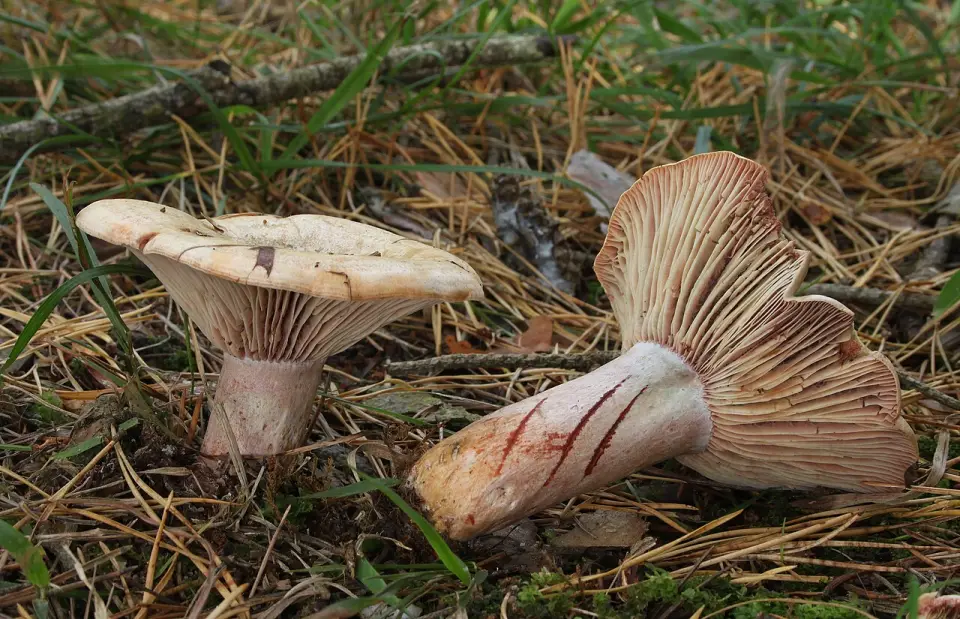
Photo: Holger Krisp / Wikimedia Commons · CC BY 3.0
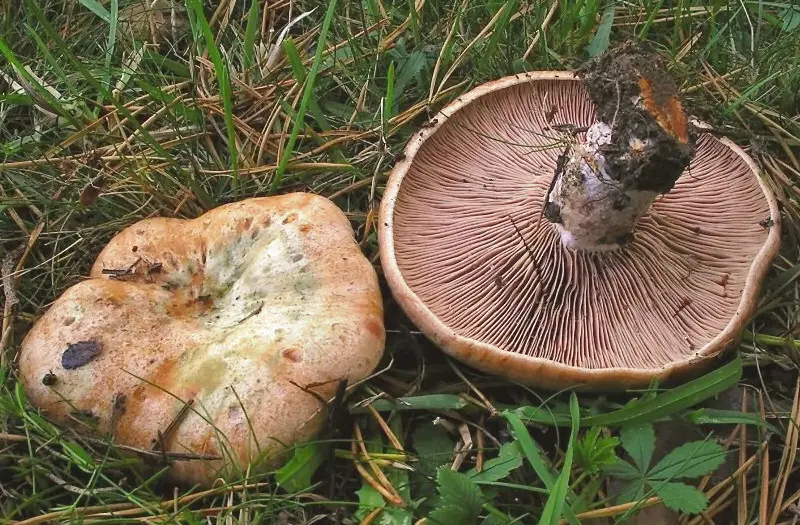
Photo: Lactarius_sanguifluus_64507.jpg: Irene Andersson derivative work: Ak ccm (talk) / Wikimedia Commons · CC BY-SA 3.0
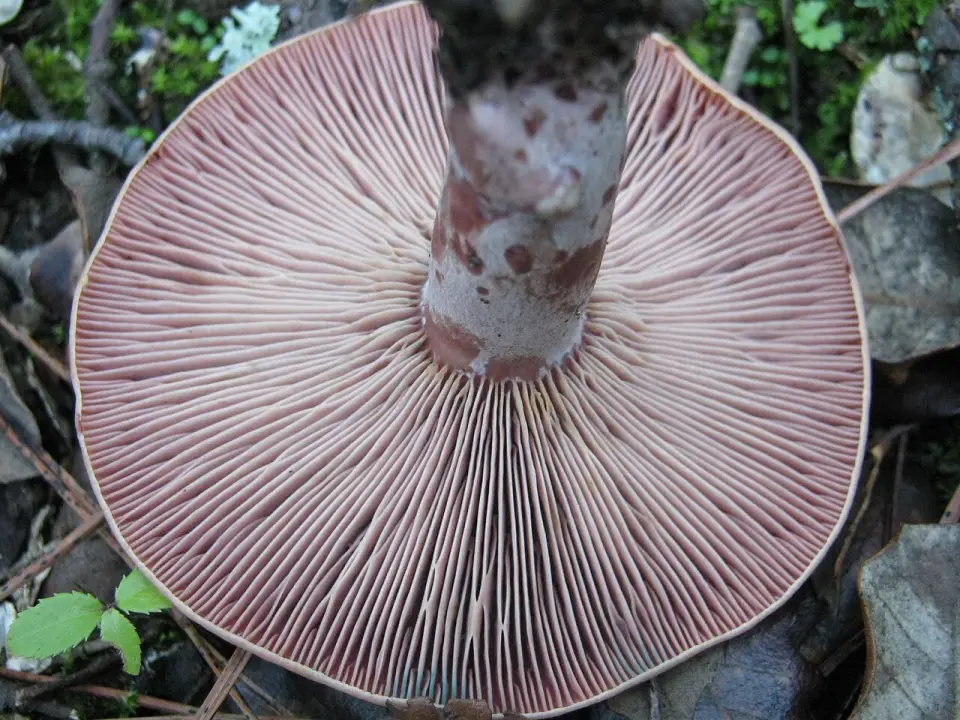
Photo: This image was created by user zaca at Mushroom Observer, a source for mycological images.You can contact this user here. / Wikimedia Commons · CC BY-SA 3.0
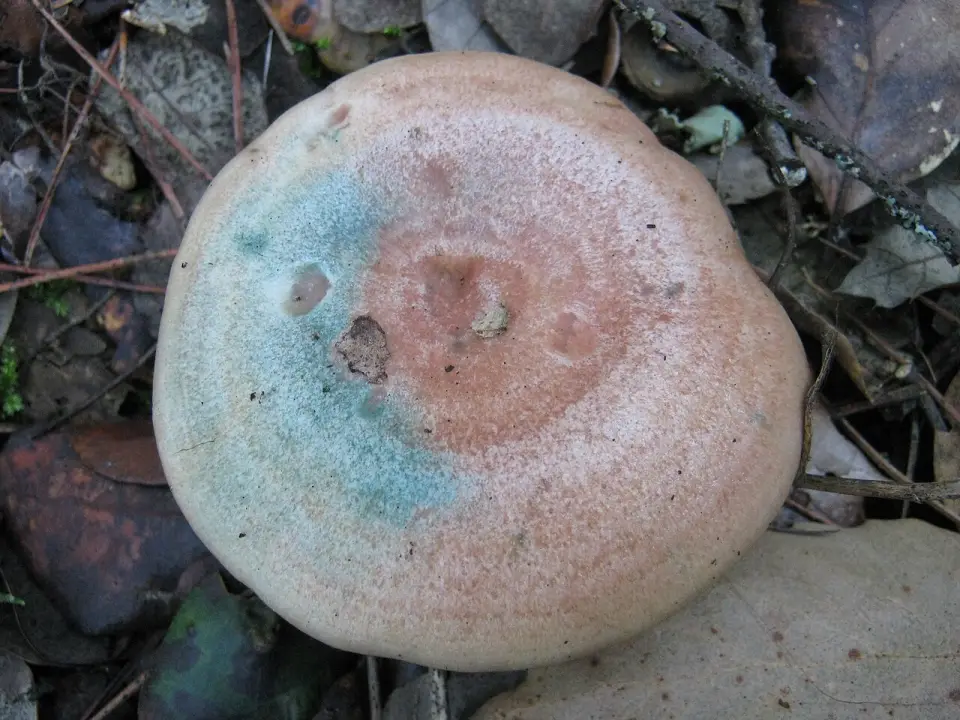
Photo: This image was created by user zaca at Mushroom Observer, a source for mycological images.You can contact this user here. / Wikimedia Commons · CC BY-SA 3.0
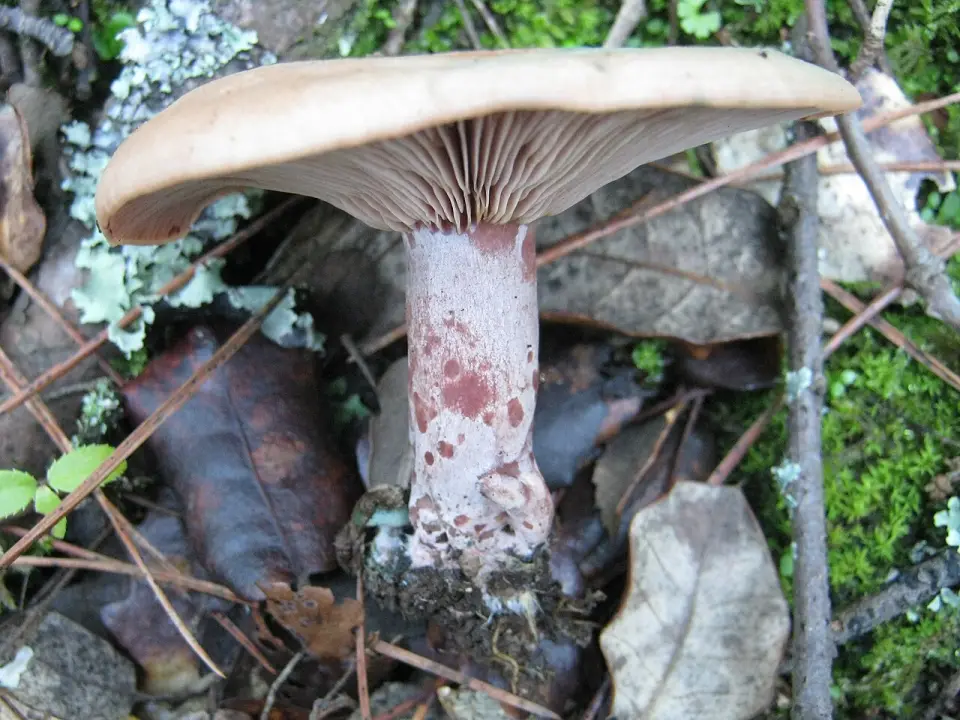
Photo: This image was created by user zaca at Mushroom Observer, a source for mycological images.You can contact this user here. / Wikimedia Commons · CC BY-SA 3.0
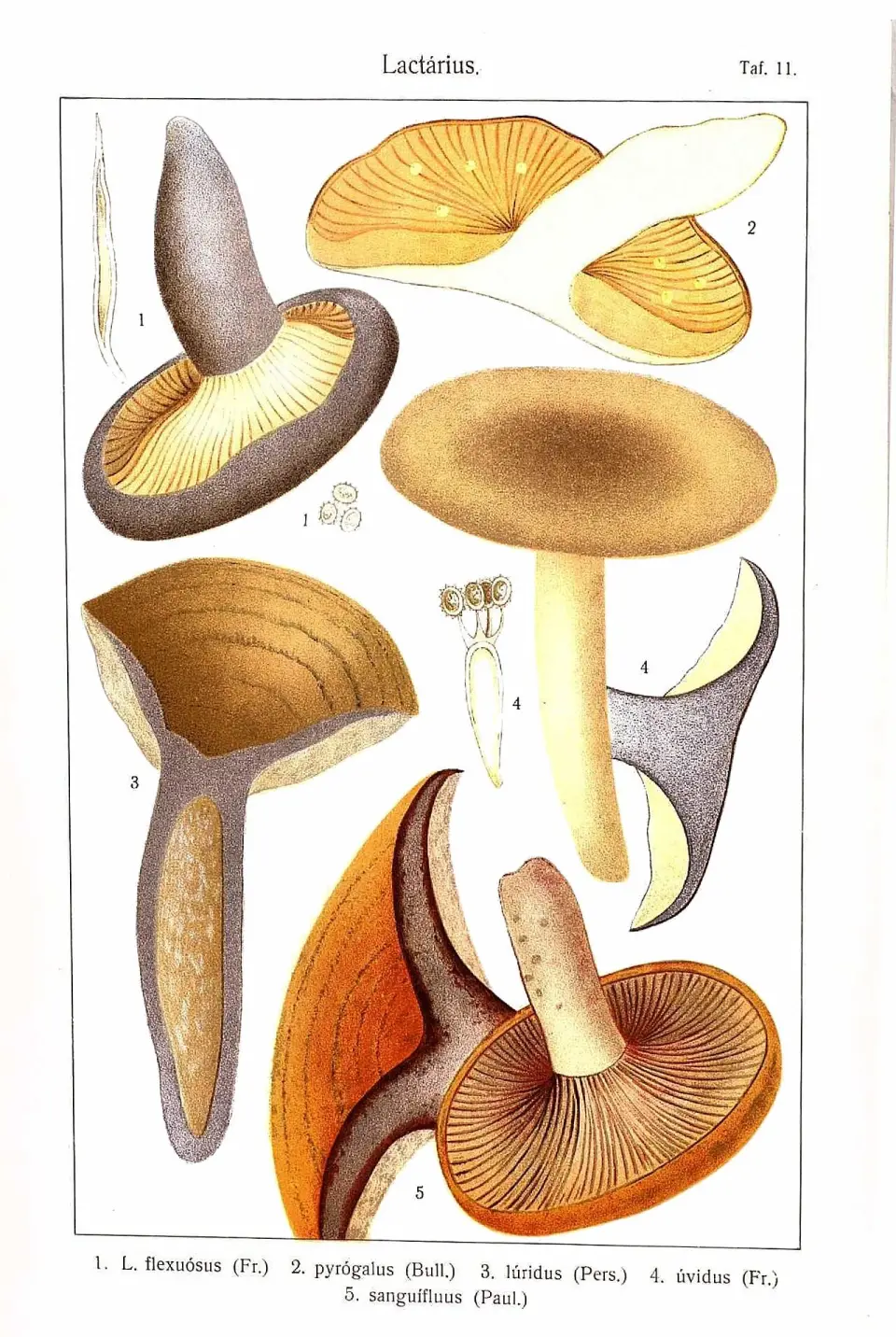
Photo: Adalbert Ricken / Wikimedia Commons · Public domain
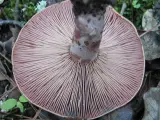
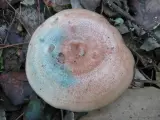
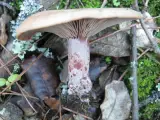
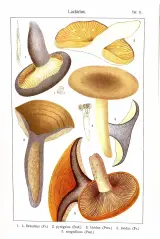
The twin of the saffron milk cap, with a duller, pinkish-ochre cap and — the deciding difference — dark red, wine-coloured milk. The flesh is firmer, and many rate it above the classic saffron milk cap.
Quick facts
- Scientific name
- Lactarius sanguifluus (Paulet) Fr. (1838)
- Family
- Russulaceae
- Edibility
- Edible
- Season
- Oct–Dec
- Usual altitude
- 105–1,259 m
- Under which trees
- Pine
- IUCN Red List
- Not evaluated (NE)
Where it grows
Mediterranean pinewoods on limestone — Aleppo, black and stone pine; the dry warm slopes of Catalonia, Valencia and Aragon. It fruits late, from October to December.
Confused with
- Saffron milk capLactarius deliciosus
Orange milk instead of wine red. Also edible — this confusion is a safe one.
When it has been found
Finds recorded in Spain, by month: 900 in all, from GBIF. They show when it fruits, and also when people go looking.
Where it has been found
Each square is an area of about 20 km with recorded finds; the darker, the more finds. It does not pinpoint patches: for where it is coming up now, see the forecast map.
Where it comes up
Areas where this species is scoring highest right now.
- Lluçanès ComarcasExcellent · peak excellent
- Moianès ComarcasExcellent · peak excellent
- Bages ComarcasExcellent · peak excellent
- Berguedà ComarcasExcellent · peak excellent
- Alto Penedés ComarcasGood · peak excellent
- Anoia ComarcasGood · peak excellent
- El Alto Mijares ComarcasGood · peak excellent
- Ripollés ComarcasGood · peak excellent
In guides and news
- Ripollés: a guide to the mushroom forests of the Pyrenees
Area guides
- Cataluña, 17–18 October: conditions better than a week ago
State of the forest
Sources
The usual altitude and the trees come from our own fit of the model to those finds and to the Spanish Forest Map (Mapa Forestal de España).
Would you know them from a photograph? →
The description is for reference. Identifying a mushroom from a photograph is unreliable: do not eat anything you are not sure of.