 MicoRadar
Parasol mushroom
Macrolepiota procera
Also called: Parasol
In Spanish: Parasol, Galamperna, Apagador, Matacandil, Matacandelas, Cucurril, Galipierno · In Catalan: Apagallums, Paloma, Cogomella, Coloma, Paraigües, Pamperol, Capell de senyor · In Basque: Galanperna, Galanperna jangarri · In Galician: Choupín, Cogordo, Zarrota, Cerrote, Patamela, Roco, Cogordón, Monxo
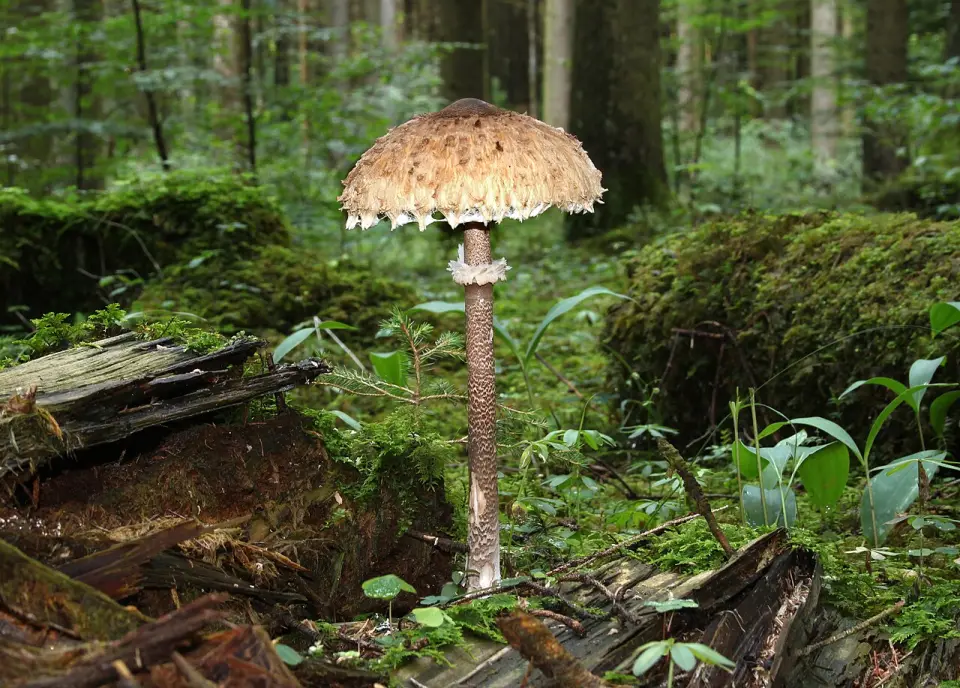
Photo: Holger Krisp / Wikimedia Commons · CC BY 3.0
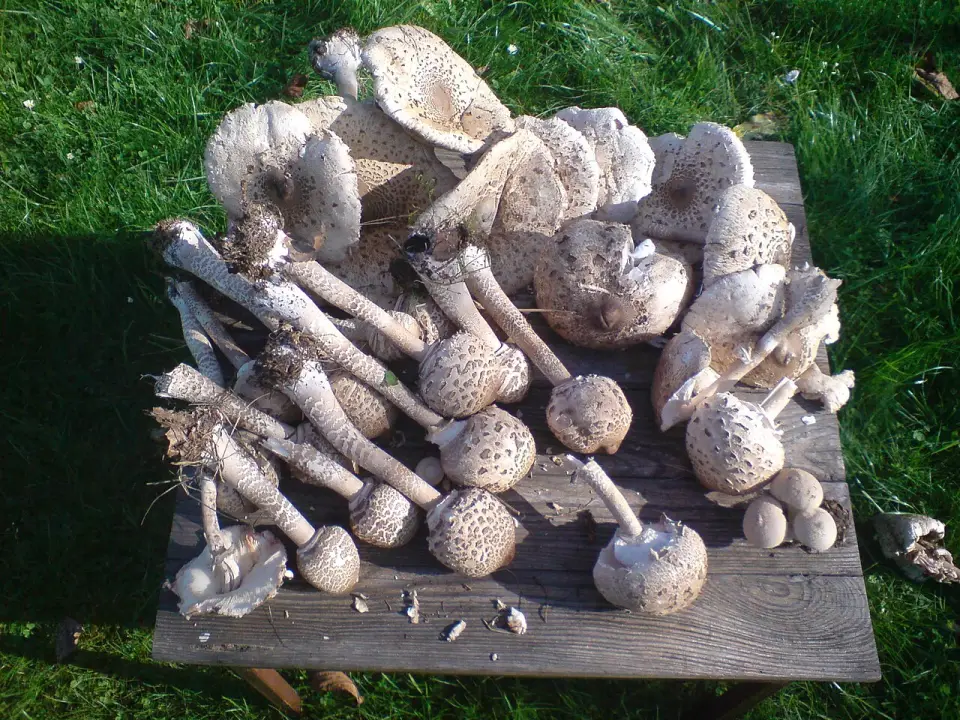
Photo: Fredy.00 / Wikimedia Commons · Public domain
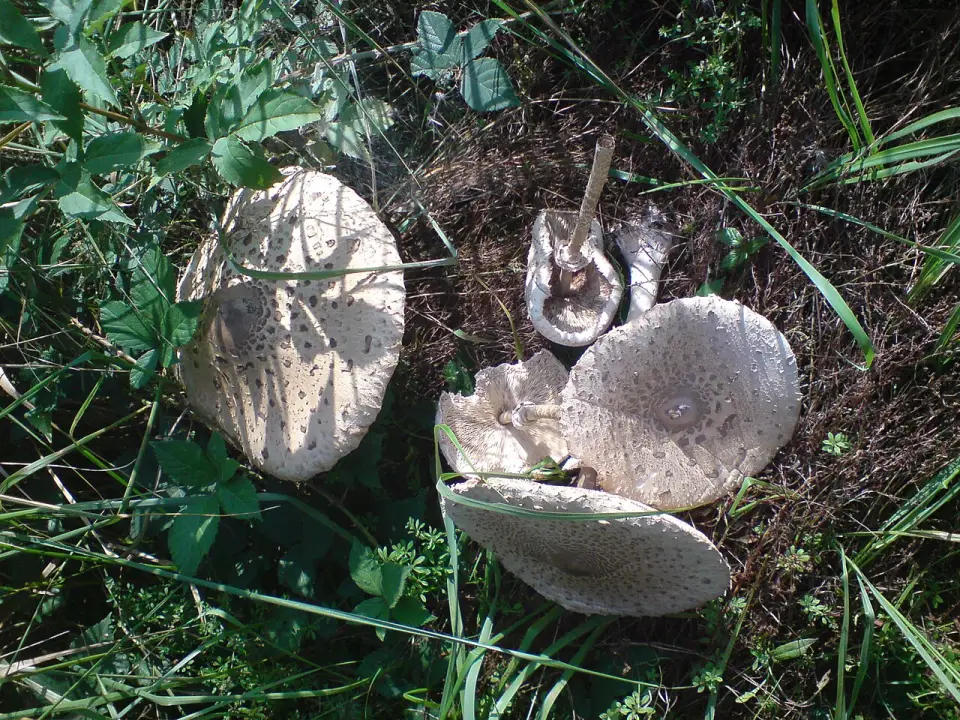
Photo: Fredy.00 / Wikimedia Commons · Public domain
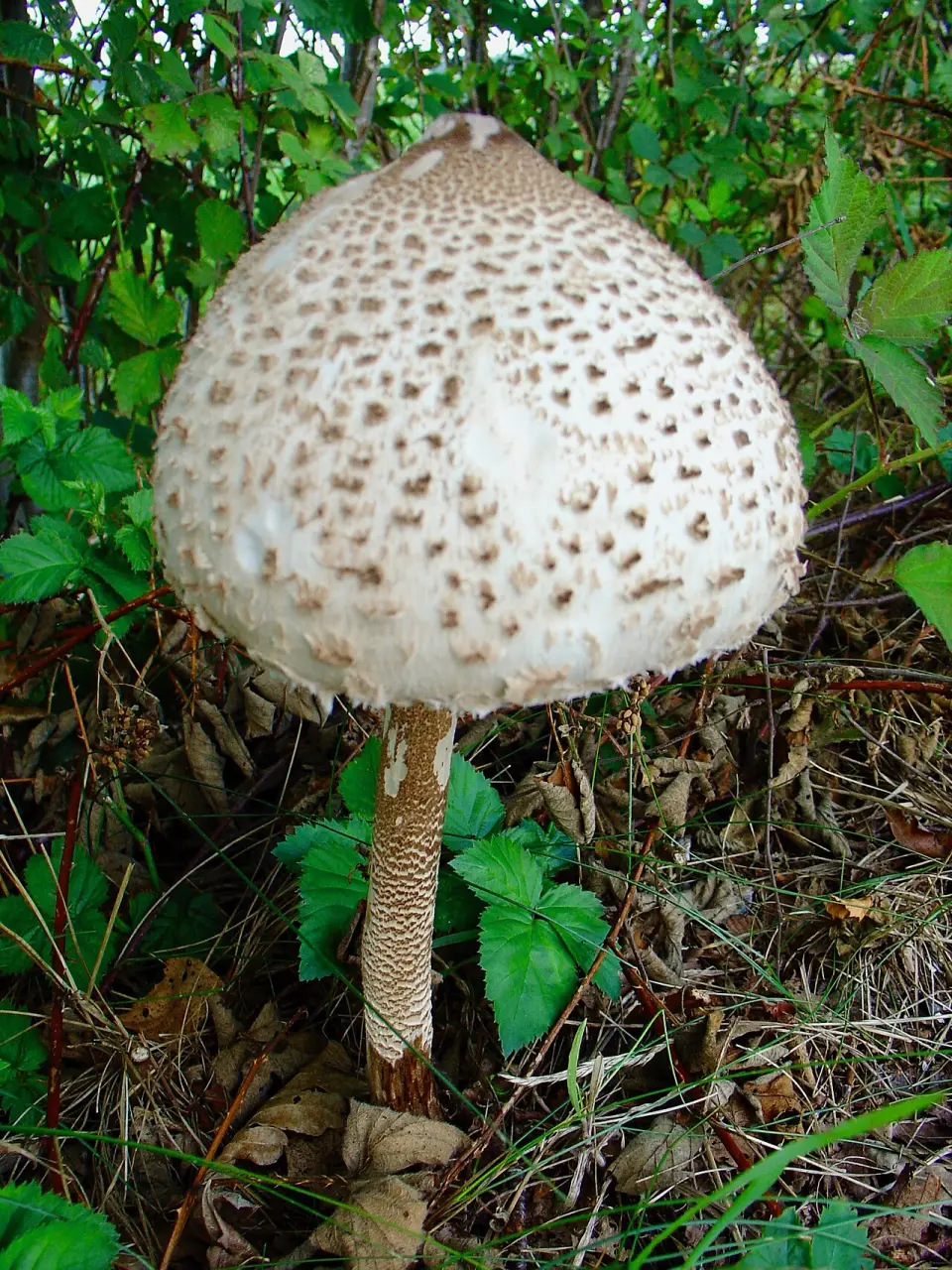
Photo: Gouwenaar / Wikimedia Commons · CC BY-SA 4.0
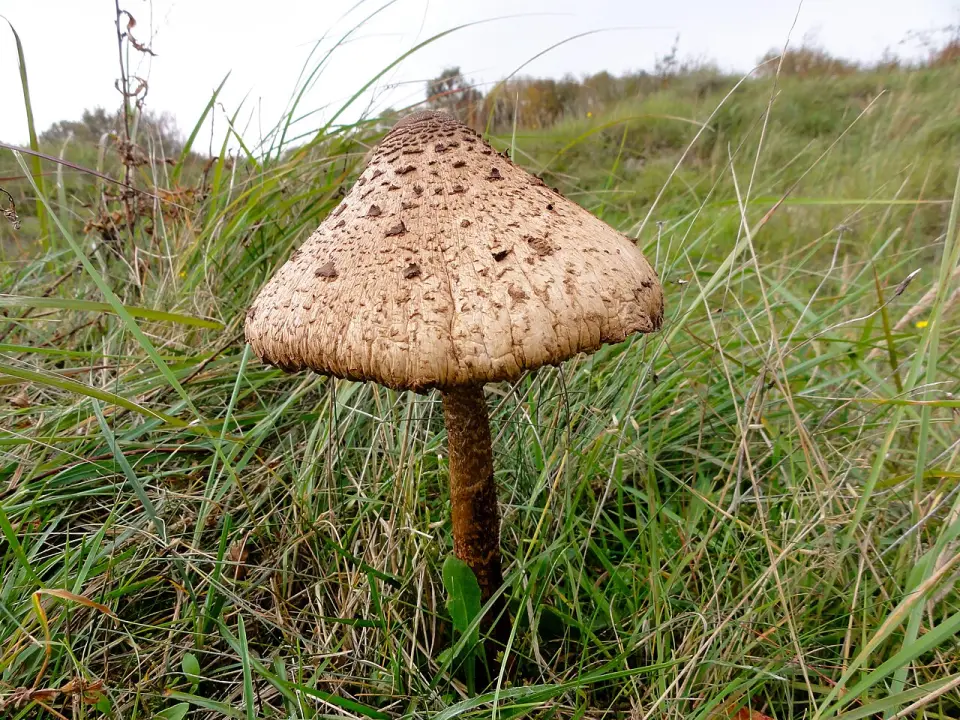
Photo: Gouwenaar / Wikimedia Commons · CC BY-SA 4.0
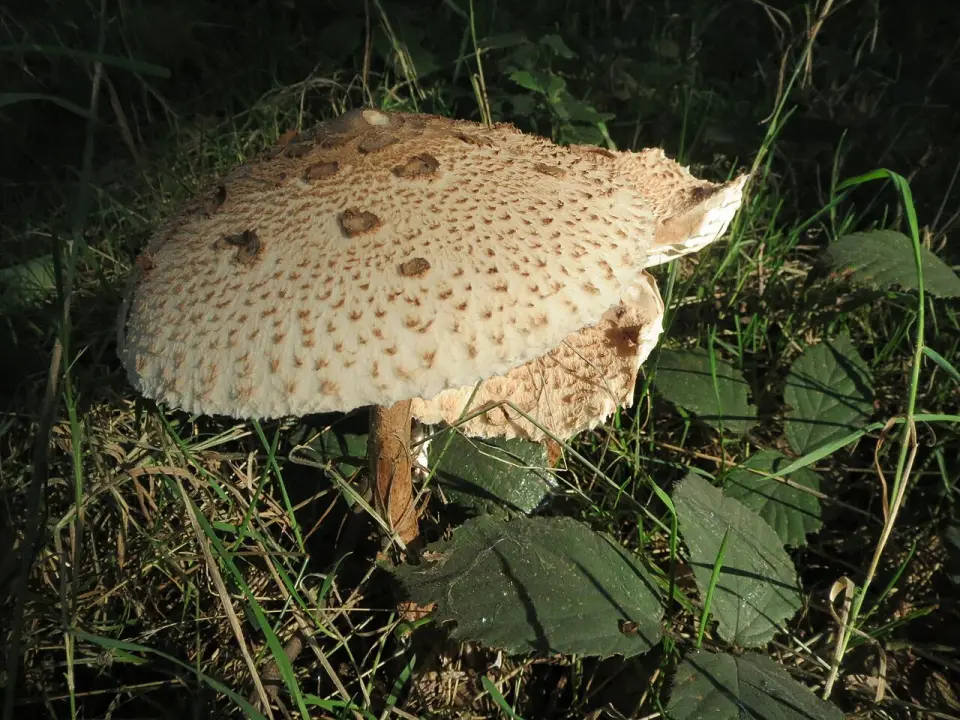
Photo: AnRo0002 / Wikimedia Commons · CC0
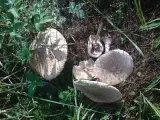
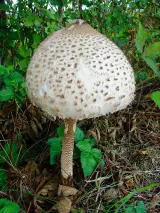
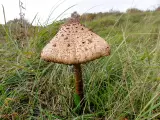
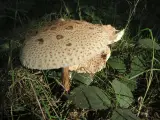
Large and unmistakable in bearing: a cap 10–30 cm that finally opens flat like a parasol, cream and covered in coarse brown scales, with a dark boss at the centre. The stem is tall and slender, marked with a distinctive zigzag snakeskin pattern, and carries a thick double ring that can be slid up and down with a finger. The flesh does not change colour when cut.
Quick facts
- Scientific name
- Macrolepiota procera (Scop.) Singer (1948)
- Family
- Agaricaceae
- Edibility
- Edible
- Season
- Sep–Nov
- Usual altitude
- 152–1,394 m
- Dangerous look-alike
- Deadly dapperling · Lepiota brunneoincarnata
- IUCN Red List
- Not evaluated (NE)
How to recognise it
- Cap
- 10–30 cm, cream with coarse brown scales and a dark central boss
- Gills, pores or pits
- Gills white to cream, free, crowded, soft
- Stem
- Tall and slender, zigzag snakeskin, bulbous base, double ring that slides
- Flesh when cut
- White, unchanging when cut; soft in the cap, fibrous in the stem
- Spore print
- White
Where it grows
Meadows, dehesas, clearings and woodland edges — the gap between the trees rather than the wood itself. It comes up in thinned pinewoods, chestnut groves, open holm-oak dehesa and mountain pasture, often in rings. September to November, a few days after decent rain.
Confused with
- Deadly dapperlingLepiota brunneoincarnatadangerous
- Cap
- 2–6 cm, cream with concentric pinkish-brown to wine-coloured scales
- Gills, pores or pits
- Gills white to cream, free
- Stem
- Short, white above, wine-brown scales in zigzag bands below; fleeting ring
- Flesh when cut
- White in the cap, pinkish to wine-coloured in the stem
- Spore print
- White
- Where and when
- Lawns, parks, verges and path edges; mainly autumn
How to tell them apart: A 2–6 cm cap and a fleeting ring, against the parasol's thick double ring; never pick one with a cap under 10 cm.
Deadly, and the reason for the one rule not to break with parasols: never pick one whose cap is under 10 cm. It is small, 2 to 6 cm, its scales a pinkish brown, with a faint, woolly ring that soon goes — nothing like the parasol's thick, double, sliding ring. Below it the stem carries brown scales that can look like the snakeskin pattern, so the stem will not rule it out. It grows in the same grass, in parks and along path edges, and it has killed whole families in Spain.
- Brown shaggy parasolChlorophyllum brunneumdangerous
- Cap
- 8–18 cm, whitish with coarse concentric brown scales, smooth brown centre
- Gills, pores or pits
- Gills white to cream, free
- Stem
- Smooth, no snakeskin, whitish to brownish; large rimmed bulb; ringed
- Flesh when cut
- White; turns bright orange-red when cut
- Spore print
- White
- Where and when
- Rich, disturbed ground: gardens, compost, woodland clearings; autumn
How to tell them apart: A smooth stem with no snakeskin, ending in a rimmed bulb, and flesh that reddens when cut; the parasol has a snakeskin stem and unchanging flesh.
Very similar at a distance, but the flesh reddens distinctly when cut, the stem is smooth with no snakeskin, and it ends in a rimmed bulb. It causes strong digestive upset in a good number of people, though others tolerate it.
When it has been found
Finds recorded in Spain, by month: 2,717 in all, from GBIF. They show when it fruits, and also when people go looking.
Where it has been found
Each square is an area of about 20 km with recorded finds; the darker, the more finds. It does not pinpoint patches: for where it is coming up now, see the forecast map.
In guides and news
- Soria: permit and rules for mushroom picking
Permits and rules
Sources
The usual altitude and the trees come from our own fit of the model to those finds and to the Spanish Forest Map (Mapa Forestal de España).
Would you know them from a photograph? →
The description is for reference. Identifying a mushroom from a photograph is unreliable: do not eat anything you are not sure of.