 MicoRadar
Morel
Morchella esculenta
Also called: Common morel, Yellow morel
In Spanish: Colmenilla, Morilla, Cagarria, Crespilla, Carcarria, Morrongla · In Catalan: Múrgola, Rabassola, Murga, Arigany · In Basque: Karraspina, Karraspina arrunt, Karraspina horail, Tripa-ziza · In Galician: Pantorra, Cogomelo de Coresma, Colmeíña, Xirupato
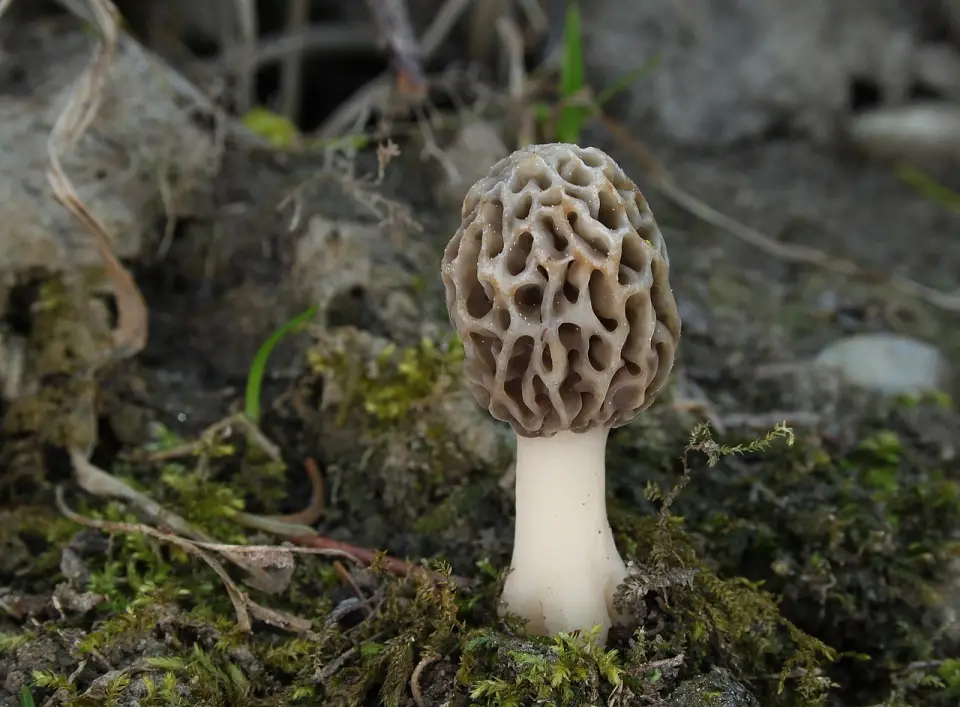
Photo: Holger Krisp / Wikimedia Commons · CC BY 3.0
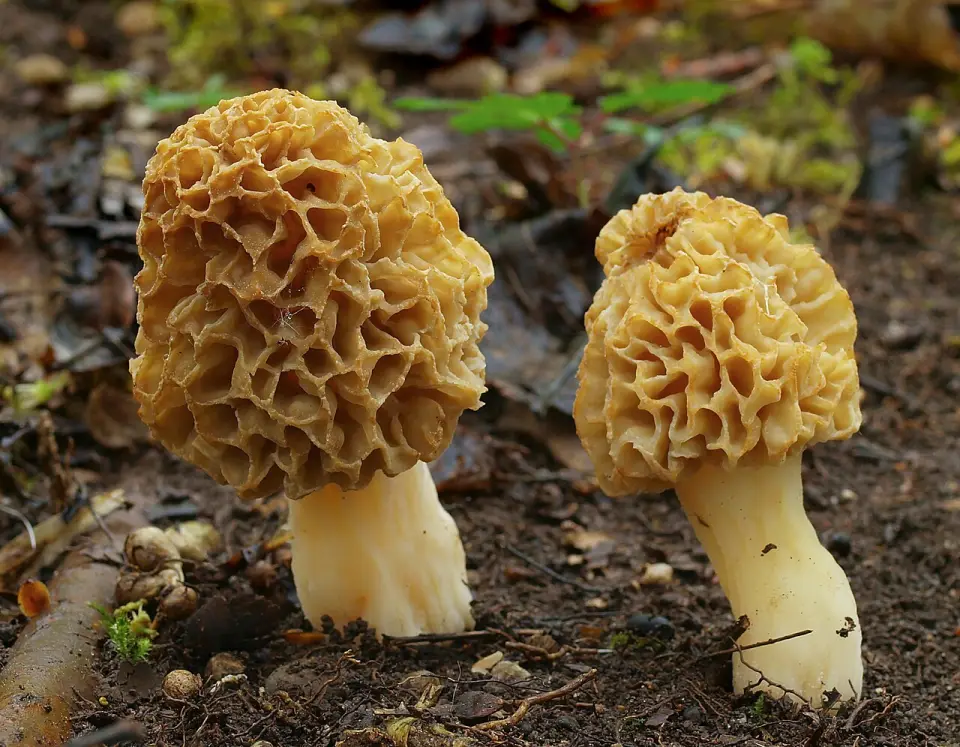
Photo: Andreas Kunze / Wikimedia Commons · CC BY-SA 3.0
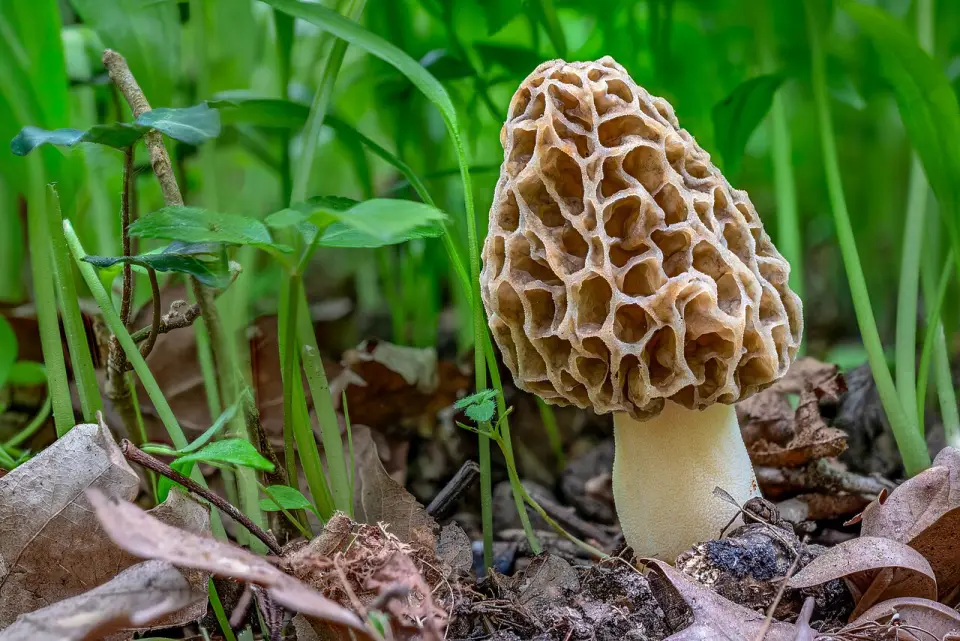
Photo: Achim Lammerts (Syntaxys) / Wikimedia Commons · CC BY-SA 4.0
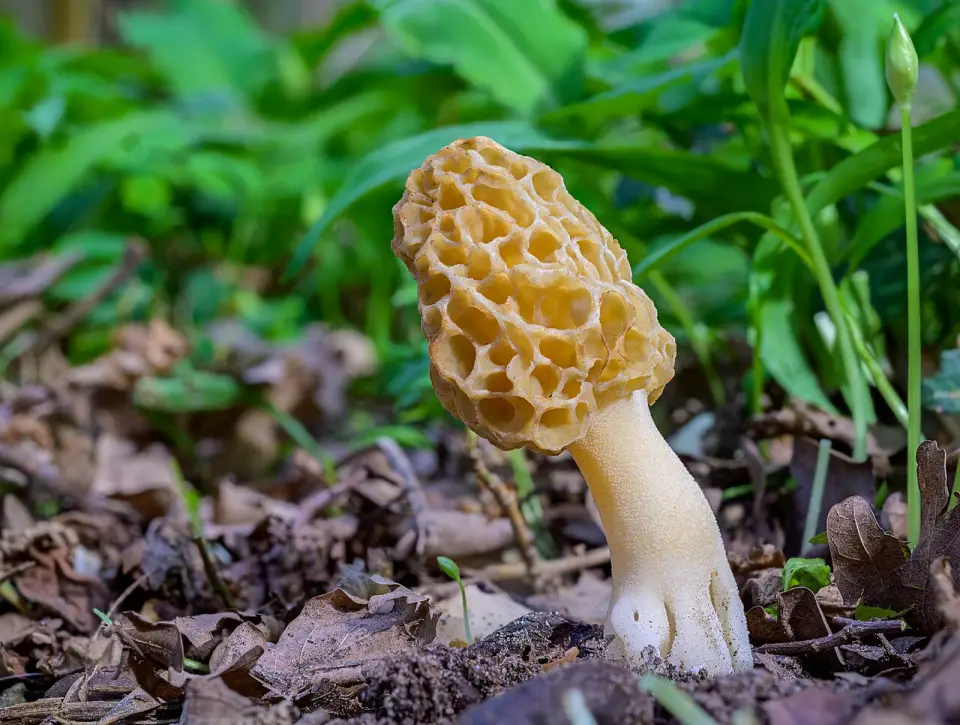
Photo: Achim Lammerts (Syntaxys) / Wikimedia Commons · CC BY-SA 4.0
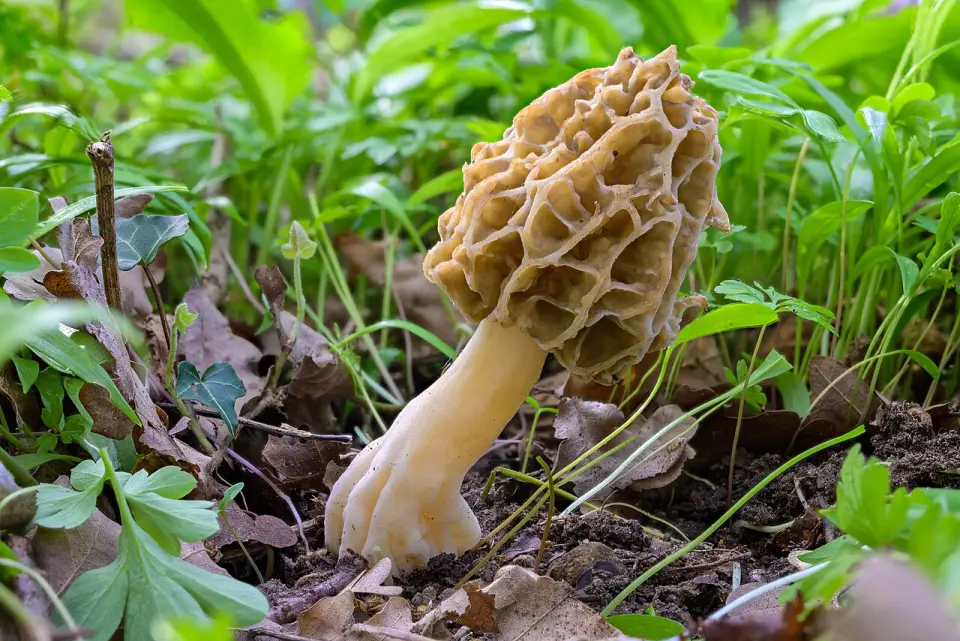
Photo: Achim Lammerts (Syntaxys) / Wikimedia Commons · CC BY-SA 4.0
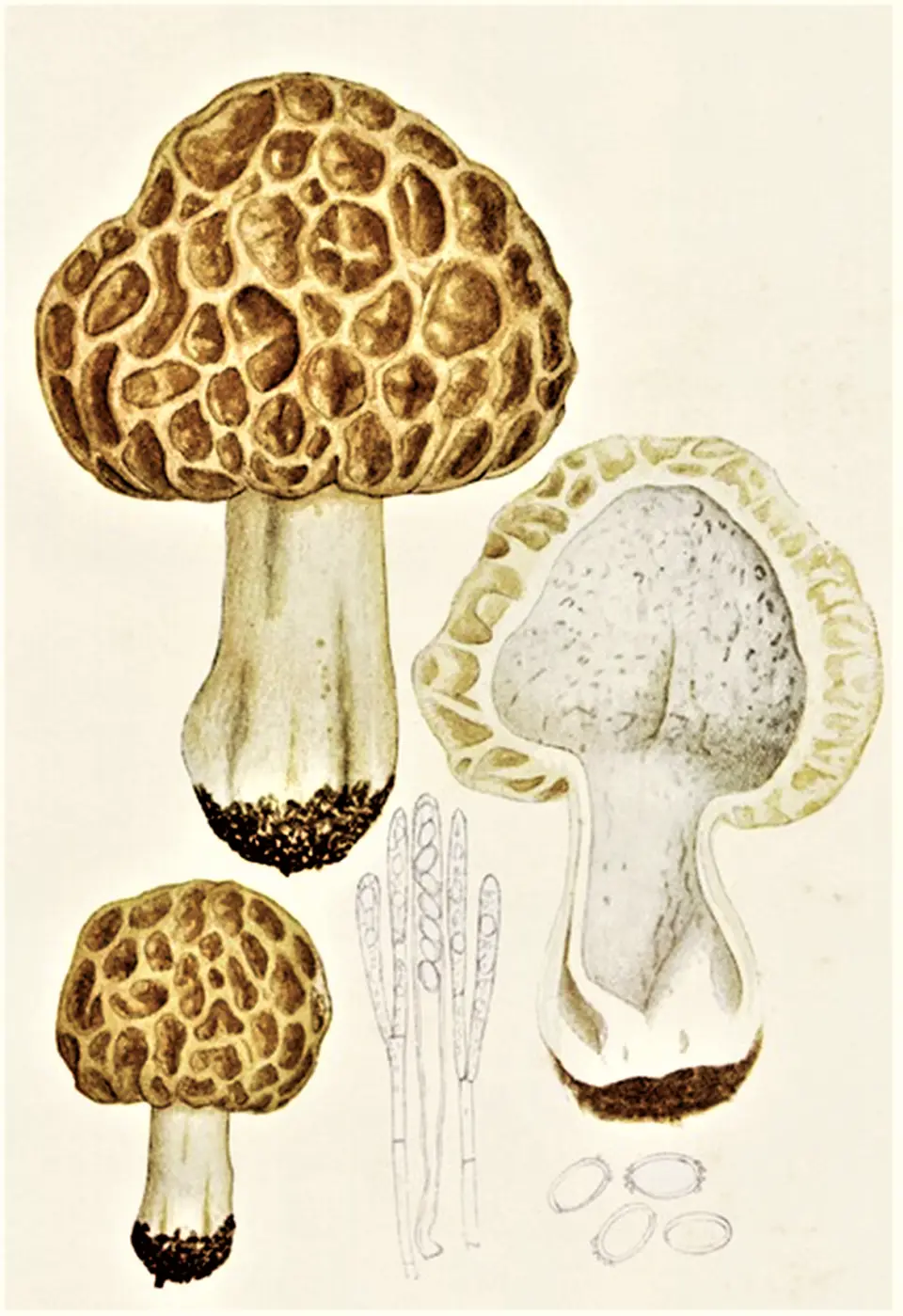
Photo: Giacomo Bresadola / Wikimedia Commons · Public domain
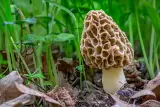
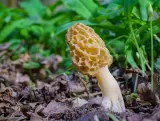
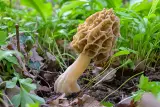
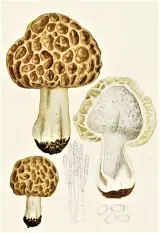
Unmistakable in shape: an oval head 4–10 cm tall, ochre to brown, pitted with irregular alveoli separated by ridges like a honeycomb, and fused along its whole length to a whitish, granular stem. Cut lengthways, the entire mushroom is hollow from top to bottom, with no chambers or cottony filling — the check to make every time, and the one that separates a morel from everything that resembles it. Raw or undercooked it is toxic: its haemolysins, which heat destroys, cause digestive poisoning. Eat it only well cooked — dried morels included.
Quick facts
- Scientific name
- Morchella esculenta (L.) Pers. (1794)
- Family
- Morchellaceae
- Edibility
- Edible with caution
- Season
- Mar–May
- Usual altitude
- 241–1,387 m
- Under which trees
- Riverside woodland, Aspen, Birch, London plane, Oak
- Dangerous look-alike
- False morel · Gyromitra esculenta
- IUCN Red List
- Not evaluated (NE)
How to recognise it
- Cap
- Oval head 4–10 cm, ochre to brown, pitted like a honeycomb
- Gills, pores or pits
- Broad, irregular pits between paler ridges; no gills
- Stem
- Whitish, granular, hollow, fused to the base of the head
- Flesh when cut
- Whitish, brittle; inside, one single hollow from top to bottom
- Spore print
- Cream to pale ochre
Where it grows
Riverbank gravel and gallery woodland, poplar and ash groves, old orchards, and ground that was disturbed or burnt the previous year — what announces it is soil disturbance rather than any one tree. It prefers limestone. March to May, starting some weeks earlier in the south and in low valleys.
Confused with
- False morelGyromitra esculentadangerous
- Cap
- Reddish to dark brown, 5–15 cm, folded like a brain
- Gills, pores or pits
- No pits: irregular folds and convolutions, like a brain
- Stem
- Short and thick, whitish, furrowed, with irregular cavities inside
- Flesh when cut
- Whitish, brittle; inside, divided into irregular chambers
- Spore print
- Whitish to pale buff
- Where and when
- Pine and other conifers, sandy soil; spring
How to tell them apart: Cut it lengthways: inside there are chambers, not one hollow, and the head has brain-like folds instead of pits.
Deadly, in spite of its scientific name. The cap has no pits but folds and convolutions like a brain, reddish-brown, and cut open it is divided into irregular chambers rather than one hollow space. Its toxins survive cooking in part and accumulate in the body.
- Early false morelVerpa bohemicadangerous
- Cap
- Thimble 2–4 cm, yellowish to dark brown, with lengthwise folds
- Gills, pores or pits
- Lengthwise folds rather than pits; the cap edge hangs free
- Stem
- Long, cream, granular; the cap is attached only at the very top
- Flesh when cut
- Whitish, brittle; the stem stuffed with cottony fibres
- Spore print
- Yellowish
- Where and when
- Riverside woods, under poplar and willow; early spring
How to tell them apart: Cut it lengthways: the cap hangs free, joined only at the top, and the stem holds cotton; a morel is fused and hollow.
It appears earlier, in the same riverside woods. Its cap hangs free, attached to the stem only at the very top like a thimble on a stick, and its folds run lengthways instead of forming pits. It causes digestive upset and problems with coordination.
When it has been found
Finds recorded in Spain, by month: 626 in all, from GBIF. They show when it fruits, and also when people go looking.
Where it has been found
Each square is an area of about 20 km with recorded finds; the darker, the more finds. It does not pinpoint patches: for where it is coming up now, see the forecast map.
Where it comes up
Areas where this species is scoring highest right now.
- Ripollés ComarcasVery weak · peak moderate
- Osona ComarcasVery weak · peak weak
- Berguedà ComarcasVery weak · peak weak
- Moianès ComarcasVery weak · peak weak
- Garrotxa ComarcasVery weak · peak weak
- Lluçanès ComarcasVery weak · peak weak
- Alta Ribagorza ComarcasVery weak · peak very weak
- Montseny massif MassifsVery weak · peak very weak
Sources
The usual altitude and the trees come from our own fit of the model to those finds and to the Spanish Forest Map (Mapa Forestal de España).
Would you know them from a photograph? →
The description is for reference. Identifying a mushroom from a photograph is unreliable: do not eat anything you are not sure of.