 MicoRadar
King oyster mushroom
Pleurotus eryngii
Also called: King trumpet mushroom
In Spanish: Seta de cardo, Oreja de cardo · In Catalan: Gírgola de panical, Gírgola de card, Bolet d'espinacal, Gírgola d'espinacal, Gírgola de camp, Gírgola d'arena · In Basque: Kardu-ziza, Gardu-ziza · In Galician: Cogomelo de cardo, Cogumelo dos cardos
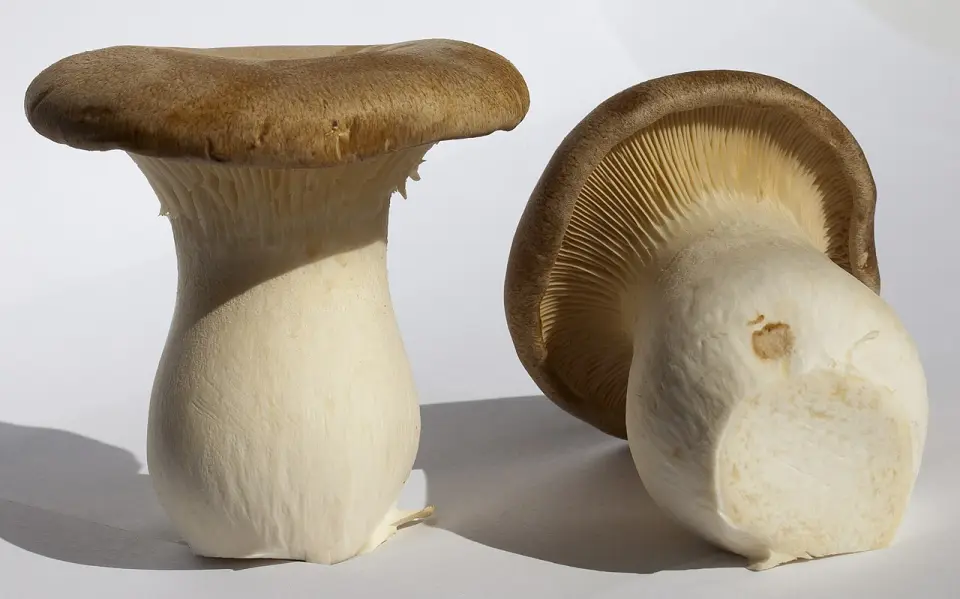
Photo: Diego Delso / Wikimedia Commons · CC BY-SA 3.0
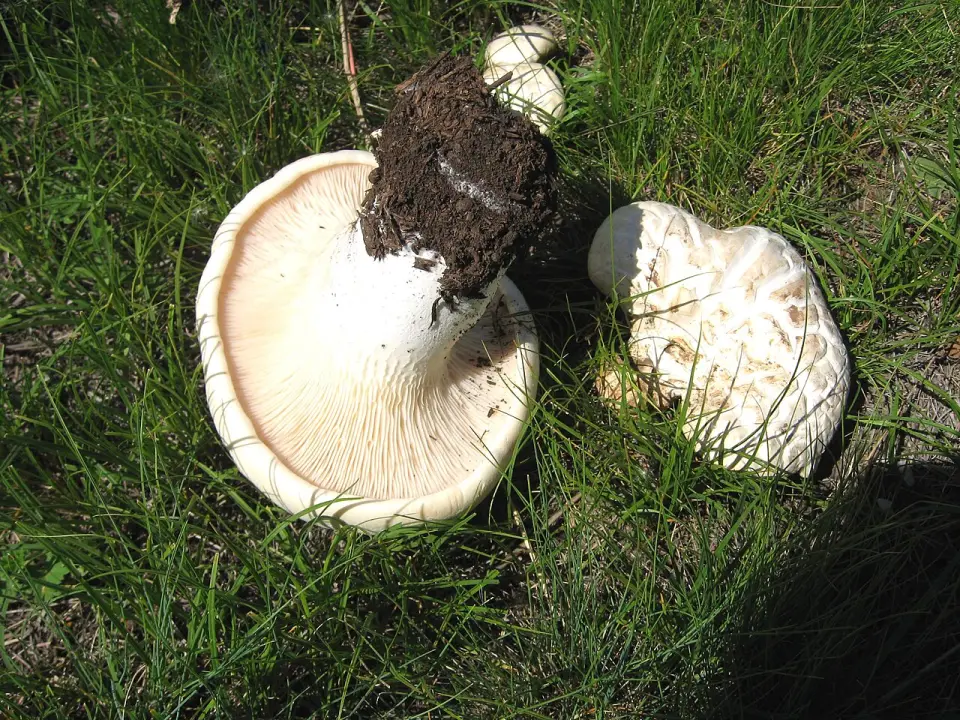
Photo: This image was created by user Igor (Igor_Yevdokimov) at Mushroom Observer, a source for mycological images.You can contact this user here. / Wikimedia Commons · CC BY-SA 3.0
Photo: USDAgov / Wikimedia Commons · Public domain
Photo: USDAgov / Wikimedia Commons · Public domain
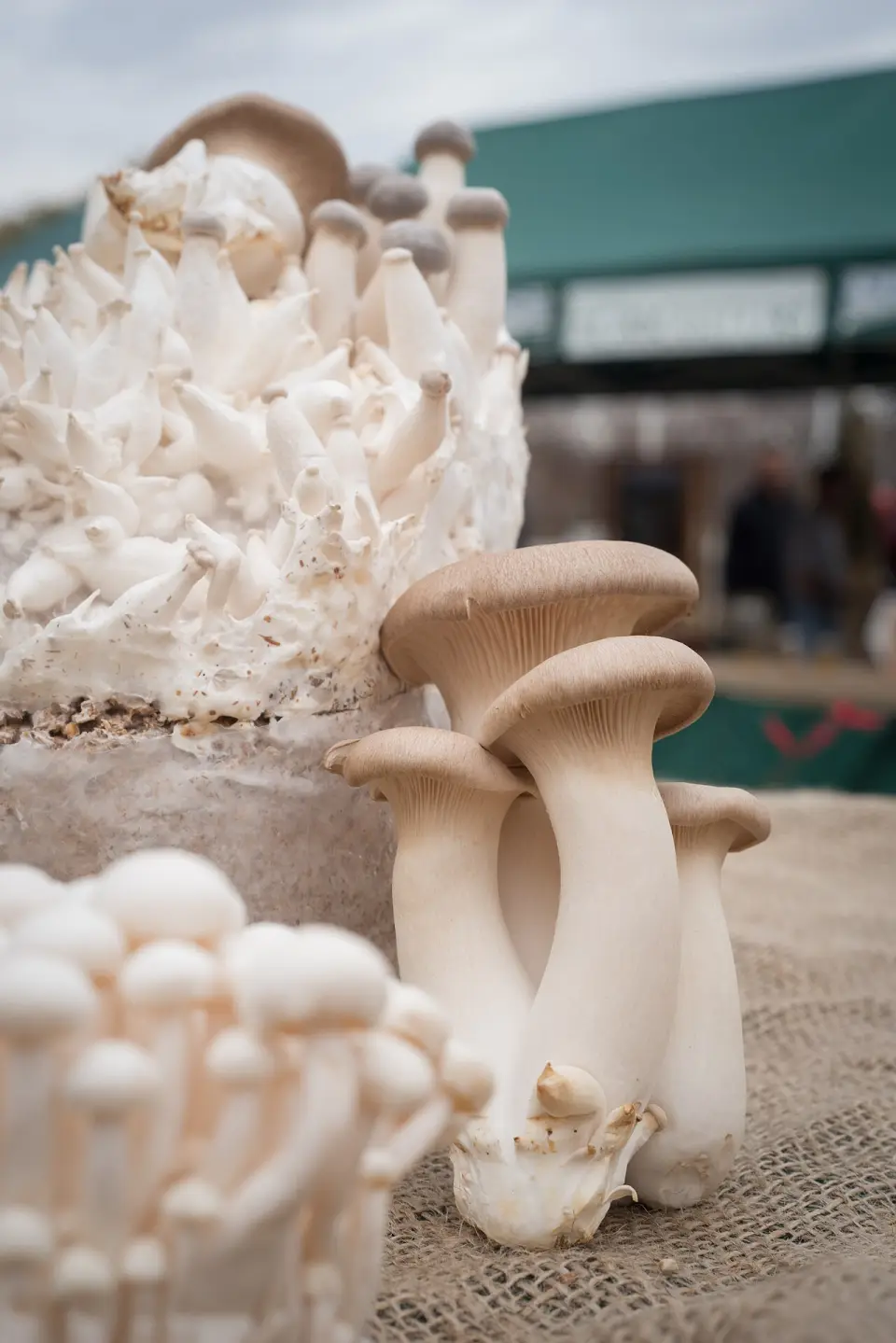
Photo: USDAgov / Wikimedia Commons · Public domain
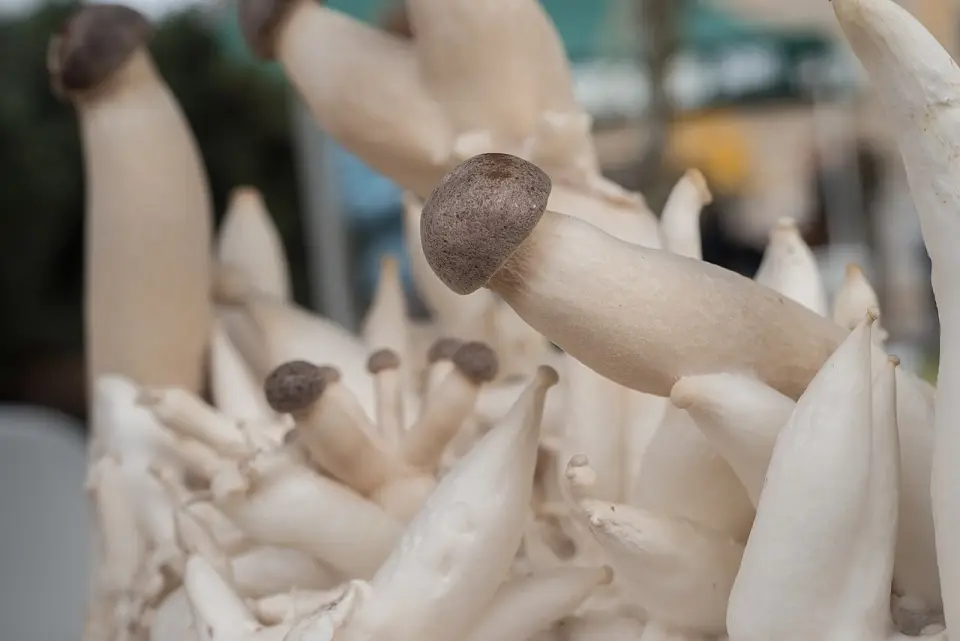
Photo: USDAgov / Wikimedia Commons · Public domain
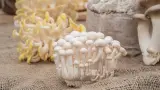
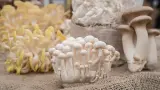
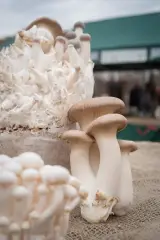
A cap 3–12 cm, convex then flattened or slightly funnelled, greyish-brown to ochre, dry and often cracked in windy weather. The cream gills run distinctly down a short, solid, white stem that is frequently off-centre. The flesh is white, thick and firm — the firmest of the oyster mushrooms, which is why it holds up on a griddle.
Quick facts
- Scientific name
- Pleurotus eryngii (DC.) Quél. (1872)
- Family
- Pleurotaceae
- Edibility
- Edible
- Season
- Oct–Dec
- Usual altitude
- 283–1,444 m
- Dangerous look-alike
- Jack-o'-lantern · Omphalotus olearius
- IUCN Red List
- Not evaluated (NE)
How to recognise it
- Cap
- Greyish-brown to ochre, 3–12 cm, dry, flat or slightly funnelled
- Gills, pores or pits
- Gills cream, crowded, running distinctly down the stem
- Stem
- Short, solid, white, often off-centre; no ring
- Flesh when cut
- White, thick, firm and slightly springy
- Spore print
- White
Where it grows
It grows neither in woodland nor on wood: it lives off the dead roots of field eryngo (Eryngium campestre), in dry pasture, fallow and cereal steppe. That is why it turns up in open country, where nobody is looking for mushrooms. It is common in Castilla-La Mancha, Aragón, southern Castilla y León, Murcia and Andalusia. The main flush runs October to December after the autumn rains, with a shorter second one in spring.
Confused with
- Jack-o'-lanternOmphalotus oleariusdangerous
- Cap
- Bright orange, 5–15 cm, convex then funnelled, smooth
- Gills, pores or pits
- True gills, thin, crowded, strongly decurrent, orange
- Stem
- Long, often off-centre, orange, darker towards the base
- Flesh when cut
- Orange right through to the centre, fibrous and firm
- Spore print
- White to cream
- Where and when
- Stumps and roots, even buried ones, of olive and other broadleaves; autumn
How to tell them apart: Orange all over, gills included, with flesh orange to the centre; the king oyster is brown or ochre, with cream gills and white flesh.
Deep orange throughout, flesh included, with sharp, strongly decurrent gills. It comes from the stumps and roots of olive, holm oak or cork oak, sometimes buried, so it can seem to rise from the soil: where it grows will not rule it out, its colour will. Toxic, causing violent vomiting.
- Fool's funnelClitocybe rivulosadangerous
- Cap
- Whitish, 2–5 cm, frosted, cracking into rings with age
- Gills, pores or pits
- Gills whitish, crowded, adnate to decurrent
- Stem
- Short and thin, whitish, fibrous; no ring
- Flesh when cut
- Whitish and thin
- Spore print
- White
- Where and when
- Pasture, lawns and verges, in rings; summer to autumn
How to tell them apart: Small, whitish and frosted, with thin flesh; the king oyster has a brown or ochre cap and thick, firm flesh.
Smaller and whitish, its cap covered in a white frosting that cracks into rings with age, with crowded, white, decurrent gills. It comes up in rings on the grass of the same pastures, so a thistle nearby confirms nothing: the king oyster has a brown or ochre cap and thick, firm flesh. It contains muscarine and brings on sweating, salivation and tears within a quarter of an hour of eating it.
- Oyster mushroomPleurotus ostreatus
- Cap
- Shell- or oyster-shaped, 5–15 cm, grey to brown, smooth
- Gills, pores or pits
- Gills whitish to cream, crowded, strongly decurrent
- Stem
- Very short and lateral, or almost absent
- Flesh when cut
- White, firm and slightly tough
- Spore print
- White to pale lilac-grey
- Where and when
- Trunks of beech, poplar or willow; autumn and winter
How to tell them apart: It grows in tiers on wood, with a lateral stem or barely any; the king oyster comes out of the ground, from eryngo roots.
Edible and a close relative, but it grows in tiers on the trunks of poplar, beech or willow, shell-shaped and with barely any stem. Confusing the two costs nothing.
When it has been found
Finds recorded in Spain, by month: 651 in all, from GBIF. They show when it fruits, and also when people go looking.
Where it has been found
Each square is an area of about 20 km with recorded finds; the darker, the more finds. It does not pinpoint patches: for where it is coming up now, see the forecast map.
Sources
The usual altitude and the trees come from our own fit of the model to those finds and to the Spanish Forest Map (Mapa Forestal de España).
Would you know them from a photograph? →
The description is for reference. Identifying a mushroom from a photograph is unreliable: do not eat anything you are not sure of.