 MicoRadar
Charcoal burner
Russula cyanoxantha
Also called: Variegated russula
In Spanish: Carbonera · In Catalan: Llora, Llora morada, Cualbra llora, Blavet, Puagra llora, Llorell, Palomins · In Basque: Urritx, Urretx, Gibel-perretxiko, Koroso, Gibelurdin · In Galician: Netorra, Carboeira, Netorra das carballeiras, Netorra abelá
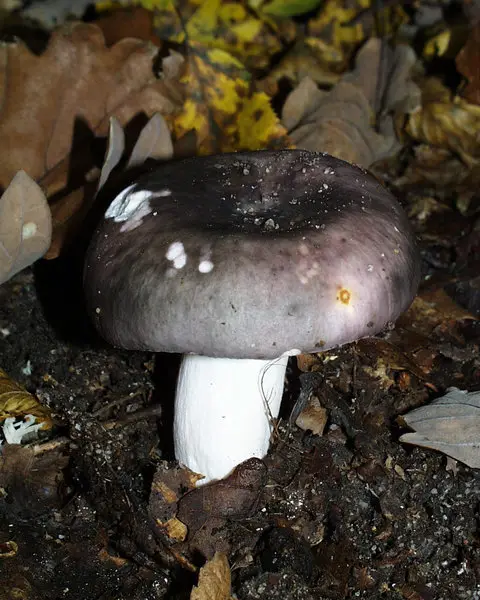
Photo: Wikimedia Commons · CC BY-SA 3.0
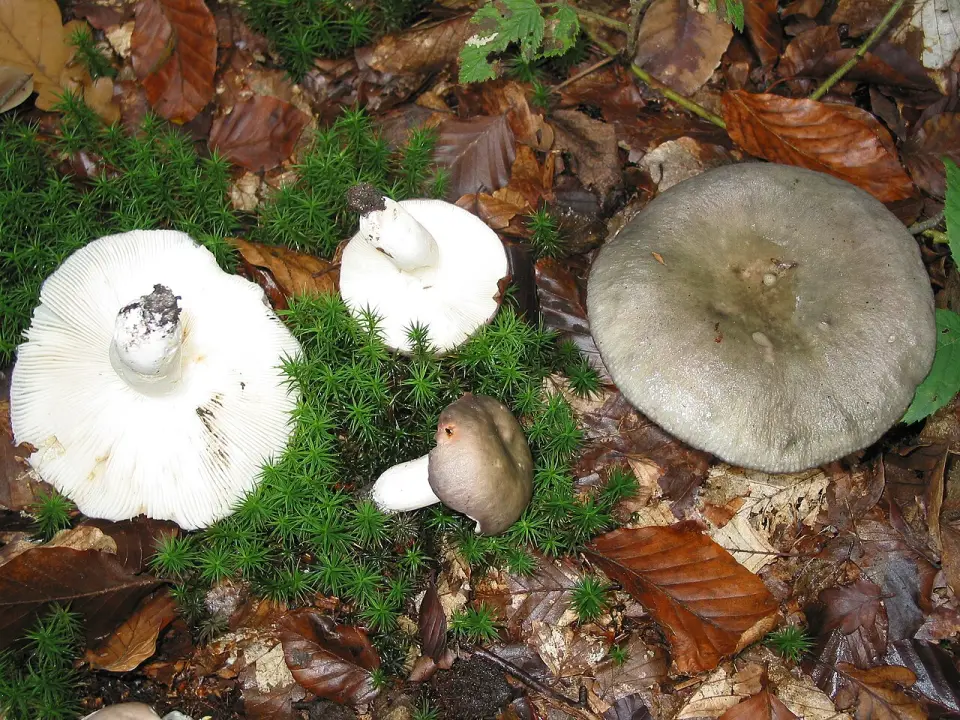
Photo: Jean-Pol GRANDMONT / Wikimedia Commons · CC BY 3.0
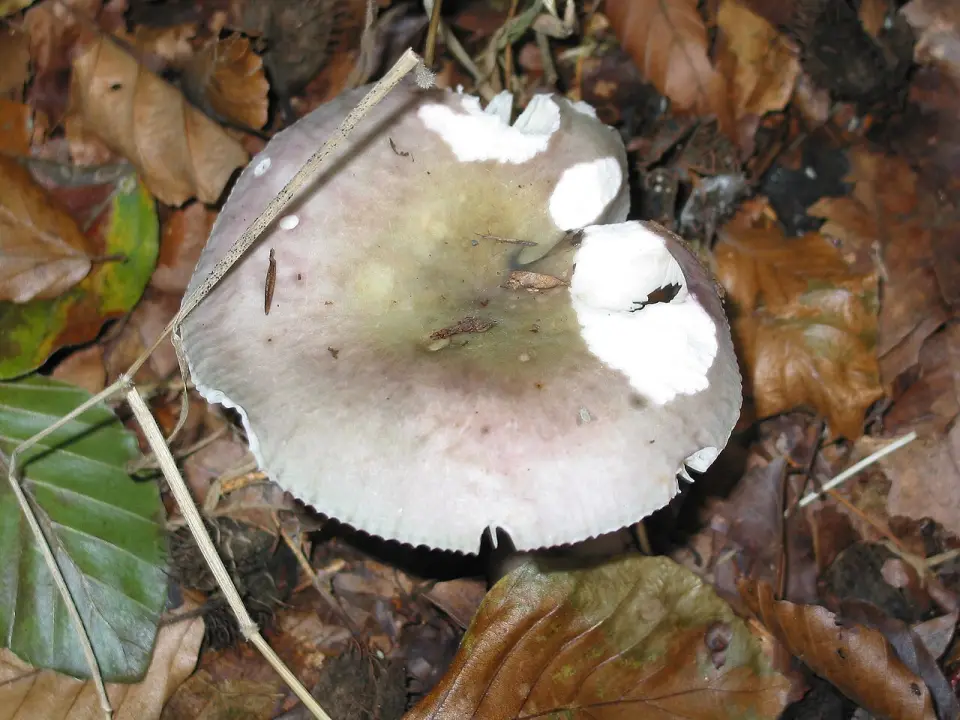
Photo: Jean-Pol GRANDMONT / Wikimedia Commons · CC BY 3.0
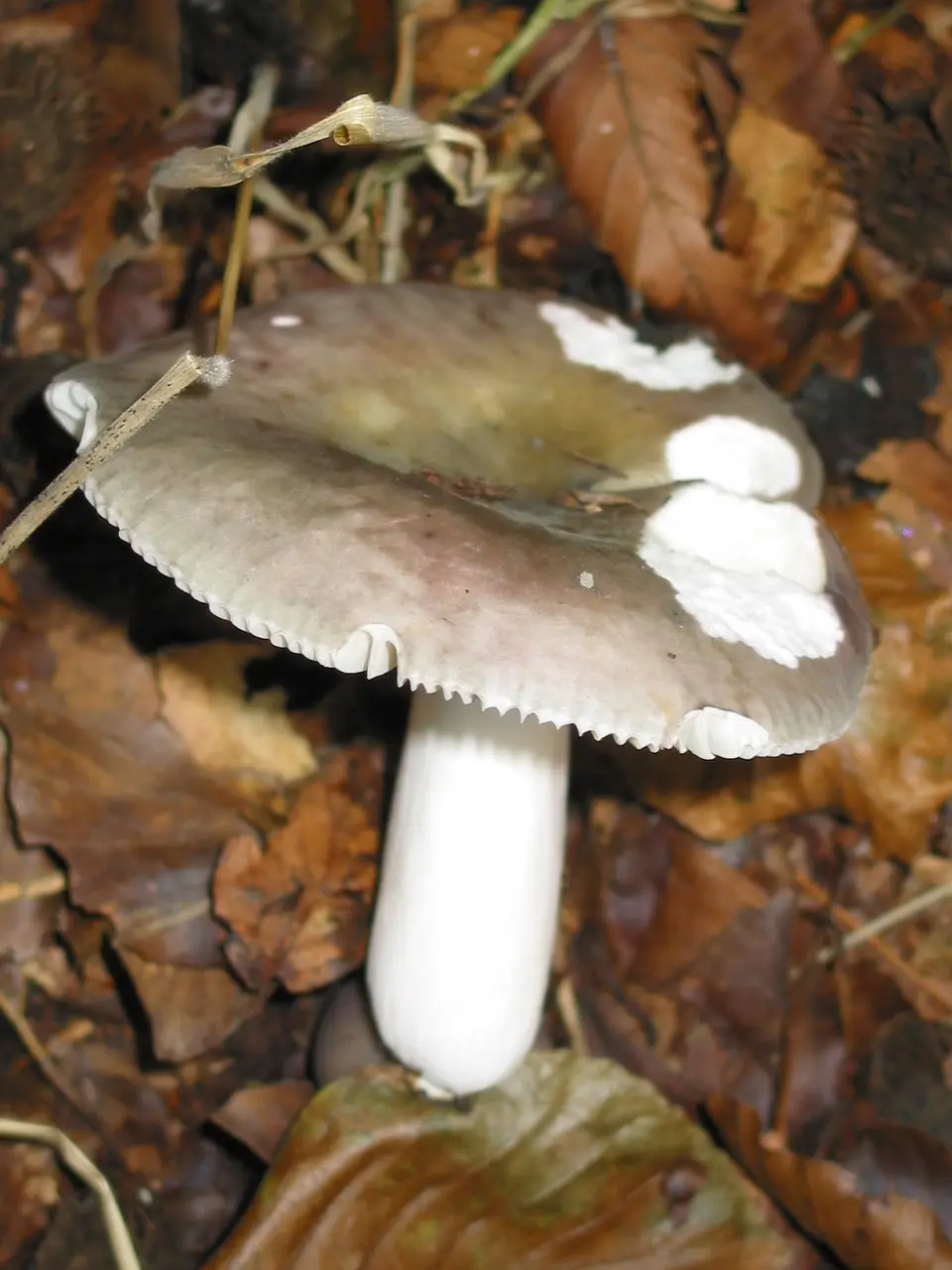
Photo: Jean-Pol GRANDMONT / Wikimedia Commons · CC BY 3.0
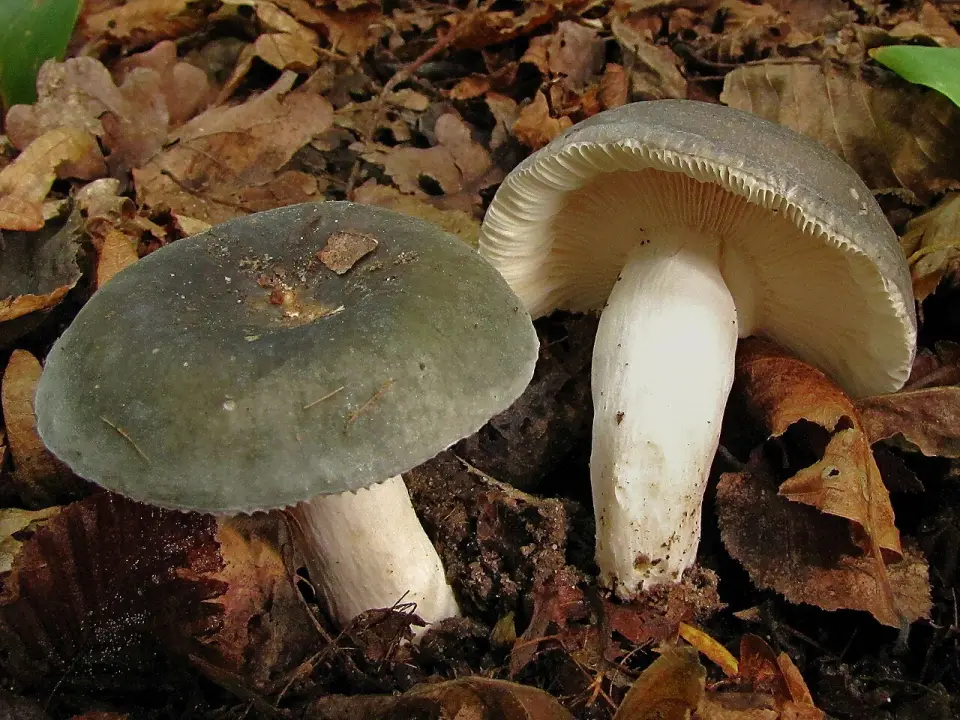
Photo: Russule_charbonniere.jpg: MediAtta derivative work: Ak ccm (talk) / Wikimedia Commons · CC BY-SA 3.0
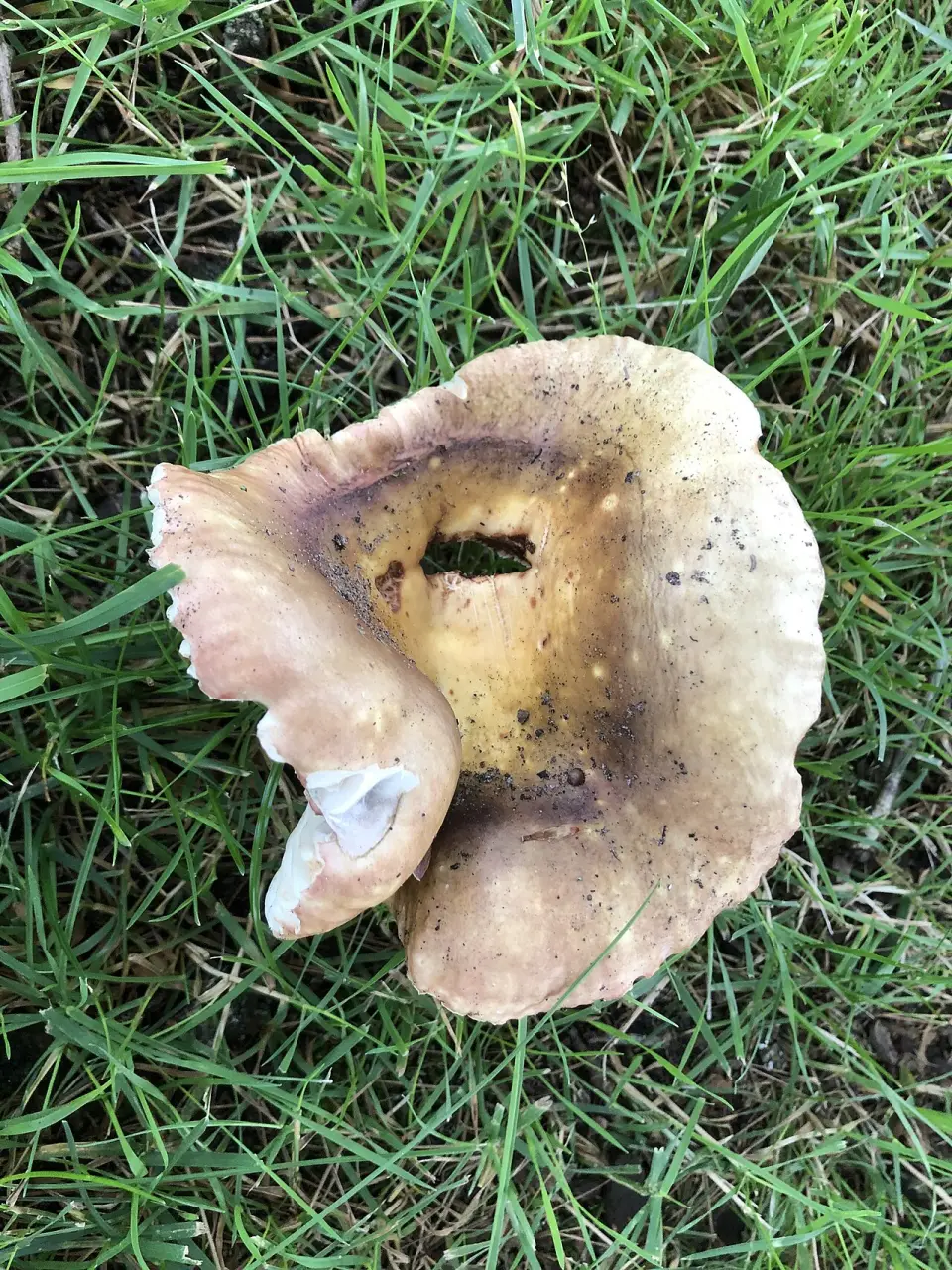
Photo: Gouwenaar / Wikimedia Commons · CC BY-SA 4.0
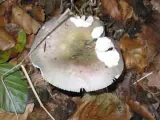
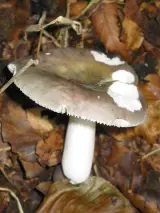
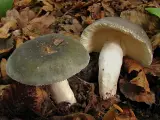
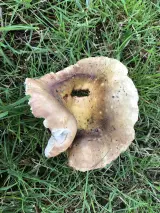
The best of the russulas. The cap is changeable — lilac, greenish, olive, often all at once; the reliable mark is the gills, which bend under a finger instead of shattering as every other russula does. White flesh, mild taste, no heat.
Quick facts
- Scientific name
- Russula cyanoxantha (Schaeff.) Fr. (1863)
- Family
- Russulaceae
- Edibility
- Edible
- Season
- Jun–Nov
- Usual altitude
- 311–1,226 m
- Under which trees
- Beech, Oak, Holm oak, Chestnut
- Dangerous look-alike
- Death cap · Amanita phalloides
- IUCN Red List
- Least concern (LC)
Where it grows
Beech and oak woods, less often conifers; moist soils, June to October.
Confused with
- Death capAmanita phalloidesdangerous
It can be greenish too, but it always has a ring on the stem and a volva at the base — a russula has neither. Deadly.
- The sickenerRussula emetica
A bright red cap, brittle gills and a burning acrid taste. It causes gastric upset.
When it has been found
Finds recorded in Spain, by month: 958 in all, from GBIF. They show when it fruits, and also when people go looking.
Where it has been found
Each square is an area of about 20 km with recorded finds; the darker, the more finds. It does not pinpoint patches: for where it is coming up now, see the forecast map.
Where it comes up
Areas where this species is scoring highest right now.
- Montseny massif MassifsExcellent · peak excellent
- Garrotxa ComarcasExcellent · peak excellent
- Osona ComarcasGood · peak excellent
- la Selva ComarcasGood · peak excellent
- Vallés Oriental ComarcasGood · peak excellent
- Larraun-Leitzaldea ComarcasModerate · peak excellent
- Pirineo ComarcasModerate · peak excellent
- Baztan-Bidasoa ComarcasModerate · peak excellent
In guides and news
- Weekend 17–18 October: good-condition area up for all five leading species
State of the forest
Sources
The usual altitude and the trees come from our own fit of the model to those finds and to the Spanish Forest Map (Mapa Forestal de España).
Would you know them from a photograph? →
The description is for reference. Identifying a mushroom from a photograph is unreliable: do not eat anything you are not sure of.