 MicoRadar
Slippery jack
Suillus luteus
Also called: Sticky bun
In Spanish: Babosillo, Boleto anillado, Boleto viscoso anillado, Hongo anillado · In Catalan: Molleric calçat, Pinetell de calceta, Moixí de calceta · In Basque: Pinudi-onddo likin, Onddo likin, Onddo eraztundun · In Galician: Andoa anelada, Andoa de anel, Andoa amarela, Madeirudo de anel
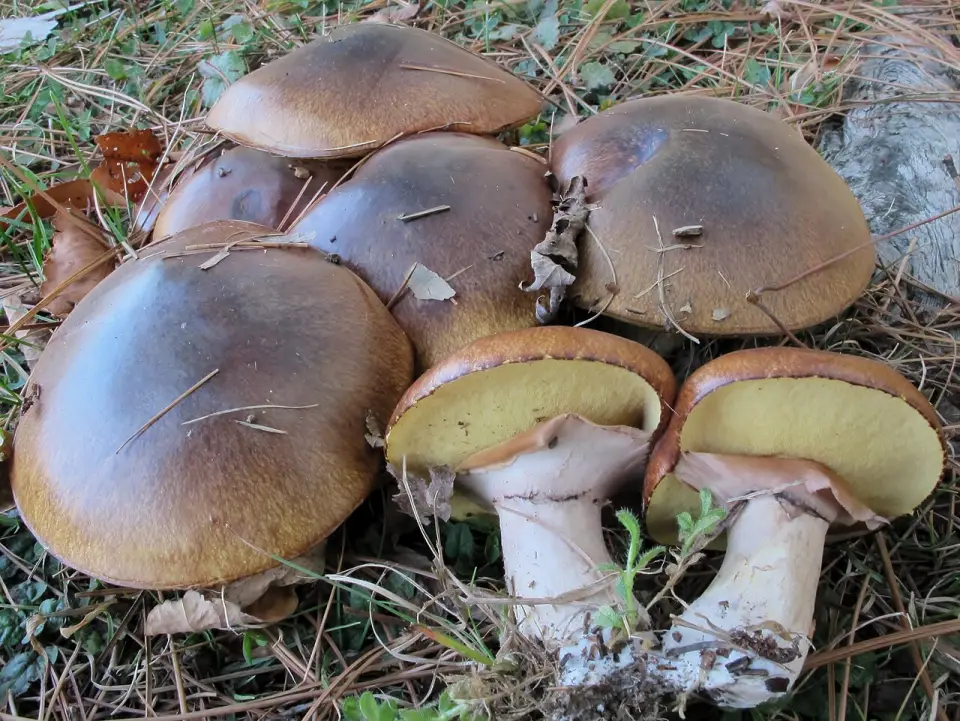
Photo: walt sturgeon (Mycowalt) / Wikimedia Commons · CC BY-SA 3.0
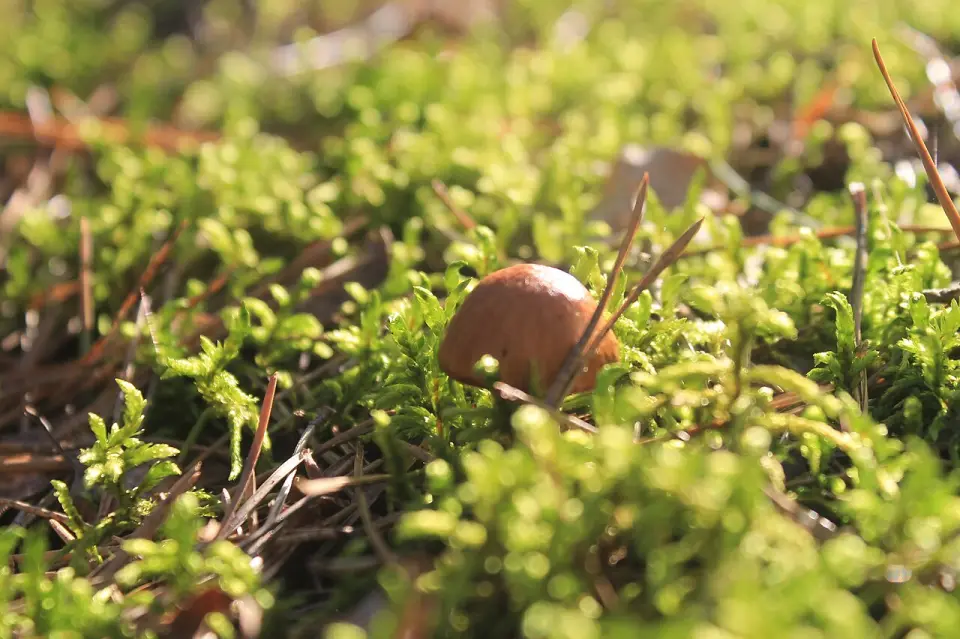
Photo: UlissLaertid / Wikimedia Commons · CC BY 4.0
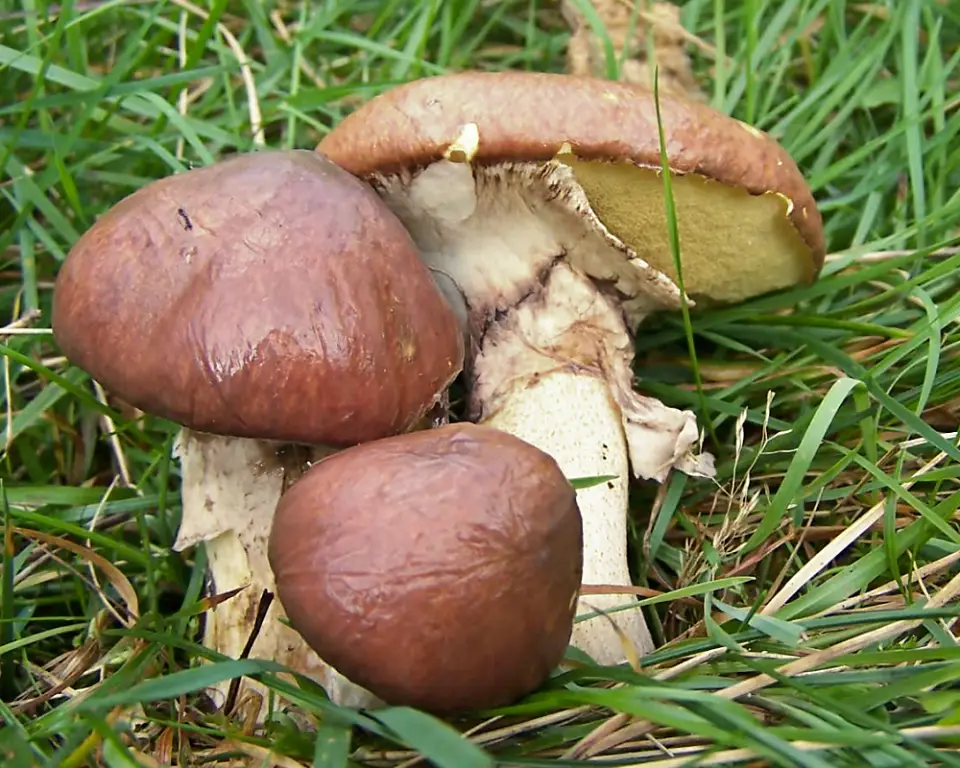
Photo: Suillus_luteus_2.jpg: Jerzy Opioła derivative work: Ak ccm (talk) / Wikimedia Commons · CC BY-SA 3.0
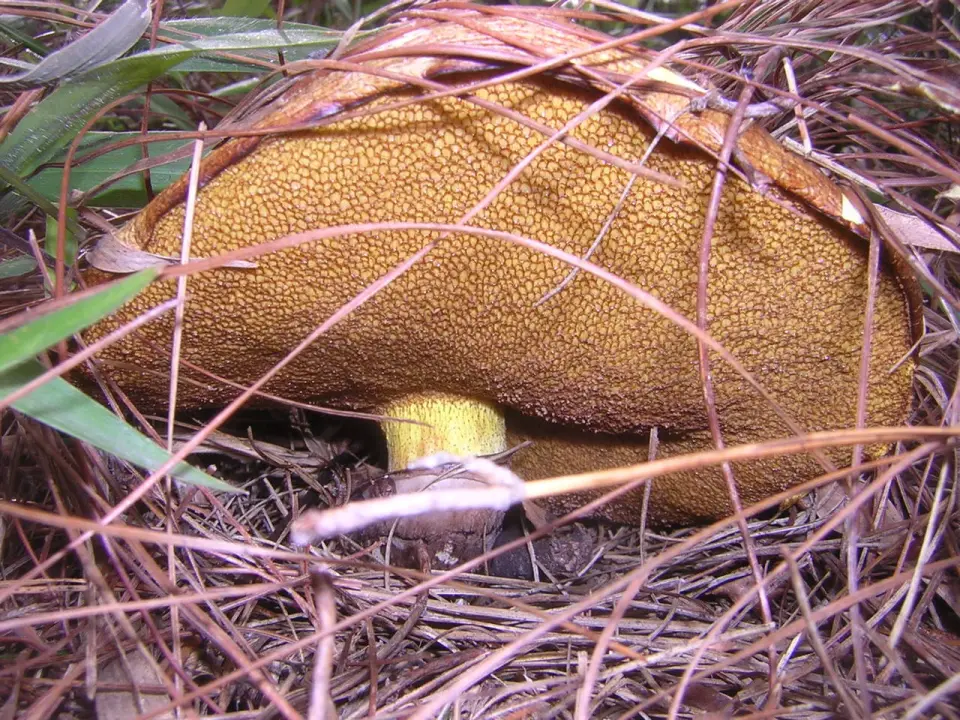
Photo: This image was created by user chuah at Mushroom Observer, a source for mycological images.You can contact this user here. / Wikimedia Commons · CC BY-SA 3.0
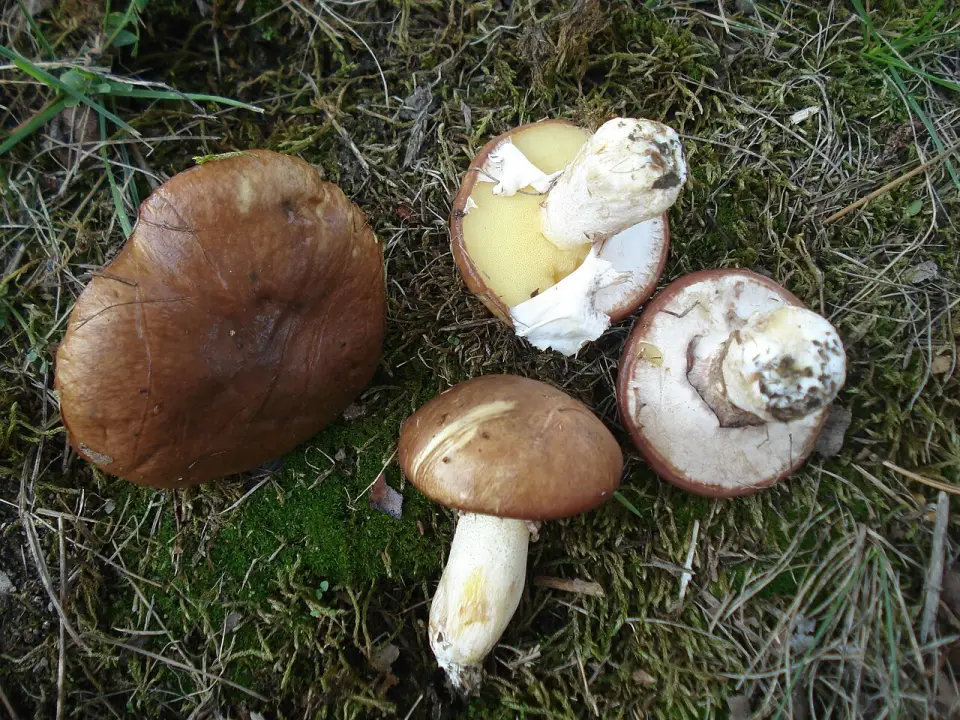
Photo: This image was created by user Dave W (Dave W) at Mushroom Observer, a source for mycological images.You can contact this user here. / Wikimedia Commons · CC BY-SA 3.0
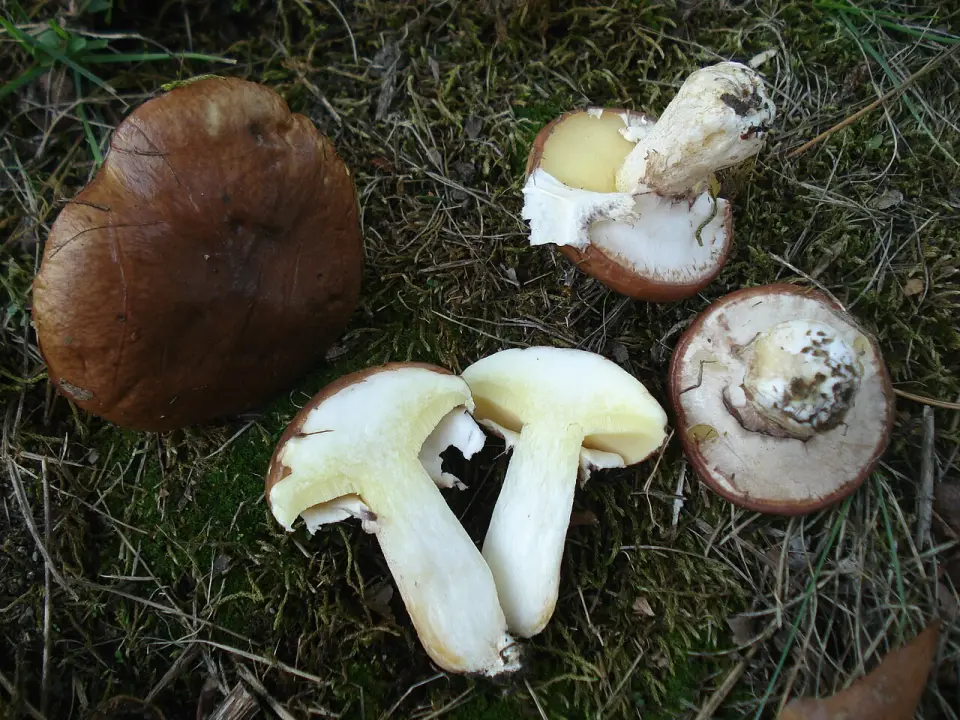
Photo: This image was created by user Dave W (Dave W) at Mushroom Observer, a source for mycological images.You can contact this user here. / Wikimedia Commons · CC BY-SA 3.0
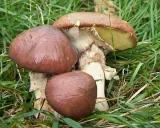
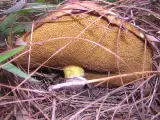
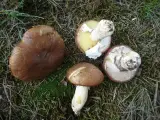
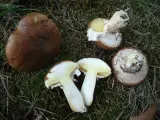
A chocolate-brown cap under a slimy film, with a skin that peels off easily. The stem carries a conspicuous white or lilac ring, what is left of the veil that covered the yellow tubes. The skin is always removed: it is bitter and laxative for some people.
Quick facts
- Scientific name
- Suillus luteus (L.) Roussel (1796)
- Family
- Suillaceae
- Edibility
- Edible
- Season
- Sep–Dec
- Usual altitude
- 605–1,716 m
- Under which trees
- Pine
- IUCN Red List
- Least concern (LC)
Where it grows
Young and middle-aged pinewoods, plantations of Scots, black and Monterey pine; poor sandy soils. It fruits in quantity in autumn and is the first to answer the rain.
Confused with
- Weeping boleteSuillus granulatus
No ring on the stem, and milky droplets on the pores. Also edible.
When it has been found
Finds recorded in Spain, by month: 965 in all, from GBIF. They show when it fruits, and also when people go looking.
Where it has been found
Each square is an area of about 20 km with recorded finds; the darker, the more finds. It does not pinpoint patches: for where it is coming up now, see the forecast map.
Where it comes up
Areas where this species is scoring highest right now.
- Montsiá ComarcasExcellent · peak excellent
- Lluçanès ComarcasExcellent · peak excellent
- Berguedà ComarcasExcellent · peak excellent
- Els Ports and the Maestrat Mountain rangesGood · peak excellent
- Gúdar-Javalambre ComarcasGood · peak excellent
- Ripollés ComarcasGood · peak excellent
- Solsonés ComarcasGood · peak excellent
- El Baix Maestrat ComarcasGood · peak excellent
In guides and news
- Huesca Pyrenees: altitude, permits and Ordesa
Area guides
- Urbión pinewoods: permit, altitudes and season
Area guides
- Weekend 17–18 October: good-condition area up for all five leading species
State of the forest
- Cataluña, 17–18 October: conditions better than a week ago
State of the forest
Sources
The usual altitude and the trees come from our own fit of the model to those finds and to the Spanish Forest Map (Mapa Forestal de España).
Would you know them from a photograph? →
The description is for reference. Identifying a mushroom from a photograph is unreliable: do not eat anything you are not sure of.