 MicoRadar
Penny bun
Boletus edulis
Also called: Porcini, Cep
In Spanish: Boleto, Hongo blanco, Hongo, Calabaza, Hongo calabaza, Seta de calabaza, Boleto comestible · In Catalan: Cep, Sureny, Siureny, Buixó · In Basque: Onddo zuri, Udazkeneko onddo zuri, Onddo buruzuri · In Galician: Madeirudo, Andoa, Boleto bo, Cogordo
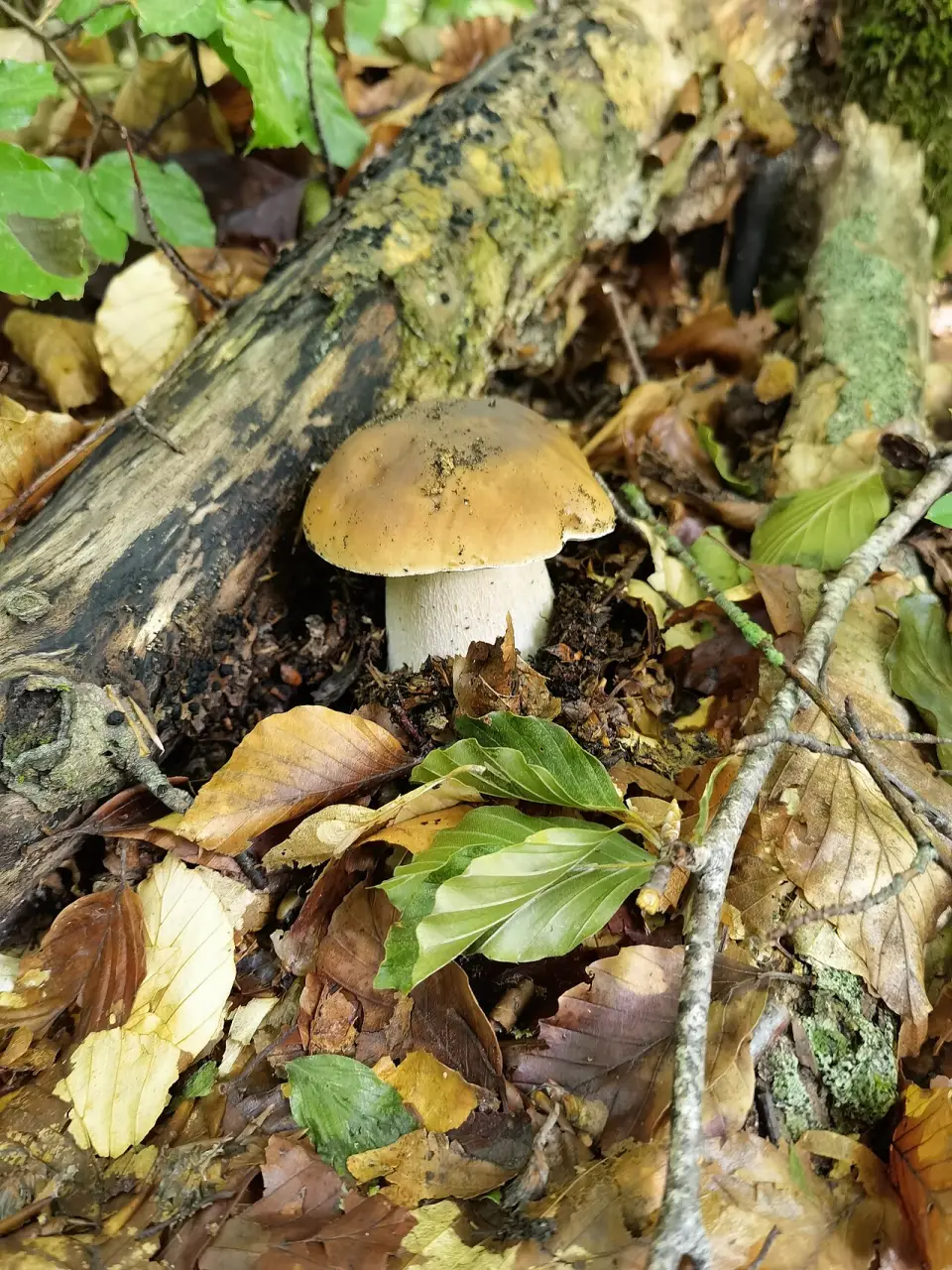
Photo: ReddishClover / Wikimedia Commons · CC BY-SA 4.0
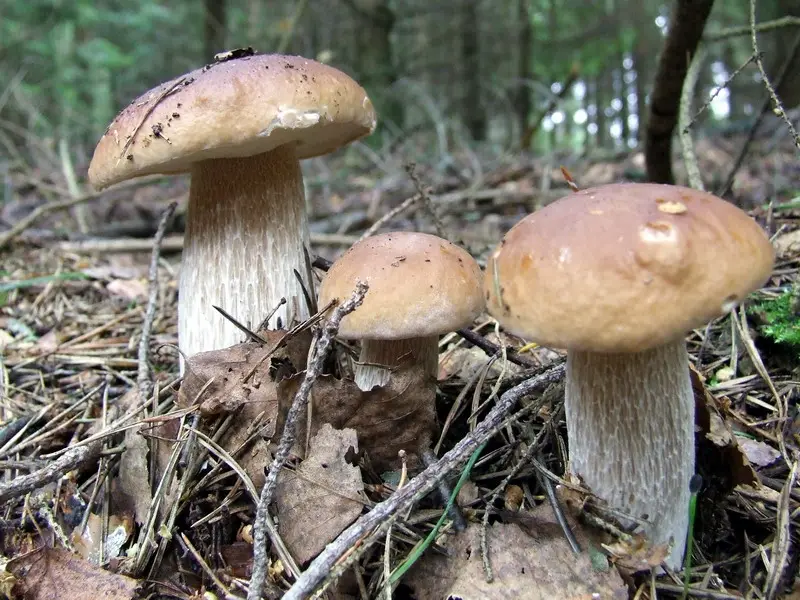
Photo: Tocekas / Wikimedia Commons · CC BY-SA 3.0
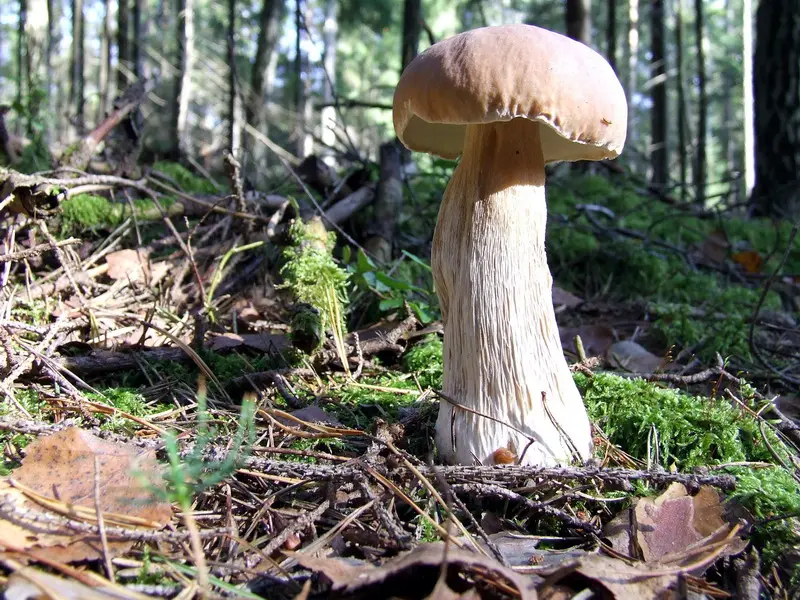
Photo: Tocekas / Wikimedia Commons · CC BY-SA 3.0
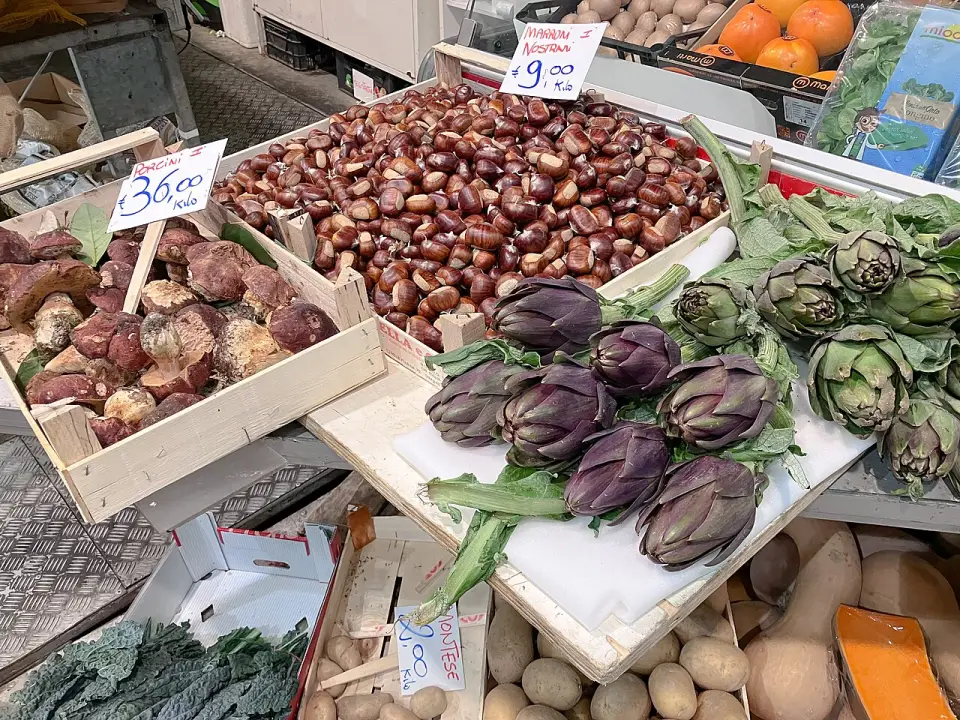
Photo: El Mono Español / Wikimedia Commons · CC BY-SA 4.0
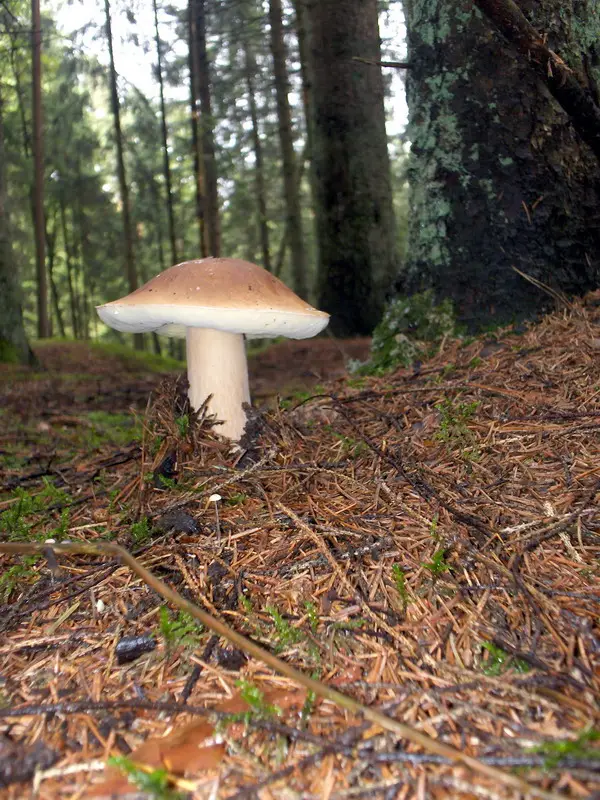
Photo: Tomas Čekanavičius / Wikimedia Commons · CC BY-SA 3.0
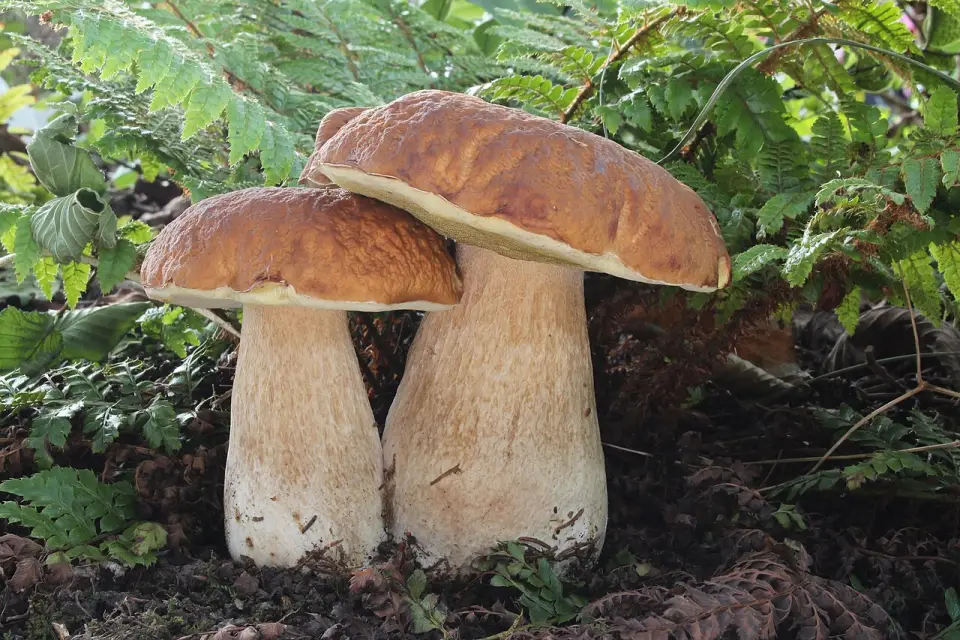
Photo: Holger Krisp / Wikimedia Commons · CC BY 3.0
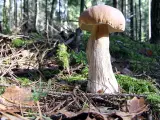
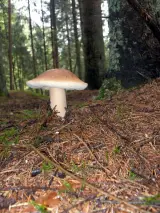
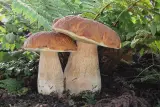
The most prized of the boletes. Cap from pale ochre to chestnut, slightly greasy in damp weather; the tubes are white and turn yellow then green with age. Barrel-shaped stem with a fine pale net over its upper part. White flesh that does not blue when cut, mild and nutty — as good fresh as it is dried or frozen.
Quick facts
- Scientific name
- Boletus edulis Bull. (1782)
- Family
- Boletaceae
- Edibility
- Edible
- Season
- Sep–Nov
- Usual altitude
- 304–1,645 m
- Under which trees
- Pine, Fir, Beech, Oak
- Dangerous look-alike
- Devil's bolete · Rubroboletus satanas
- IUCN Red List
- Least concern (LC)
How to recognise it
- Cap
- Pale ochre to chestnut, 8–30 cm, paler margin, greasy when damp
- Gills, pores or pits
- Pores white when young, then yellow and greenish; they do not stain when touched
- Stem
- Barrel-shaped and stout, whitish to pale brown, with a fine white net at the top
- Flesh when cut
- White and firm; does not blue or change colour when cut
- Spore print
- Olive-brown
Where it grows
Pine, fir, beech, oak and chestnut woods of northern Spain and the mountains of the Meseta, mostly on acid soil with moss and bilberry. The main flush comes after the autumn rains between 800 and 1600 m, in mycorrhiza with Scots, black and maritime pine, fir, beech, oak and chestnut.
Confused with
- Devil's boleteRubroboletus satanasdangerous
- Cap
- Whitish or ash-grey, 8–25 cm, velvety and matt
- Gills, pores or pits
- Pores yellow or orange when young, soon red; they blue when pressed
- Stem
- Very swollen, yellow at the top and carmine red below, with a reddish net
- Flesh when cut
- Whitish and thick; blues only slowly and faintly when cut
- Spore print
- Olive-brown
- Where and when
- Oak and other broadleaf woods on limestone; summer to early autumn
How to tell them apart: A red net on a red stem and pores that go from orange to red; the penny bun has a white net and white to greenish pores, never red.
A whitish or ash-grey cap, pores yellow or orange in young specimens that soon turn red, and a reddish net over a swollen stem. The flesh blues only slowly and faintly when cut, so the cut will not rule it out: the red pores and the red net give it away. It causes severe gastric upset.
- Bitter boleteTylopilus felleus
- Cap
- Pale brown to ochre, 5–15 cm, dry, slightly velvety
- Gills, pores or pits
- Pores white when young, turning pink as they mature; they bruise brownish
- Stem
- Stout, ochre to brown, with a coarse dark brown net
- Flesh when cut
- White, turning slightly pinkish; intensely bitter
- Spore print
- Pinkish brown
- Where and when
- Conifer and broadleaf woods, acid soil; summer and autumn
How to tell them apart: Pores that turn pink and a coarse dark brown net; the penny bun has white to greenish pores and a fine white net.
The tubes turn pink, the net on the stem is dark, and the flesh is unbearably bitter — it ruins the whole dish, but it does not poison.
When it has been found
Finds recorded in Spain, by month: 1,170 in all, from GBIF. They show when it fruits, and also when people go looking.
Where it has been found
Each square is an area of about 20 km with recorded finds; the darker, the more finds. It does not pinpoint patches: for where it is coming up now, see the forecast map.
Where it comes up
Areas where this species is scoring highest right now.
- Ripollés ComarcasGood · peak excellent
- Lluçanès ComarcasGood · peak excellent
- Berguedà ComarcasGood · peak excellent
- Osona ComarcasGood · peak excellent
- Moianès ComarcasModerate · peak excellent
- Montseny massif MassifsModerate · peak excellent
- Pirineo ComarcasModerate · peak excellent
- Garrotxa ComarcasModerate · peak excellent
In guides and news
- Huesca Pyrenees: altitude, permits and Ordesa
Area guides
- Ripollés: a guide to the mushroom forests of the Pyrenees
Area guides
- Urbión pinewoods: permit, altitudes and season
Area guides
- Cataluña, 17–18 October: conditions better than a week ago
State of the forest
Sources
The usual altitude and the trees come from our own fit of the model to those finds and to the Spanish Forest Map (Mapa Forestal de España).
Would you know them from a photograph? →
The description is for reference. Identifying a mushroom from a photograph is unreliable: do not eat anything you are not sure of.