 MicoRadar
Chanterelle
Cantharellus cibarius
Also called: Golden chanterelle, Girolle
In Spanish: Rebozuelo, Cantarela, Chantarela, Cabrilla · In Catalan: Rossinyol, Ginesterola, Vaqueta · In Basque: Zizahori, Saltsa-perretxiko · In Galician: Cantarela, Pan de cabra, Cantarelo
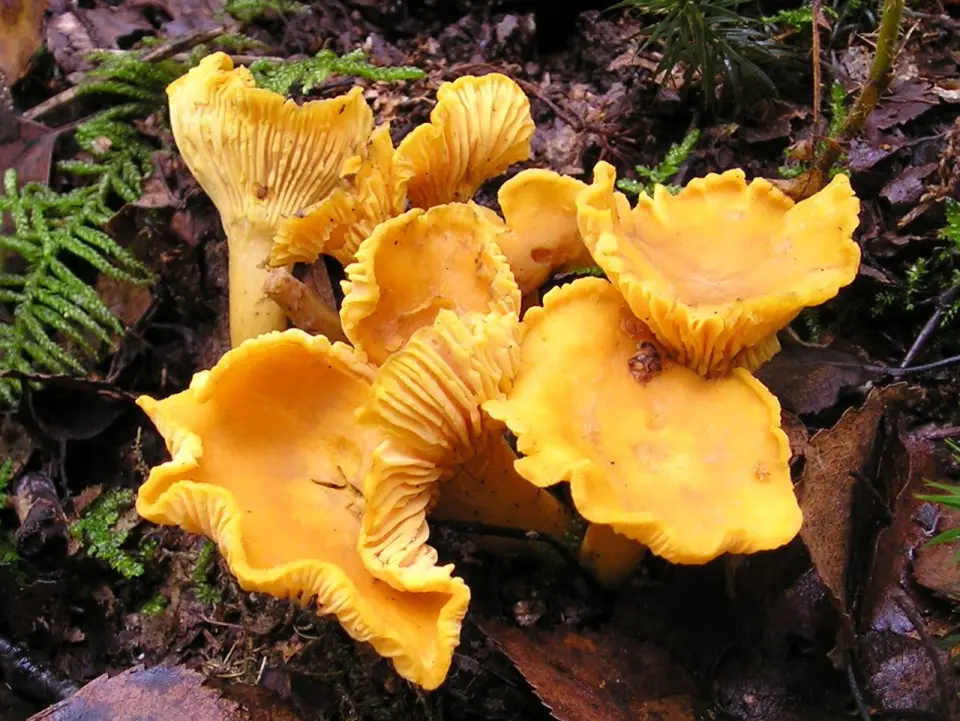
Photo: Wikimedia Commons · CC BY-SA 3.0
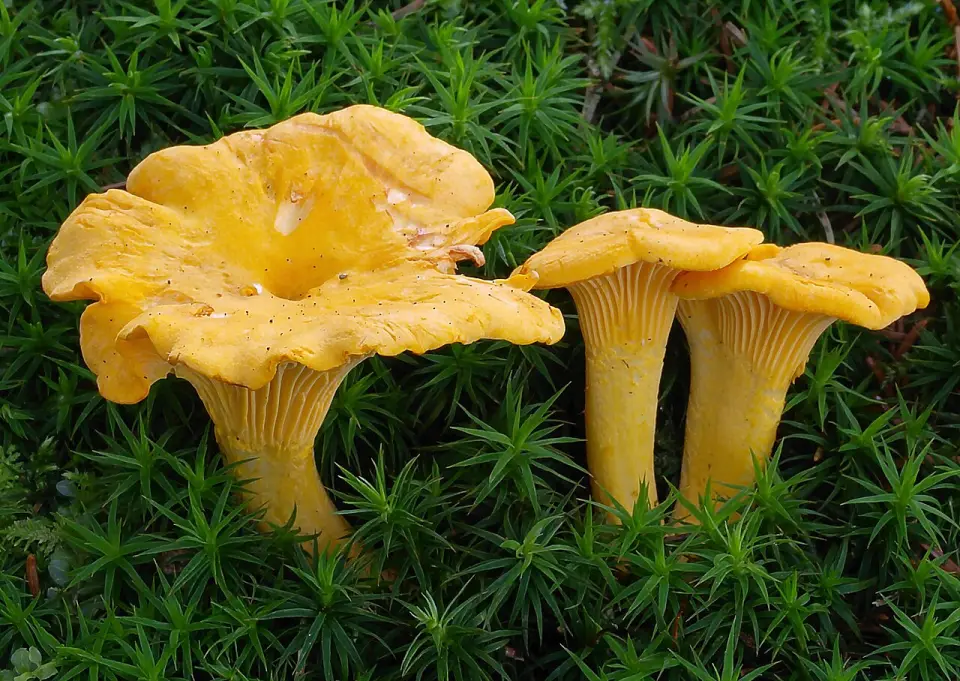
Photo: Andreas Kunze / Wikimedia Commons · CC BY-SA 4.0
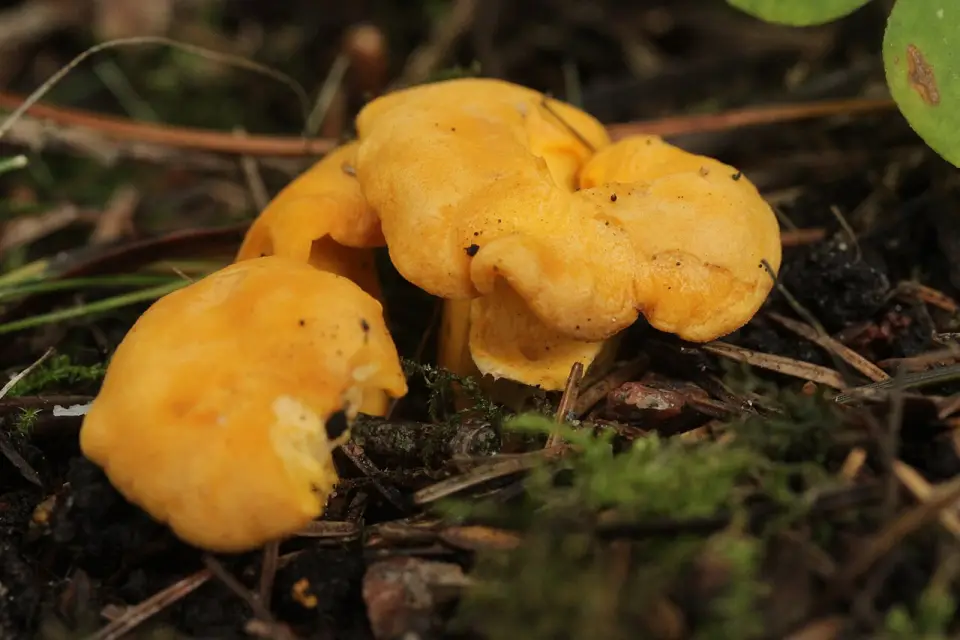
Photo: Björn S... / Wikimedia Commons · CC BY-SA 2.0
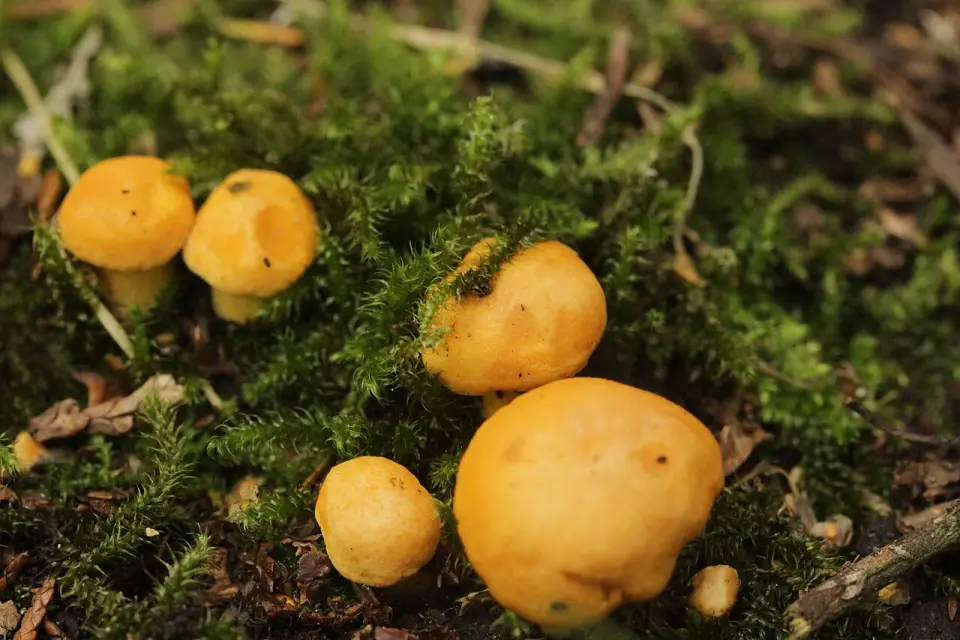
Photo: Björn S... / Wikimedia Commons · CC BY-SA 2.0
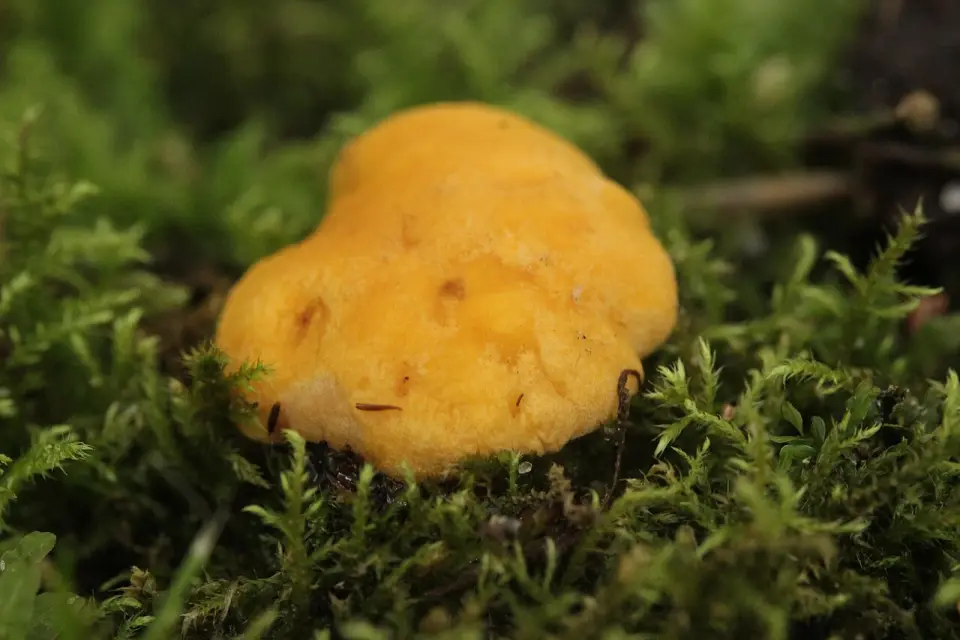
Photo: Björn S... / Wikimedia Commons · CC BY-SA 2.0
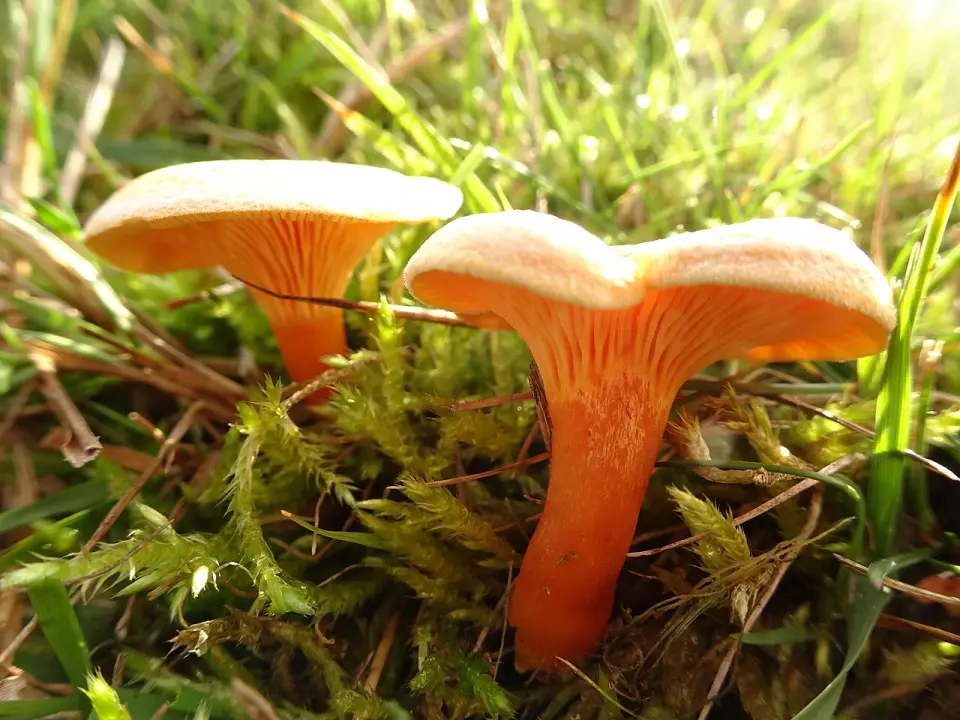
Photo: Dr. Hans-Günter Wagner / Wikimedia Commons · CC BY-SA 2.0
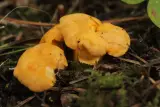
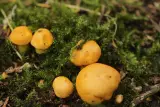
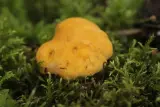
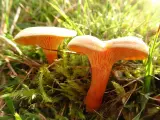
An egg-yellow mushroom with a funnelled cap and a wavy margin. It has no gills: the underside carries thick blunt folds that run down the stem. It smells of apricot, the flesh is springy, and it hardly ever goes maggoty.
Quick facts
- Scientific name
- Cantharellus cibarius Fr. (1821)
- Family
- Hydnaceae
- Edibility
- Edible
- Season
- Jun–Dec
- Usual altitude
- 142–1,421 m
- Under which trees
- Oak, Holm oak, Cork oak, Beech, Chestnut, Pine
- Dangerous look-alike
- Jack-o'-lantern · Omphalotus olearius
- IUCN Red List
- Least concern (LC)
How to recognise it
- Cap
- Egg-yellow, 3–10 cm, funnelled, wavy margin
- Gills, pores or pits
- Thick, blunt, forking folds that run down the stem; not gills
- Stem
- Short and solid, the same yellow, tapering to the base
- Flesh when cut
- Whitish to pale yellow, firm and springy; smells of apricot
- Spore print
- Cream to pale yellow
Where it grows
Oak, beech, chestnut and pine on acid soil, among moss and grassy litter. A long season — late spring to December, peaking after the autumn rains.
Confused with
- Jack-o'-lanternOmphalotus oleariusdangerous
- Cap
- Bright orange, 5–15 cm, convex then funnelled, smooth
- Gills, pores or pits
- True gills, thin, crowded, strongly decurrent, orange
- Stem
- Long, often off-centre, orange, darker towards the base
- Flesh when cut
- Orange right through to the centre, fibrous and firm
- Spore print
- White to cream
- Where and when
- Stumps and roots, even buried ones, of olive and other broadleaves; autumn
How to tell them apart: True gills, thin and sharp, and flesh orange to the centre; a chanterelle has blunt folds and whitish to pale yellow flesh.
True gills, thin and sharp, instead of blunt folds, and flesh that is orange right through rather than whitish. It usually grows in tufts on the stumps and roots of olive, holm oak or chestnut, but from a buried root it seems to come out of the soil and can stand alone: where it grows is not enough to rule it out. Toxic, causing violent vomiting.
- Fool's webcapCortinarius orellanusdangerous
- Cap
- Tawny orange-brown, 3–8 cm, dry, matt, finely felted
- Gills, pores or pits
- True gills, thick and widely spaced, orange-yellow to rust
- Stem
- Yellowish to reddish-brown, fibrous; cobweb veil remnants, no ring
- Flesh when cut
- Yellowish to pale ochre, thin
- Spore print
- Rusty reddish-brown
- Where and when
- Oak, chestnut and beech on acid soil; August to November
How to tell them apart: True, widely spaced, rust-coloured gills and a reddish-brown spore print; a chanterelle has blunt folds and a pale print.
A tawny-orange cap with true gills, widely spaced and rust-coloured, cobweb-like veil remnants on the stem and a reddish-brown spore print; a chanterelle has blunt folds and a pale print. It has been eaten in mistake for chanterelles. Its toxin destroys the kidneys without warning: symptoms take from a few days to three weeks, and by the time they arrive the damage cannot be undone.
- False chanterelleHygrophoropsis aurantiaca
- Cap
- Orange to orange-yellow, 2–8 cm, velvety, margin rolled under
- Gills, pores or pits
- True gills, thin, very crowded, forked, decurrent, bright orange
- Stem
- Orange, darker or brownish at the base; no ring
- Flesh when cut
- Yellowish to orange, soft and thin
- Spore print
- White to cream
- Where and when
- Pine and other conifers, on soil or rotten wood; autumn
How to tell them apart: True gills, thin, crowded and forked, of a brighter orange; a chanterelle has thick blunt folds and firm flesh.
True thin gills instead of folds, and a more orange colour. It tastes of nothing and upsets some people.
When it has been found
Finds recorded in Spain, by month: 982 in all, from GBIF. They show when it fruits, and also when people go looking.
Where it has been found
Each square is an area of about 20 km with recorded finds; the darker, the more finds. It does not pinpoint patches: for where it is coming up now, see the forecast map.
Where it comes up
Areas where this species is scoring highest right now.
- Montseny massif MassifsExcellent · peak excellent
- Garrotxa ComarcasExcellent · peak excellent
- Osona ComarcasExcellent · peak excellent
- Ripollés ComarcasExcellent · peak excellent
- la Selva ComarcasExcellent · peak excellent
- Lluçanès ComarcasExcellent · peak excellent
- Berguedà ComarcasExcellent · peak excellent
- Gironés ComarcasExcellent · peak excellent
In guides and news
Sources
The usual altitude and the trees come from our own fit of the model to those finds and to the Spanish Forest Map (Mapa Forestal de España).
Would you know them from a photograph? →
The description is for reference. Identifying a mushroom from a photograph is unreliable: do not eat anything you are not sure of.